💎 I Bought “Real” Amethyst Online—Here’s How I Verified It in 5 Minutes
🧭 The 60-Second Take
Buying gemstones online can feel like a gamble. The photos can be edited, certificates can be misleading, and lighting tricks can hide flaws. How do you know if what you’ve bought is genuine when you first open that package?
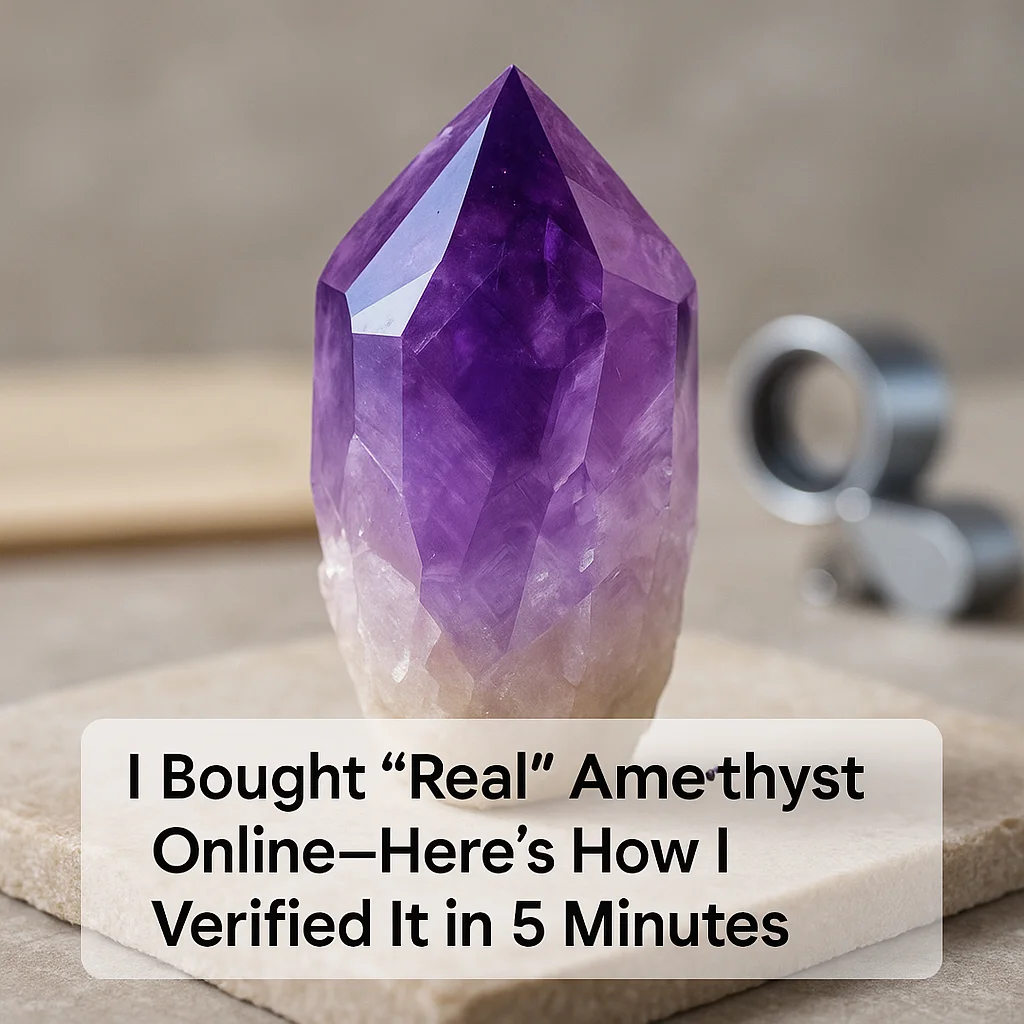
In just a few minutes, you can take some simple steps to feel more confident about your purchase. Before you start questioning your buying decision, give yourself a moment to verify what you're holding.
- Examine the amethyst under natural light, away from artificial sources.
- Check for visible inclusions or irregularities—it could indicate authenticity.
- Look for a consistent color, free from obvious zoning or dying marks.
- Feel the weight. Natural amethyst should feel relatively heavy for its size.
- Compare it against known examples or reputable images of genuine amethysts.
- Check for authenticity certificates from reputable labs, but take them with a grain of salt.
- Search customer reviews related to amethysts from the same seller.
- Consult a professional jeweler if uncertainty persists.
🧪 What Actually Makes It “Real”
Understanding the differences between natural, lab-grown, and imitation gems helps protect your purchase. Natural amethyst is extracted from the earth, featuring unique inclusions and color variations. Lab-grown amethyst has the same chemical structure as natural but is created in controlled environments.
Imitations might look similar but differ chemically and often materialize as colored glass or plastic. Assembled stones, like doublets or triplets, combine pieces to mimic the look of a full gemstone. Rely on these categories to discern photos, pricing, and certification claims online.
Remember, photos can deceive by enhancing colors or disguising imperfections. Pricing too low might suggest fakes, whereas paperwork can be exaggerated. Always question any extraordinary claim you encounter in a listing.
🔍 My Buyer Checklist (Step by Step)
- Look at the gemstone in daylight. If it sparkles naturally, continue inspecting.
- Feel the texture; real amethyst should be smooth and cool to touch.
- Weigh the stone if possible. A heavier stone typically suggests it’s genuine.
- Use a magnifying glass to look for inclusions. No inclusions may indicate a synthetic.
- If the color seems too uniform, suspect possible enhancements or synthetic origins.
- Compare the stone against genuine amethyst samples. If inconsistent, proceed with caution.
- Verify the seller’s return policy. If returnable within a reasonable timeframe, this is a positive sign.
- If price seems unreasonable, research further. Value shouldn't be dramatically lower than market averages.
- Observe the seller's transparency. If certifications are associated with reputable labs, continue positively.
- If doubts remain, consult with a gemologist before final decisions.
This checklist not only helps verify authenticity but calms impulses to overreact to minor or irrelevant discrepancies.
⚠️ Mistakes People Make (And the Fix)
- Mistake: Relying solely on online photos. Fix: Always view in natural light.
- Mistake: Ignoring inclusions. Fix: Seek inclusions as a sign of authenticity.
- Mistake: Trusting paperwork from unknown labs. Fix: Verify the credibility of certifying laboratories.
- Mistake: Believing colors that are too perfect. Fix: Real amethysts have slight variations.
- Mistake: Dismissing return policies. Fix: Ensure there's a sound return policy.
- Mistake: Skipping research on sellers. Fix: Read reviews and ratings meticulously.
- Mistake: Ignoring potential treatments. Fix: Assume amethysts could be treated and verify if skeptical.
- Mistake: Forgetting lighting impact on color. Fix: Double-check gem appearance under various lights.
- Mistake: Overlooking fake pricing. Fix: Be wary of exceedingly low prices.
- Mistake: Rushing purchase decisions. Fix: Take time and consult with experts when necessary.
🎨 Look & Red Flags That Matter
The appearance of your amethyst can change dramatically with lighting. Under warm light, it can appear more vibrant, while cool lights might dull it. Both settings could either hide or reveal surface coatings applied to enhance appearance.
A careful eye on the cut and polish can indicate quality. Well-cut stones will reflect light evenly. Common treatments such as heat treatment to enhance color are customary, but lesser-known ones may include surface coatings.
Inclusions within the gemstone are telling. Too few suggest synthetic origins, while those too prominent might mean a lower-quality stone. Watch out for any dyeing marks, unnatural colors, or zones within the stone that might indicate treatments.
🧼 Care & Storage (Safe Defaults)
- Do clean regularly with mild soap and water.
- Don’t use harsh chemicals or ultrasonic cleaners.
- Do dry with a soft cloth to avoid scratching surfaces.
- Don’t expose to prolonged sunlight, which can fade colors over time.
- Do store separately, in a soft cloth or padded container.
- Don’t wear when engaging in heavy manual labor to avoid damage.
- Do check for any loose settings periodically.
- Do seek professional cleaning if unsure about home cleaning methods.
- Don’t stack with harder gemstones to avoid scratches.
- Do remove when swimming in chlorinated pools.
- Do caution against rapid temperature changes which can cause cracking.
- Do handle with care, respecting its fragility.
- Don’t place directly on hard surfaces; always use a protective barrier.
🧾 What Certificates Can (and Can’t) Prove
Certificates can bring peace of mind, but their credibility relies heavily on the issuing authority. Reputable labs such as GIA or AGS can affirm the gem's nature, treatments, and physical attributes, but they don’t assess market value or intrinsic worth.
Sellers can sometimes exaggerate claims linked to certificates. Be wary of any that promise absolute guarantees without certification from known institutions. These documents are most valuable when provided by reputable authorities and when the stone is of significant value.
A report is particularly worthwhile when considering an investment or rare pieces. For everyday purchases, use them as just one part of your overall assessment toolkit.
❓ Quick Questions Buyers Ask
Q: How can I tell if an amethyst is natural?
A: Check for natural inclusions and color variations—these are common in natural stones.
Q: How does lighting affect an amethyst’s appearance?
A: Different lights can alter its perceived color; view it under natural light for truest color.
Q: Can I rely on online pictures?
A: Not entirely. Images can be enhanced; personal inspection is always best.
Q: What is the difference between a lab-grown and an imitation amethyst?
A: Lab-grown mimics the natural chemical structure; imitations use different materials.
Q: Should I question a certificate?
A: Yes, if it’s from an unrecognizable lab. Stick to known authorities for verification.
Q: Is a uniform color a good sign?
A: Too uniform may indicate treatment; slight variations are more authentic.
Q: Are returns important?
A: Absolutely. A solid return policy is a key component of a trustworthy purchase.
Q: What treatments might an amethyst undergo?
A: Commonly, heat treatments. Less commonly, surface coatings or dyeing can be applied.
Q: Why is my amethyst lighter than expected?
A: Could be due to lighting conditions or potentially a synthetic stone.
📌 If You Only Remember 5 Things
- 1. Always view your gemstone in natural daylight.
- 2. Use certificates for insights, not absolute decisions.
- 3. Check weight and integrity—real amethysts are heavier.
- 4. Beware of prices that are too good to be true.
- 5. Protect your stone with proper care and storage.
- 6. Remember, slight imperfections are often signs of authenticity.
- 7. Consult reputable jewelers or gemologists when in doubt.