💎 “Is This Citrine Actually Heat-Treated Amethyst?” A Simple Buyer’s Checklist
🧭 The 60-Second Take
Picture this: You’re browsing an online store and find a stunning citrine at a temptingly low price. The photos look great, the descriptions are convincing, and the seller promises a “natural” product. But is it really citrine, or could it be a heat-treated amethyst?
Here's where buyers often feel anxious—unsure of what's genuine and what's not. Visual cues in online listings can be misleading due to lighting and photo editing. But don’t worry, you can still make informed decisions.
Here’s a quick checklist to keep your purchase stress-free:
- Check seller reviews for consistent feedback.
- Cross-reference prices with similar items from reputable sellers.
- Ask specific questions about treatment history.
- Request more photos showing different lighting.
- Ensure there is a return policy in place before buying.
- Consider a professional appraisal if investing in high value.
- Look for certifications from recognized gemological labs. >
- Be cautious of deals that seem too good to be true.
🧪 What Actually Makes It “Real”
Distinguishing natural citrine from lab-created or imitation varieties can be tricky. Natural citrine is fairly rare, which often causes sellers to heat-treat amethyst to produce a similar yellow hue.
Lab-grown stones have the same chemical composition as natural ones but are produced in a controlled environment. While lower-cost, they’re still considered genuine. Imitations, in contrast, are crafted from entirely different materials.
A buyer can’t easily verify a stone's authenticity via photos. Paperwork can help, but only reputable gemological certificates provide reliable information. Pricing that seems unusually low should be a warning sign.
🔍 My Buyer Checklist (Step by Step)
- Research the seller thoroughly. If their credibility checks out, proceed; otherwise, explore other options.
- Verify if the stone’s price aligns with market rates. If not, ask why it differs.
- Inquire explicitly about how the stone was treated. If unclear, seek more information.
- Check if the seller can provide multiple photos under different lighting. Absence of this might suggest tampering.
- Request a certification. If they can’t provide documentation, it’s wise to be cautious.
- Review the return policy carefully. Lack of one is a deal-breaker.
- If the stone appears too perfect online, scrutinize it. Natural stones often have inclusions.
- Consult with a gemologist if uncertain, especially for significant purchases. It's a good investment for peace of mind.
- If treatment history is disclosed, assess if it affects your purchasing decision.
- Consider the stone’s origin, but only if certified. Untested claims aren’t reliable. >
- Cross-check facts against multiple sources. Inconsistencies should prompt a pause. >
- Trust your intuition. If something feels off, consider alternatives diligently.
Following this checklist can help you navigate purchases calmly. It’s essential not to let uncertainties overwhelm you. Use each step carefully, adjusting decisions as you gather more information.
⚠️ Mistakes People Make (And the Fix)
- Relying solely on online photos—always ask for more images.
- Skipping reviews—prioritize sellers with consistent positive feedback.
- Ignoring the price too-good-to-be-true syndrome—research first.
- Forgetting to confirm return policies—always essential information.
- Trusting vague descriptions—request specific treatment details.
- Believing in flawless stones—beware of artificially enhanced ones.
- Getting swayed by dazzling lighting—request natural lighting photos.
- Failing to consider a lack of paperwork—not ideal for high-value stones.
- Overlooking the market standard—compare similar items.
- Forgoing a professional opinion—wise for significant investments.
🎨 Look & Red Flags That Matter
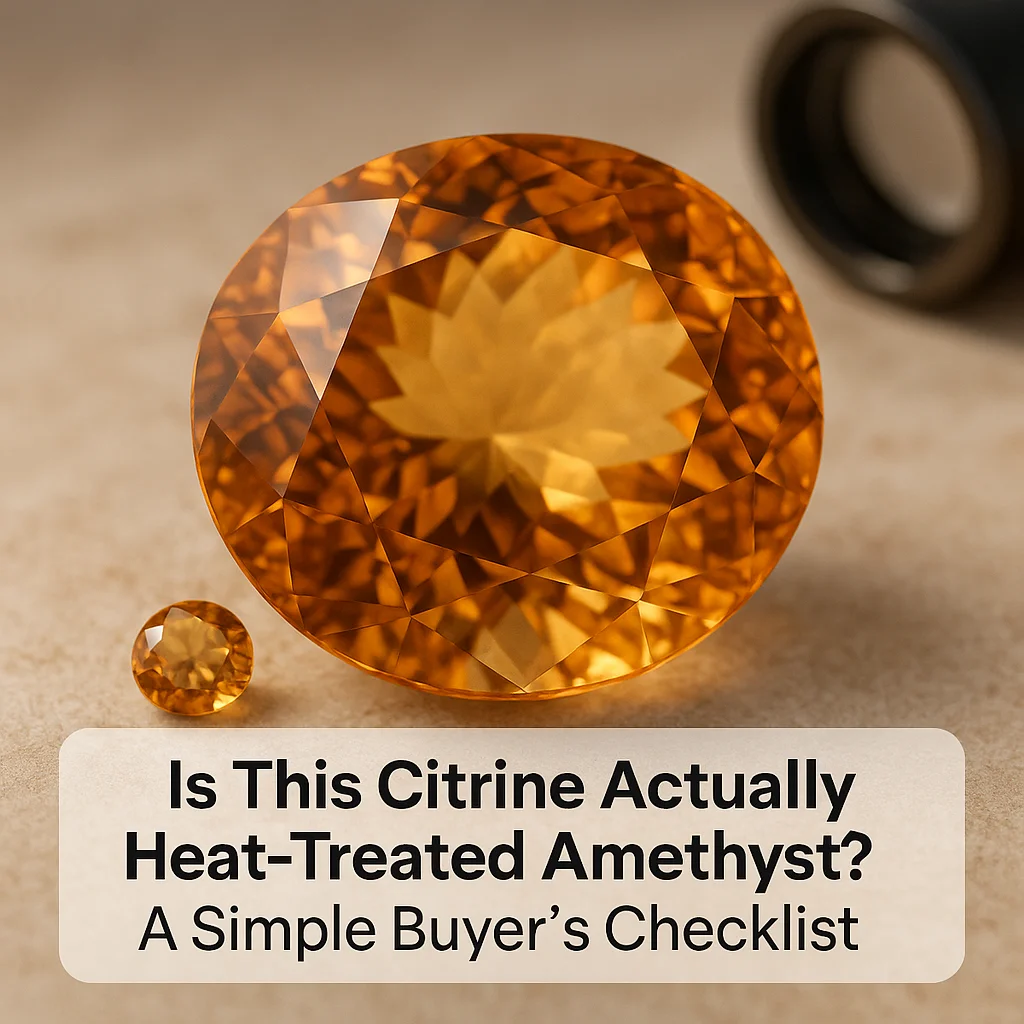
Lighting can vastly alter a stone’s appearance, giving heat-treated amethyst passed off as citrine a misleading sparkle. High-quality natural citrines usually have a vibrant yellow, less of the reddish tint sometimes seen in treated amethyst.
Evaluating the stone’s cut and polish also offers insight. While these enhance beauty, overly symmetric or uniform stones could indicate possible enhancements. Natural stones often have inclusions when viewed closely.
Awareness of potential treatments is key. As with amethysts turned citrines, heat treatments are common. Confirm statements with reliable certifications and be cautious of stones that seem unnaturally vivid or uniform.
🧼 Care & Storage (Safe Defaults)
- Use mild soap, water, and a soft cloth for cleaning.
- Avoid ultrasonic cleaners—risk damaging sensitive pieces.
- Store separately in soft pouches to prevent scratching.
- Keep away from prolonged sunlight to avoid color fading.
- Remove jewelry before physical activity to prevent damage.
- Beware of chemicals, including perfume and hairspray.
- Regularly inspect settings and prongs for wear and tear.
- Professional cleaning and inspection annually can help.
- For significant purchases, consult specific care recommendations.
- When in doubt, err on the side of caution with care techniques. >
🧾 What Certificates Can (and Can’t) Prove
Certificates from reputable gemological labs identify a stone’s type, treatments, and sometimes origin. They provide an unbiased confirmation of authenticity that sellers might exaggerate or misrepresent.
However, certificates are not omniscient. They cannot assure quality, aesthetics, or personal value. Certificates are most valuable for costly stones or when questioning a stone’s treatment history.
When the cost is justified, investing in a report can offer peace of mind and leverage for disputes. Choose certificates from well-regarded labs to ensure reliability and avoid possible counterfeit documents.
❓ Quick Questions Buyers Ask
Q: How can I tell if citrine is heat-treated amethyst?
A: Ask sellers for certification and look for reddish tints in the stone.
Q: Is it safe to buy gems online?
A: Yes, but prioritize reputable sellers and insist on return policies.
Q: Do photo lighting tricks matter?
A: Absolutely, lighting can obscure a stone’s true color or flaws.
Q: What does a gem certification report show?
A: It identifies the type, any treatments, and sometimes the origin.
Q: Should I always trust low prices?
A: Be cautious; exceptionally low prices may suggest enhancements.
Q: Are heat-treated gems worse?
A: Not necessarily, but natural stones are usually more valuable.
Q: Is it worth getting a second opinion?
A: Yes, particularly for high-value purchases or uncertain origin.
Q: Can gem treatments be harmful?
A: Some make stones more fragile, so research treatment details.
📌 If You Only Remember 5 Things
- Always verify seller credibility before purchasing.
- Look for consistent feedback from previous buyers.
- Never forgo a solid return policy.
- View stones under various lighting to spot inconsistencies.
- When in doubt, consult a professional. It's wise for peace of mind.