💎 The Most Common Gemstone Scams (2026 Edition Checklist)
🧭 The 60-Second Take
Imagine you’re browsing online, captivated by a sparkling gemstone that seems like a steal. The photos are dazzling, and there’s even a “certificate” attached. However, without understanding the tricks sellers might use, you could end up with a disappointment rather than a treasure.
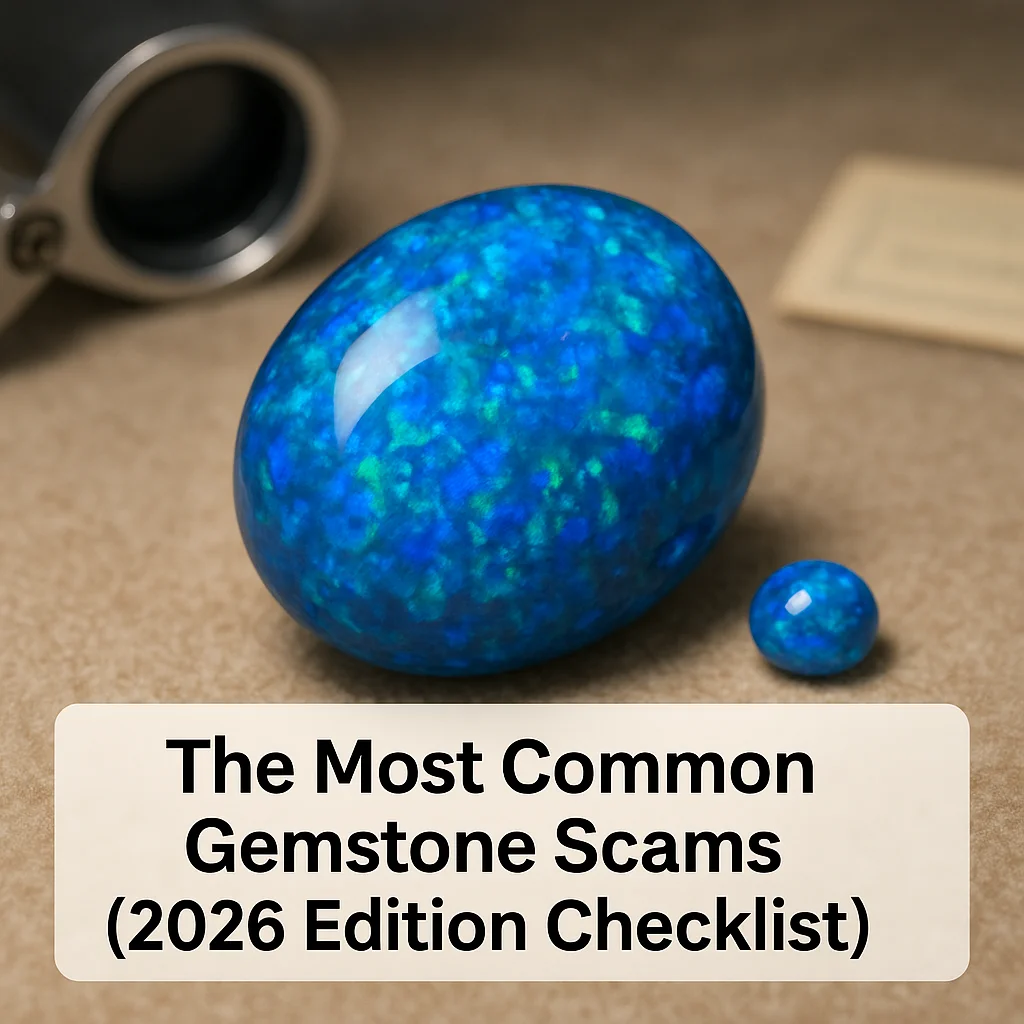
Lighting tricks, misleading certificates, and overly generous return policies can all mask the true nature of a gemstone. Many buyers find themselves regretting their purchase when the stone arrives and doesn’t match its online allure.
Here’s a brief checklist to navigate these waters:
- Verify the seller’s reputation through independent reviews.
- Evaluate the gemstone's color and clarity across multiple photos or videos.
- Question the authenticity of third-party certificates.
- Understand the implications of price points that seem too good to be true.
- Enquire about the return policy and ensure it’s clear and reasonable.
- Secure professional appraisal for high-value purchases before final commitment.
- Research typical treatments for the gemstone type.
- Know that natural imperfections can indicate authenticity.
🧪 What Actually Makes It “Real”
With gemstones, reality can be complex. Natural stones are extracted directly from the earth, while lab-grown ones are created synthetically but share the same chemical composition. Imitation stones merely resemble the desired gem without the same materials.
Assembled stones, such as doublets and triplets, combine layers or have enhancements that often mimic the appearance of genuine gems. What is crucial to understand is that photos alone can’t reveal these layers or origins.
A certificate might provide insights, but its source determines its reliability. Price can hint at nature and origin, yet both high and low prices can trigger caution if not aligned with the market standards.
🔍 My Buyer Checklist (Step by Step)
- Research the gemstone type you’re interested in before viewing listings.
- Scrutinize seller reviews; if inconsistent, investigate further or choose another vendor.
- If the price seems unusually low, anticipate possible enhancements or imitations.
- Request additional photos and videos if the details are unclear.
- Inquire about the origin of the gemstone from the seller.
- If authenticity is vital, ask whether a reputable lab has evaluated the gemstone.
- Check the return policy meticulously; no policy is often suspect.
- If buying in-store, view the stone in natural light; fluorescent lights can distort its appearance.
- Seek advice from a professional gemologist if uncertainty persists.
- On delivery, verify the stone’s quality against the listing description.
- If doubtful, do not hesitate to return the item within the allowed period.
Using this checklist should empower you to assess a gemstone’s true nature. Keep in mind that overreactions aren’t required; use measured steps to balance appreciation and caution.
⚠️ Mistakes People Make (And the Fix)
- Over-relying on photos: Always verify in real light.
- Trusting unknown certificates: Confirm with trusted sources.
- Ignoring stone imperfections: Natural flaws can validate authenticity.
- Assuming high price equals authenticity: Checklist other factors.
- Skipping the return policy read: Always choose flexible terms.
- Buying on impulse: Take time to research and think.
- Ignoring market treatments: Understand enhancements specific to the stone.
- Glossing over lighting differences: Check gemstone in daylight.
- Believing in “perfect” stones: If it’s too perfect, investigate modifications.
- Forgetting reputable appraisals: Engage experts for high stakes.
🎨 Look & Red Flags That Matter
A gemstone’s appearance is multifaceted, influenced greatly by light settings, the quality of the cut, and even surface treatments. Lighting can create illusions, making colors appear more vibrant or dull.
A well-polished stone reflects light better, making it appear more brilliant. Inclusions, or internal flaws, might reduce a gem’s value but often verify its natural origin. Surface coatings and dyes can alter appearance but require scrutiny for longevity and authenticity.
Certain treatments are common in the market, like heat treatment for sapphires or oiling in emeralds. Transparent disclosure from sellers aids in assessing how these factors impact value.
🧼 Care & Storage (Safe Defaults)
- Do use mild soap and water for regular cleaning.
- Don’t use ultrasonic cleaners, especially on soft stones like opals.
- Do employ a soft cloth for gentle drying.
- Don’t expose gemstones to harsh chemicals.
- Do store each piece individually to avoid scratching.
- Don’t subject porous stones like turquoise to prolonged water exposure.
- Do keep stones away from prolonged direct sunlight.
- Don’t clean with steam; it can damage treatments.
- Do use padded containers for transportation.
- Don’t neglect regular inspections for settings and conditions.
- Do check for specific care instructions for treated gems.
- Don’t risk storing gems in extreme temperatures.
- Do consult professionals for valued or uncertain pieces.
🧾 What Certificates Can (and Can’t) Prove
In the world of gemstones, certificates can act as a source of assurance, providing valuable insight about a stone’s characteristics. Labs typically report on the type, weight, measures, and any known treatments or enhancements.
However, not all certificates are equal. Some sellers might exaggerate certificates' authority; others might issue their own to inflate a gem's value. Identifying trustworthy labs is crucial, and a certification from unknown entities might mislead rather than inform.
If certainty is needed, particularly for significant investments, obtaining a certified appraisal is recommended. This report can offer a reliable measure of a gemstone’s authenticity and condition.
❓ Quick Questions Buyers Ask
Q: Can I trust online photos?
A: Use them as guides but verify in multiple lighting conditions.
Q: Do I need a certificate for every purchase?
A: It depends on value and personal assurance needs; not always necessary for minor purchases.
Q: Are lab-grown stones considered fake?
A: No, they have the same properties as natural stones but are created synthetically.
Q: What if the gemstone doesn’t match the description?
A: Exercise your rights under the return policy promptly.
Q: Why should I care about treatments?
A: Treatments can affect value, appearance, and care requirements.
Q: How can I spot a doublet or triplet?
A: Visible layering or unusual reflections at certain angles can be hints.
Q: Is a professional appraisal mandatory?
A: Not always, but it provides confidence for high-value gems.
Q: What to do if my gemstone seems damaged?
A: Stop use and consult a professional for assessment.
📌 If You Only Remember 5 Things
- Review the seller’s credibility thoroughly before purchasing.
- Compare gemstone appearance under different lights.
- Validate certificates' origin for genuine insight.
- Handle with care and follow specific storage guidelines.
- Be ready to use a return policy if authenticity is in doubt.
- Understand treatments may change care and appearance needs.