💎 The Truth About “Rare” Gems on Marketplaces: Red Flags to Watch
🧭 The 60-Second Take
Picture this: You’re browsing an online marketplace and come across a dazzling gemstone. The photos make it look like an absolute treasure, and the seller claims it’s a rare find. But how can you be sure it’s as advertised? In the digital age, buying gemstones online can be risky, with lighting tricks and vague certificates complicating things.
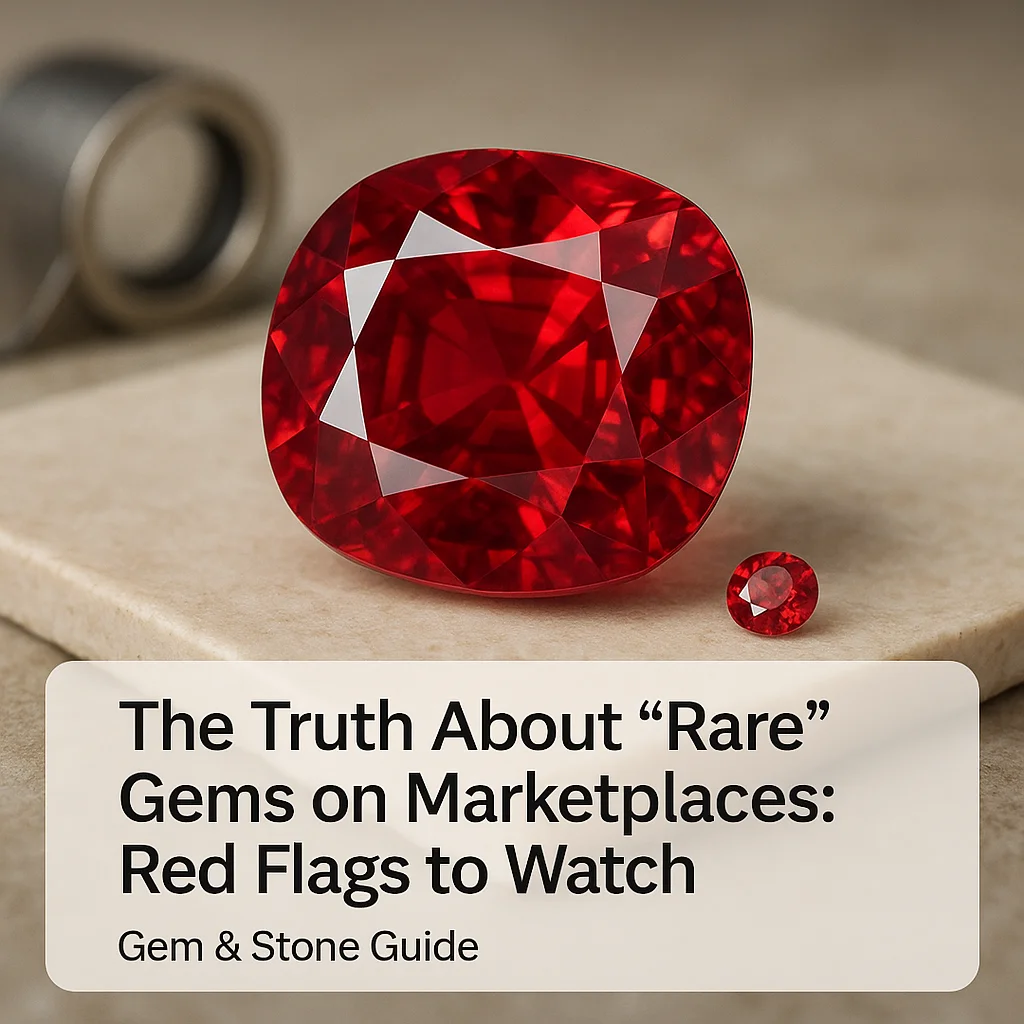
Before you click 'buy,' consider the potential pitfalls. The gem might look perfect in the photos, but pictures can be deceiving. Even if a “certificate” is offered, it may not guarantee authenticity. Careful evaluation is key to a successful purchase.
- Research the seller’s reputation and reviews before making a purchase.
- Request high-resolution photos from multiple angles.
- Ask for a detailed description, including any treatments or enhancements.
- Understand the differences between natural, lab-grown, and imitation gems.
- Check return policies thoroughly to protect your investment.
- Consult a professional gemologist if in doubt.
- Be wary of "rare" claims without proper substantiation.
- Don’t rely solely on certificates provided by unknown labs.
🧪 What Actually Makes It “Real”
Understanding the difference between natural, lab-grown, and imitation gemstones is crucial. Natural gems are mined from the earth, lab-grown gems share the same properties but are created in controlled environments, and imitation gems look similar but lack the actual mineral composition.
Photos alone cannot reveal these differences accurately, as factors like lighting and angle can significantly alter appearance. Likewise, price can be deceptive; a high price doesn’t always equate to authenticity. Certificates might add credibility, but they depend on the issuing lab’s reputation. Be skeptical of paperwork that seems too good to be true.
🔍 My Buyer Checklist (Step by Step)
- Verify the seller’s credibility. If reputable, proceed. If not, pause.
- Ask for multiple photos. If provided, assess carefully. If not, reconsider.
- Request a gemological report. If credible, use it. If not, be cautious.
- Investigate the return policy. If favorable, feel more secure. If not, be wary.
- Inquire about any enhancements. If disclosed, evaluate impact. If not, suspect tampering.
- Compare with market prices. If similar, consider valid. If too divergent, question authenticity.
- Seek expert opinion on unusual claims. If verified, proceed. If dubious, back away.
- Understand treatment implications. If acknowledged, assess tolerance. If hidden, challenge validity.
This checklist is designed to help you make informed decisions. Not every red flag means disaster, but more scrutiny is always better than less. Trust and confirm, rather than doubt and assume.
⚠️ Mistakes People Make (And the Fix)
- Trusting only photos: Request additional angles to verify.
- Forgetting to check return policies: Always verify policy terms.
- Buying from sellers with no reviews: Research before buying.
- Overlooking descriptions: Confirm details about size and treatment.
- Ignoring lighting effects: Analyze under different lighting conditions.
- Relying solely on "perfect" gems: Expect natural inclusions as a sign of authenticity.
- Misinterpreting certificates: Verify with recognized labs.
- Assuming rarity equals value: Evaluate based on actual market data.
- Discarding expert advice: Always consult professionals when uncertain.
- Neglecting to ask questions: Communicate with sellers for transparency.
🎨 Look & Red Flags That Matter
The physical appearance of a gemstone can vary significantly based on several factors. Lighting can alter color perception, while a precise cut enhances brilliance. Surface polish affects light reflection, and inclusions may either add character or devalue the gem.
Coatings and dyes are common treatments that can disguise true color, potentially misleading buyers. Heat treatment and irradiation are typical for enhancing saturation and clarity, especially in sapphires and topazes. Recognizing these modifications is key to understanding what you’re buying.
🧼 Care & Storage (Safe Defaults)
- Do use mild soap and water for cleaning.
- Do store gems separately to prevent scratches.
- Do keep gems away from harsh chemicals.
- Do avoid rapid temperature changes.
- Don’t expose to direct sunlight for prolonged periods.
- Don’t use ultrasonic cleaners on delicate stones like opals and emeralds.
- Do handle gems gently, especially softer ones like pearls and turquoise.
- Don’t wear gems while engaging in hard-impact activities.
- Do get professional cleaning for valuable pieces annually.
- Don’t forget to insure expensive items.
🧾 What Certificates Can (and Can’t) Prove
Gemological institutes provide certificates detailing specific gemstone properties, like type, weight, dimensions, and sometimes treatments. Recognized labs like GIA or AGS are trustworthy sources, providing consistency and reliability in reports.
Sellers may exaggerate gem quality by showcasing ambiguous certificates that do not correlate with recognized labs. These exaggerations can skew buyer perception, leading to potential misinformation about authenticity.
Investing in a lab report from a respected institution can be invaluable for high-value gemstones. While additional costs can be a deterrent, the assurance of authenticity from a reputable source often justifies the investment.
❓ Quick Questions Buyers Ask
Q: Are online gemstone deals reliable?
A: It depends on seller credibility and transparency. Research is crucial.
Q: Can photos accurately show gemstone quality?
A: Photos can be misleading due to lighting and angles. Always ask for more data.
Q: What's the difference between lab-grown and imitation?
A: Lab-grown shares authentic properties with natural gems; imitation does not.
Q: How can I spot a gemstone treatment?
A: Transparency on treatments often comes from reliable certificates; seller honesty is key.
Q: Are “rare” gems always valuable?
A: Rarity doesn’t automatically imply high value; market demand plays a role.
Q: Should I trust "no return" policies?
A: Be cautious of such policies; they can indicate potential issues with product authenticity.
Q: Is a higher price always justified?
A: Not necessarily. Investigate why a gem commands its price.
Q: When should I use a professional gemologist?
A: When investing heavily or if you have doubts about the gem’s authenticity.
📌 If You Only Remember 5 Things
- Always assess the seller’s credibility before buying.
- Request detailed information beyond what’s in the listing.
- Understand the impact of treatments and authenticity certificates.
- Compare the gem’s market value to ensure price fairness.
- Use expert advice to guide significant purchases without rush.