💎 Why Opals Crack: The Humidity Rule Nobody Told You
🧭 The 60-Second Take
Imagine finding the perfect opal online. The photos sparkle, the colors dance, and the price seems too good to be true. Your heart races, but there's a lingering doubt: will the gem in the picture be the gem in your hand?
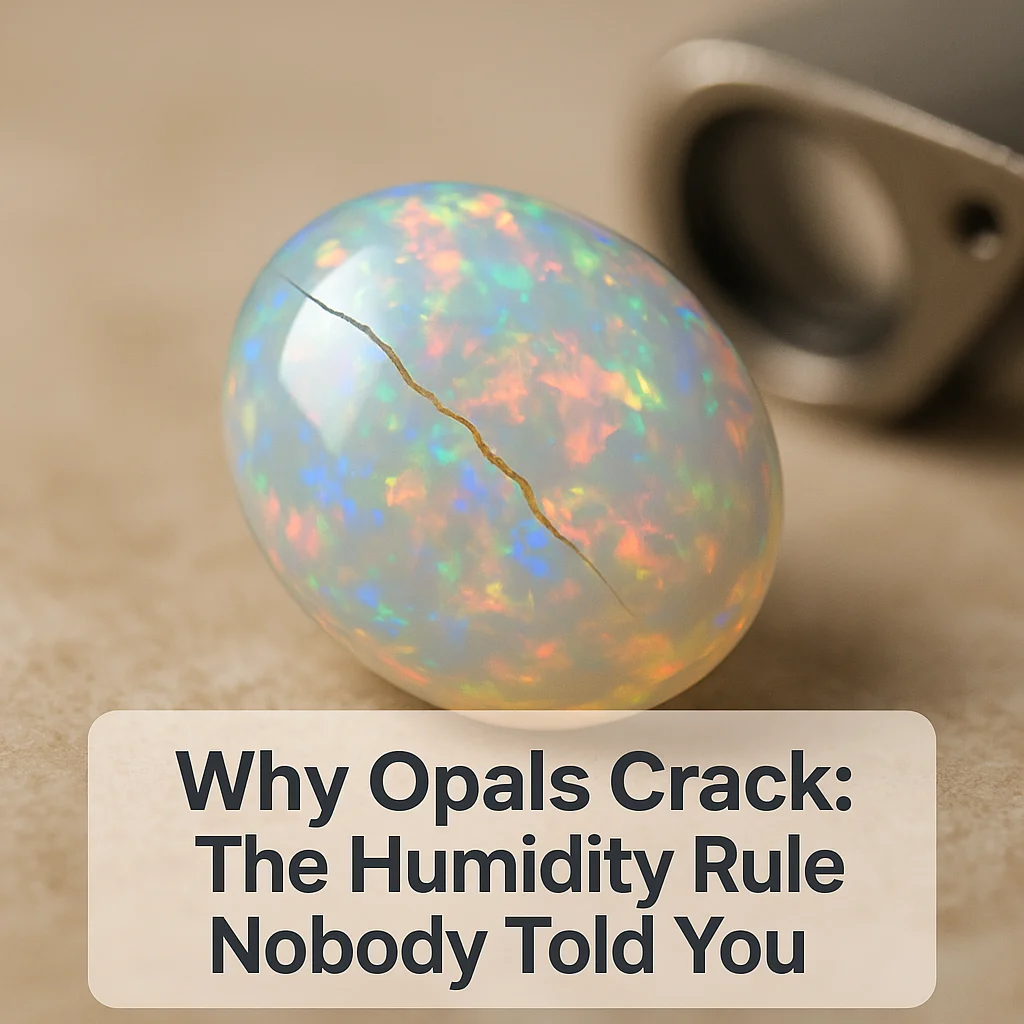
Often, the opal that arrives may not look as vibrant as those images suggested. The reason might not be a trick but the natural vulnerability of opals to their environment—especially changes in humidity.
Here's what you can do today:
- Examine pictures closely for signs of inconsistency.
- Check if the seller offers a detailed description and opal type.
- Read reviews to spot any red flags about inconsistencies.
- Understand the basics of opal care and environmental needs.
- Look for sellers offering a clear return policy.
- Consider conditions like humidity where the opal will be kept.
- Trust your instincts if something feels off in the listing.
- Seek expert opinions when in doubt.
🧪 What Actually Makes It “Real”
Opals can be found in three main forms: natural, lab-grown, and imitation. Natural opals come from nature itself, each uniquely formed over millions of years. Lab-grown opals, while identical chemically and physically to natural ones, are crafted in controlled conditions. Imitations and assembled versions, like doublets or triplets, mimic the look but not the structure.
Photos may deceive. Colors and patterns often shift under varied lighting. Prices can sometimes hint at authenticity, but be wary; both natural and high-quality lab-grown opals can command a premium. Certificates may illuminate origin but not always the full picture. Be cautious with paperwork that claims too much.
🔍 My Buyer Checklist (Step by Step)
- If the opal is unreasonably cheap, research why. High-quality opals rarely come at a bargain.
- Request high-resolution photos under different lighting conditions.
- Verify the opal's origin; some sources are known for higher-quality gems.
- Check whether it’s a solid opal, doublet, or triplet.
- If a return policy isn’t offered, consider other sellers.
- Look for reputable lab certifications for high-value purchases.
- Observe the seller's feedback for consistency about item descriptions.
- Assess how the opal was stored and handled prior to purchase.
- Inquire about any treatments or enhancements disclosed or conducted.
- Consider the practicalities of maintenance and care for opals.
- Determine whether a professional appraisal is justified.
- If unsure, consult a gemologist for clarity.
This checklist aids in making informed decisions without giving in to anxiety or haste. Trust the process and weigh factors logically.
⚠️ Mistakes People Make (And the Fix)
- Assuming online photos will match real life—demand multi-angled pictures.
- Ignoring small print in return policies—always read thoroughly.
- Falling for "too good to be true" prices—research average values.
- Overlooking lighting discrepancies—request more information.
- Buying on impulse without checks—pause and evaluate.
- Assuming all opals are equal—consider their variations.
- Not considering humidity effects—adjust environmental conditions.
- Ignoring surface scratches—inspect surface closely.
- Trusting paperwork blindly—validate with independent sources.
- Assuming a perfect look means real—it might be an imitation.
🎨 Look & Red Flags That Matter
The true allure of an opal is in its play-of-color—how it transforms under different lights. Bright, uniform colors often stem from precise cuts, but lighting creates illusions. Be keen on changes in appearance.
Some opals have undergone treatments, like resin impregnation, to enhance durability. However, such treatments can also predispose the stone to cracking if improperly cared for. Always inquire about coatings and treatments, especially if the price is high.
Surface coatings or dyes are sometimes applied to mimic a richer look. Inspect for evidence of these, such as unnatural color concentrations. Inclusions or visible cracks also indicate the stone’s vulnerability to environmental factors.
🧼 Care & Storage (Safe Defaults)
- Do clean opals with mild soap, water, and a soft cloth.
- Don’t use ultrasonic cleaners or harsh chemicals.
- Do store opals away from extremes of humidity and temperature.
- Don’t subject opals to sudden environmental changes.
- Do use cushioned storage to prevent scratches.
- Don’t wear opals during strenuous activities or showers.
- Do periodically check opals for signs of deterioration.
- Don’t expose opals to prolonged bright light or heat sources.
- Do consult professionals for extensive cleaning.
- Don’t leave opals in overly dry storage conditions.
- Do consider environmental conditions when displaying opals.
- Don’t ignore advice from certified gemologists.
- Do keep them away from other harder gemstones.
- Don’t assume all jewelry boxes or displays are suitable.
🧾 What Certificates Can (and Can’t) Prove
Certificates from reputable gem labs report on an opal's authenticity, origin, and treatments, offering peace of mind. However, these documents vary significantly depending on the issuing lab, and they may not cover every detail a buyer might worry about.
Sellers sometimes exaggerate the implications of these certificates, suggesting they offer guarantees they do not. While a lab certificate adds credibility, it does not replace a careful personal inspection and awareness of conditions specific to opals.
Ultimately, a lab report is most worth its weight when dealing with high-value opals. For budget-conscious buyers, assessing opal visually and practically is the most prudent approach, while keeping a skeptical eye on accompanying paperwork.
❓ Quick Questions Buyers Ask
Q: What makes opals crack?
A: Opals can crack due to extreme changes in humidity or temperature, especially if untreated.
Q: Is an opal always a solid gemstone?
A: No, many opals are doublets or triplets, which are layers assembled to mimic the look of solid opal.
Q: Are certificates necessary for all opals?
A: They're most useful for high-value opals; for others, focus on visual checks.
Q: Can opals be worn daily?
A: Due to their softness, they're better suited for occasional wear.
Q: Do opals require special storage?
A: Yes, store them in stable, moderate humidity and temperature environments.
Q: Do synthetic opals crack like natural ones?
A: They can, especially if they have similar compositions, but tend to be more stable.
Q: Can I repair a cracked opal?
A: Repairs are possible but consult a professional jeweler for best results.
Q: Is a cloudy opal a sign of damage?
A: It might indicate surface wear; polishing can sometimes restore its luster.
📌 If You Only Remember 5 Things
- Opals thrive in stable environments; avoid rapid humidity changes.
- Photos don't paint the whole truth; inquire beyond what you see.
- Certifications add trust but aren't infallible; inspect closely.
- Proper storage prolongs their beauty—soft cushions, no extremes.
- Treat opals gently—harsh conditions lead to cracking.
- Know your opal’s type—solid, doublet, or triplet—to manage expectations.
- Frequent checks and careful handling keep opals looking their best.