💎 Agate
🪨 What It Is
Agate is a fascinating variety of chalcedony, which is a type of quartz. This material is a popular choice for jewelry and decorative pieces due to its vibrant colors and intriguing patterns. Agate is technically a rock rather than a single mineral, as it consists of multiple bands of microcrystalline quartz. It’s a favorite among gem enthusiasts for its diverse appearances.
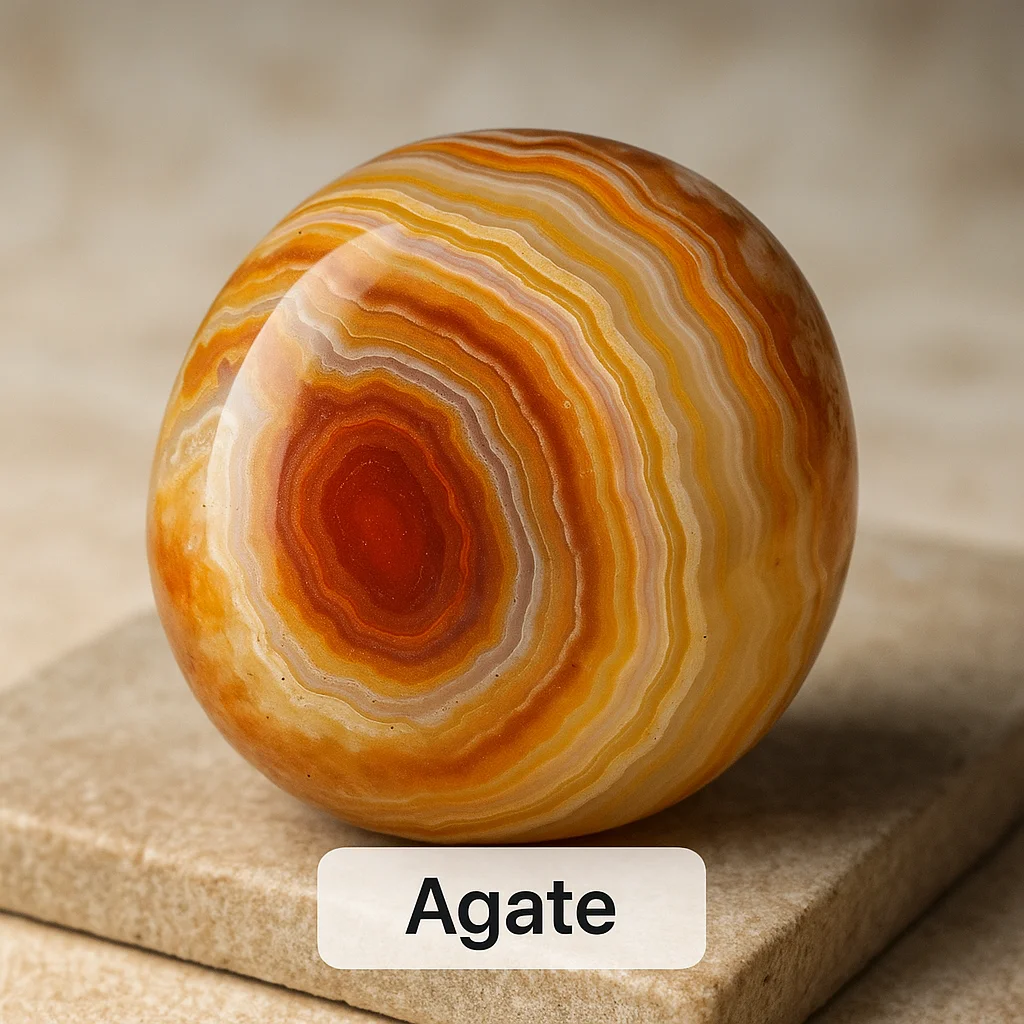
Known for its stunning bands of color, agate has been adored by cultures around the world for centuries. It’s not considered one of the traditional birthstones, but it holds its significance in modern jewelry due to its aesthetic appeal and durability. Agate is often used in making pendants, cabochons, and beads.
In this article, we’ll explore agate’s appearance, properties, origins, and formation. We’ll also provide information on its care, cultural significance, and buying tips. Whether you’re a novice or a seasoned collector, understanding agate can enhance your appreciation of this unique stone.
🌍 Where It Comes From
Agate forms in a variety of geological environments but is most commonly found in volcanic rock cavities, where silica-rich fluids fill the spaces and slowly crystallize into layers of quartz. This process creates the distinctive banding that agate is known for. Igneous rocks, like basalt, are typical hosts for agate formations.
Agate is found globally, but some regions are particularly renowned for their unique agate varieties. Brazil is a major producer, known for its beautiful and diverse agate stones. Other notable sources include parts of Africa, India, and the United States, especially in the state of Oregon, which is famous for its "thunderegg" formations, a type of nodular agate.
The origin of agate can influence its color and quality. For instance, Botswana agate is prized for its intricate banding patterns and pastel hues, while Mexican agate varieties often contain vibrant reds and oranges. Knowing the origin can help collectors and buyers appreciate the stone’s unique characteristics.
🔬 How It Forms
Agate formation begins with the cooling of molten rock. As volcanic gases create voids in the solidified lava, these cavities become ideal spaces for agate to develop. Over time, silica-rich water percolates through the rock, filling these voids. The dissolved silica then crystallizes layer by layer, forming the beautiful bands characteristic of agate.
The colors within agate are generally caused by trace elements and minerals such as iron, manganese, or chromium, which are present in the fluid during formation. These elements can create a wide range of colors, from the bright reds of carnelian agate to the deep blues of lace agate.
Agate typically appears as nodules or geodes—hollow rock formations that are filled with layers of crystal. When these are cut or polished, the resulting stone reveals its striking banded patterns, making it highly valued for decorative and jewelry purposes.
🎨 Color and Look
Agate is celebrated for its variety of colors and intricate patterns. Common colors include stripes or swirls of white, red, orange, yellow, and brown, although green, blue, and even black agates are also found. The patterns often resemble landscapes or abstract paintings, adding to their allure.
The stone’s appearance can be significantly affected by how it is cut and polished. A well-cut agate will display its colors and patterns to greatest effect, and a high polish can enhance the stone’s natural luster. Lighting conditions can also influence its appearance; for instance, backlighting can make the stone’s colors more vibrant.
In some cases, agates are treated to enhance their appearance. Dyeing is a common practice to intensify color, but the natural beauty of untreated agates is often preferred by collectors. Heat treatments might also be used to deepen colors, but these processes should be disclosed to buyers.
🧪 Properties That Matter
Agate has a Mohs hardness of 6.5 to 7, which means it is relatively resistant to scratches and suitable for a variety of jewelry applications. Its toughness makes it less prone to chipping compared to many other gemstones, offering good durability for daily wear conditions.
Unlike minerals with cleavage, agate has a conchoidal fracture, meaning it breaks with a smooth, curved surface, much like glass. This property, combined with its hardness, makes agate a suitable material for carvings and small sculptures, as well as jewelry.
The stone’s luster is usually described as waxy or dull, and due to its microcrystalline nature, agate is typically opaque, though some varieties can be translucent. These properties make agate a versatile choice for many types of jewelry, from rings to pendants to beads.
✨ Meanings, Birthstones, and Culture
Throughout history, agate has been associated with a number of symbolic meanings. It has traditionally been valued for bringing balance and harmony, and in some cultures, it is believed to protect against curses and bad luck. While these are cultural traditions rather than scientifically proven benefits, agate’s continued popularity attests to its revered status in folklore.
Although agate is not one of the traditional birthstones, it is often associated with the zodiac sign Gemini and is sometimes linked to the element of earth in spiritual practices. In modern jewelry traditions, agate is a staple due to its diverse appearances and durability.
Agate’s long-standing cultural presence demonstrates its timeless appeal. Whether worn as an amulet or admired for its beauty, this storied stone continues to captivate admirers worldwide.
🧼 Care and Cleaning
Agate is relatively easy to care for, making it a low-maintenance option for jewelry enthusiasts. Cleaning should be done with lukewarm water and mild soap, gently rubbed with a soft cloth. Harsh chemicals and prolonged soaking should be avoided as they may damage treated agates.
When storing agate jewelry, it is advisable to keep pieces separate to prevent scratching. While agate is not as soft as other gemstones like opal or turquoise, avoiding abrasive activities will help maintain its polish. It is also best to keep agate out of direct sunlight for prolonged periods to prevent potential color fading.
By following these simple care guidelines, your agate pieces can remain as captivating as the day they were acquired, allowing you to enjoy their unique beauty for years to come.
🛒 Buying Tips and What to Check
The value of agate is influenced by several factors, including color, cut, clarity, and origin. Intense and unique color patterns generally command higher prices, and precision cutting that maximizes the visual appeal is often desirable. Clarity isn't as critical for opaque agates but is important for translucent varieties.
In the market, be sure to ask about potential treatments and use reputable sellers to ensure authenticity. For high-value pieces, a lab report can confirm natural versus treated status. These reports can verify several aspects of the stone, including whether any enhancements have been made.
When buying agate online, consider seller reputation, photographic evidence of the stone, and a clear return policy. These steps, along with disclosure about any treatments, will help you make an informed purchase and ensure satisfaction with your new piece.
⚠️ Real vs Fake and Common Look-Alikes
Agate can come in natural and synthetic forms. Natural agate forms over millions of years, while synthetic versions are manufactured in laboratories. Synthetic agates are not "fake" but are created using human-made processes to replicate natural conditions.
Imitation agates are also common, often made from glass or plastic, and can be distinguished by their lack of natural banding. Assembled stones like doublets or triplets might use slices of agate adhered to other materials, presenting another look-alike.
Professional gemological testing is the best way to confirm authenticity, as visual inspection alone cannot reliably differentiate natural from synthetic or imitation stones.
❓ Common Questions and Misconceptions
Is it a mineral or a rock? Agate is a rock, composed primarily of the mineral quartz.
Is it a birthstone? Agate is not traditionally a birthstone but holds significance in alternative traditions.
Will it scratch easily? With a Mohs hardness of 6.5-7, agate is relatively scratch-resistant.
Can it go in water? Yes, agate can be safely cleaned with water, but avoid extended soaking.
Does color fade in sunlight? Prolonged exposure to direct sunlight might fade some dyed agates.
What treatments are common? Dyeing and heat treatments are common; always ask for disclosure.
Is lab-grown "fake"? No, lab-grown agate is a synthetic but genuine form of the stone.
How do I store it safely? Store separately in a soft cloth or pouch to avoid scratches.
Do inclusions always lower value? Not always; some inclusions can add character to the stone.
How do I pick a good one for jewelry? Look for vibrant colors, unique patterns, and quality cuts.
📌 Summary
- Agate is a variety of chalcedony, a type of quartz.
- Typically displays bands of multiple colors.
- Forms in volcanic rock cavities via silica-rich fluids.
- Mohs hardness of 6.5-7 makes it durable for wear.
- Treatments like dyeing can affect appearance.
- Clean with gentle soap and water; store to avoid scratches.
- Versatile for jewelry: pendants, rings, earrings.
- Common look-alikes include imitations made of glass or plastic.
- Authenticity best confirmed by professional testing.
- Buying tips: check for treatments, seller reputation, return policy.
- Associated with harmony; linked culturally to Gemini.
- Renowned for its beautiful patterns and diverse colors.