💎 Amethyst
🪨 What It Is
Amethyst is a popular and widely recognized gemstone known for its beautiful purple hue. It is a variety of quartz, which is one of the most common minerals found on Earth. Amethyst stands out due to its vibrant color, making it a favorite choice for jewelry.
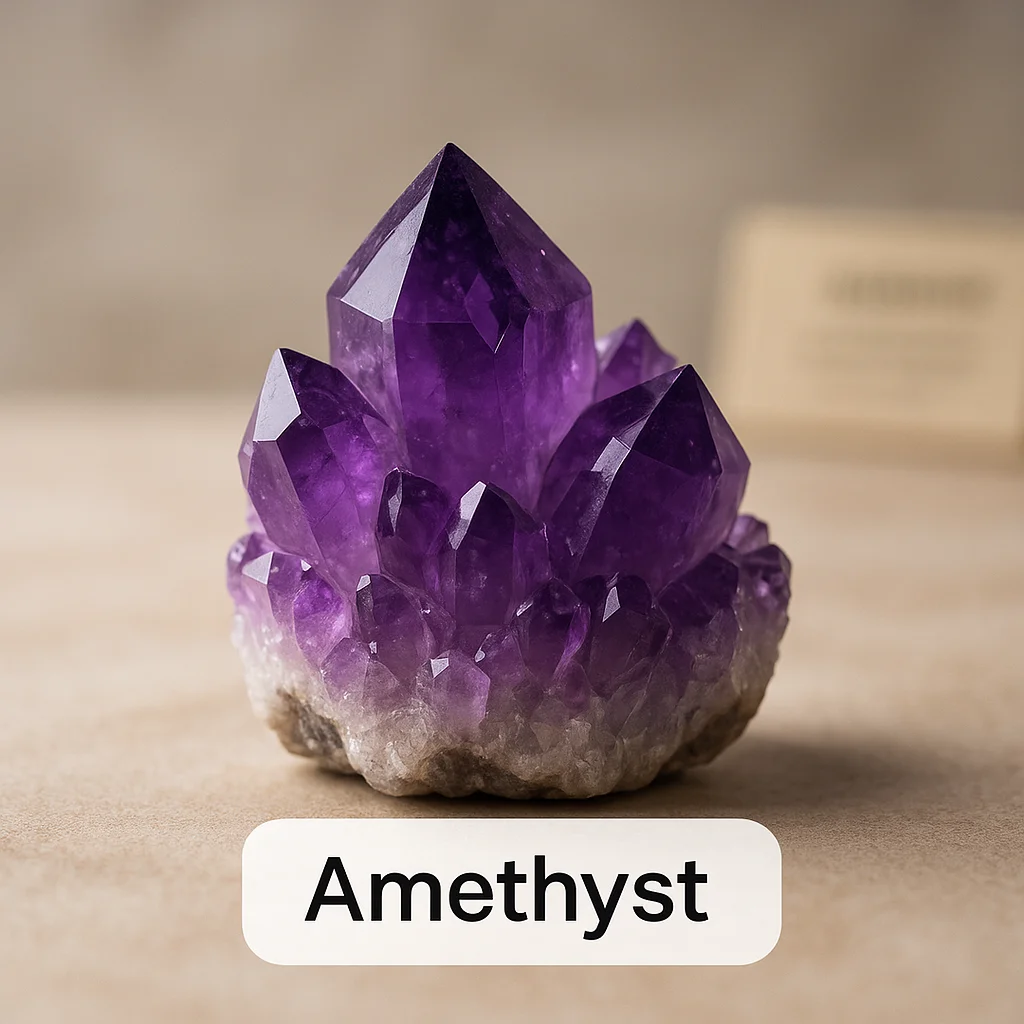
This gemstone is recognized as the birthstone for the month of February, which ties it to certain cultural and artistic traditions. Beginners exploring the world of gemstones will find that amethyst offers an intriguing blend of visual appeal, cultural significance, and practical utility.
This article will guide you through the essential aspects of amethyst, including its appearance, properties, formation, origins, value, care, and tips for buying.
🌍 Where It Comes From
Amethyst naturally occurs in a variety of geological settings, predominantly in igneous and metamorphic rocks. It can be found in volcanic rock formations and is often associated with geodes — hollow stones lined with crystals.
The most renowned sources of high-quality amethyst are Brazil and Uruguay, where large deposits have been discovered. South American amethyst is highly esteemed in the jewelry market for its deep, consistent purple hue.
Other significant sources include parts of Africa, such as Zambia, where the stones are known for their bluish-purple color. The origin of amethyst can influence its color, clarity, and price, making it an important consideration for collectors and jewelers alike.
🔬 How It Forms
Amethyst forms through the mineralization process in which silica-rich liquid infiltrates rock cavities. Over time, this solution cools and allows quartz crystals to precipitate out within these cavities.
The iconic purple hue of amethyst is due to the presence of iron impurities within the quartz structure, combined with natural irradiation during formation. These factors lead to the diverse shades of purple ranging from light lavender to deep violet.
Commonly found in geodes or as clusters of crystal points, amethyst crystals exhibit a hexagonal crystal habit typical of quartz minerals.
🎨 Color and Look
Amethyst is most admired for its stunning range of purple colors, from pale lilac to deep, royal purple. This variety in color results from variations in iron content and exposure to radiation over geological time.
The appearance of amethyst can be significantly affected by factors such as its cut, polish, and the clarity of the stone. A well-cut amethyst with a high polish displays a captivating luster.
Some amethysts may undergo heat treatment to enhance their color, though this is typically noted in the gem trade. These treatments are accepted practice but should be disclosed to buyers.
🧪 Properties That Matter
Amethyst has a Mohs hardness of 7, which provides good scratch resistance, making it suitable for various types of jewelry. However, it should still be handled with care to avoid chipping. Amethyst lacks cleavage, a property that refers to how a mineral breaks along specific planes, but it can fracture if subjected to excessive force.
The gemstone exhibits a vitreous luster, meaning it has a glass-like quality when polished. Its transparency ranges from transparent to translucent, which contributes to its visual appeal in jewelry.
Due to these properties, amethyst is a durable choice for jewelry that can be worn daily, such as rings, pendants, and earrings, as long as proper care is taken.
✨ Meanings, Birthstones, and Culture
Throughout history, amethyst has been associated with various cultural meanings and symbolism. It is traditionally linked to qualities such as calmness, clarity, and protection against intoxication, though these are based on folklore rather than scientific proof.
As the birthstone for February, amethyst is associated with qualities believed to be embodied by those born in this month. It is also often featured in modern jewelry as a symbol of spiritual growth and protection.
This cultural significance enhances the gemstone's appeal, often making it a cherished gift or personal talisman.
🧼 Care and Cleaning
Proper care and cleaning of amethyst are essential to maintaining its beauty and longevity. Use gentle soap and water as the default cleaning method, and avoid harsh chemicals that could dull or damage the stone.
Use a soft cloth to polish the gem, and avoid exposing it to extreme heat and sudden temperature changes, which can cause fractures. Long soaking should also be avoided to prevent potential weakening.
For storage, keep amethyst away from other harder gemstones to prevent scratches. A fabric-lined jewelry box or pouch is ideal for safekeeping.
🛒 Buying Tips and What to Check
When buying amethyst, consider factors such as color, clarity, cut, and carat size. The most valued amethysts exhibit a deep, vivid purple hue with little to no visible inclusions.
Always inquire about any treatments the stone may have undergone and request a gemological report for more expensive purchases. These reports can confirm the gemstone's natural origin and detail its properties.
When shopping online, ensure that the seller provides clear photographs, a return policy, and full disclosure of the gemstone's characteristics. Check the seller's reputation through customer reviews.
⚠️ Real vs Fake and Common Look-Alikes
Amethyst can be found in natural, synthetic, and imitation forms. Natural amethyst is created by geological processes, while synthetic amethyst is grown in a laboratory with the same chemical properties.
Imitation amethyst may be glass, plastic, or composite materials designed to mimic the appearance of real amethyst. Additionally, assembled stones, such as doublets and triplets, are used to imitate valuable stones.
Common look-alikes include stones like purple fluorite and synthetic quartz. Reliable identification should be done by professional gemologists using advanced testing methods.
❓ Common Questions and Misconceptions
Is it a mineral or a rock? Amethyst is a mineral, specifically a variety of quartz.
Is it a birthstone? Yes, amethyst is the birthstone for February.
Will it scratch easily? Amethyst has a Mohs hardness of 7, making it resistant to scratches.
Can it go in water? Brief exposure to water is generally safe, but avoid long soaking.
Does color fade in sunlight? Yes, prolonged exposure to sunlight can cause amethyst to fade.
What treatments are common? Heat treatment is sometimes used to enhance color.
Is lab-grown 'fake'? Lab-grown amethyst is not fake, as it shares the same chemical composition as natural amethyst.
How do I store it safely? Store amethyst separately from harder gemstones in a soft cloth or fabric-lined box.
Do inclusions always lower value? Not necessarily; minor inclusions may not significantly impact value but should be considered.
How do I pick a good one for jewelry? Look for vibrant color, clarity, a precise cut, and ensure it is suitable for the intended jewelry use.
📌 Summary
- Amethyst is a variety of quartz known for its purple color.
- Common colors range from light lavender to deep purple.
- Forms in cavities through silica-rich solutions and natural irradiation.
- Mohs hardness of 7 provides good scratch resistance for jewelry.
- Heat treatments can enhance color and should be disclosed.
- Clean with gentle soap and water, avoid harsh chemicals or heat.
- Ideal for rings, pendants, and earrings with proper care.
- Common look-alikes include purple fluorite and glass.
- Authenticity often confirmed through lab reports and expert evaluation.
- Checklist for online purchases: clear photos, return policy, seller reviews.
- Associated with February as a traditional birthstone.
- Amethyst's enduring appeal comes from its beauty, durability, and cultural significance.