💎 Diamond
🪨 What It Is
Diamonds are one of the most popular gemstones in the world, known for their unparalleled brilliance and hardness. They are a crystalline form of carbon and are considered a mineral due to their natural occurrence and chemical composition. Because of their beauty and durability, diamonds are a favorite in jewelry, particularly for engagement rings.
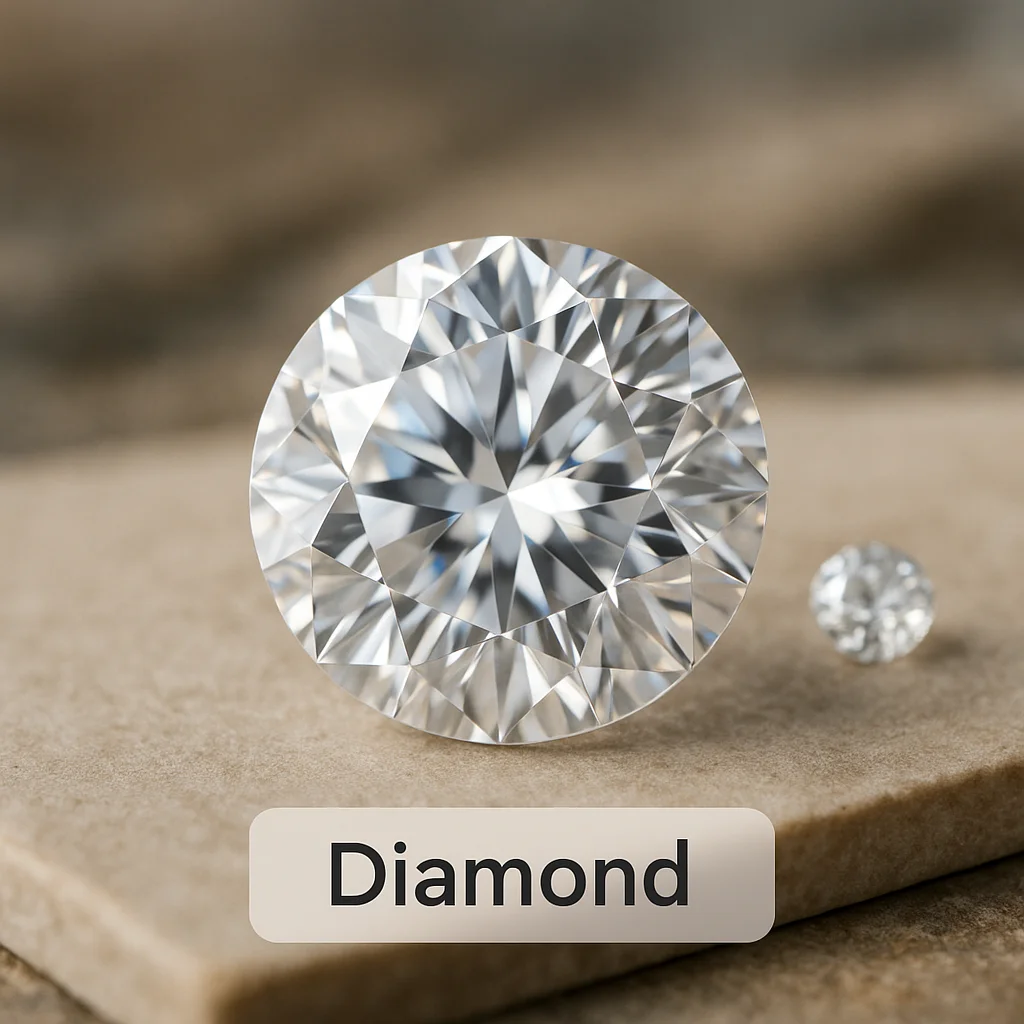
Diamonds are also the traditional birthstone for the month of April, and they have long been associated with various cultural beliefs and symbolism, such as strength and eternal love. This article will explore the appearance, properties, origin, care, and buying tips associated with diamonds, arming you with the knowledge to appreciate and choose these precious stones wisely.
In addition to being prized for jewelry, diamonds have unique physical properties that make them invaluable in industrial applications. However, this guide will focus primarily on diamonds as gemstones, including their aesthetic qualities and significance in jewelry.
🌍 Where It Comes From
Diamonds are typically found deep within the Earth in kimberlite and lamproite pipes, which are igneous rocks formed from volcanic activity. These rocks bring diamonds to the Earth's surface, where they can be mined. Diamonds may also be found in river and ocean shore sediment deposits, known as alluvial deposits, resulting from erosion and natural transportation.
Well-known diamond-producing regions include parts of Africa, such as Botswana, South Africa, and Namibia. Other important sources are found in parts of Russia and Canada. The origin of a diamond can affect its color, clarity, and even its market reputation. For instance, certain regions are known for producing diamonds with particular colors or higher clarity stones.
While the origin does not necessarily determine a diamond's quality, it can play a role in its perceived value. Diamonds extracted from certain regions, such as Canadian diamonds, are sometimes considered more ethically sourced and environmentally responsible, impacting market preference.
🔬 How It Forms
Diamonds form through a natural process occurring deep within the Earth's mantle, under extremely high pressure and temperature. Carbon atoms bond in a crystal lattice structure, resulting in a material that is incredibly strong. This formation requires conditions only found at depths of about 150 to 200 kilometers beneath the Earth's surface.
Diamonds get to the surface through volcanic eruptions that propel them along with the volcanic material. Over millions of years, natural erosion processes can spread diamonds from these volcanic pipes into alluvial deposits found in riverbeds and ocean shores.
Unlike some other gemstones, diamonds are typically colorless. However, trace elements or structural anomalies can cause diamonds to have a range of colors, such as yellow, blue, green, and pink. These colored diamonds, sometimes referred to as "fancy diamonds," are rare and often market at a premium.
🎨 Color and Look
Diamonds are best known for their clear, colorless appearance, yet they can come in a spectrum of colors, including yellow, blue, green, and even pink, depending on the presence of trace elements or structural defects. For example, boron can give diamonds a blue hue, while nitrogen may result in yellow diamonds.
The cut of a diamond is crucial for enhancing its sparkle and brilliance. A well-cut diamond will reflect light in a way that maximizes its natural brilliance, while a poorly cut diamond may appear dull. The clarity and polish can also affect the appearance, with higher clarity stones showcasing minimal inclusions and blemishes.
Common treatments to enhance diamond appearance include laser drilling to remove inclusions and fracture filling to improve clarity. While these treatments can make a diamond look more appealing, they may also affect its value. Buyers should inquire about any treatments a diamond has undergone before purchasing.
🧪 Properties That Matter
Diamonds are renowned for their exceptional hardness, having the highest rank of 10 on the Mohs scale. This means they are highly resistant to scratching, making them ideal for everyday wear, especially in rings and other jewelry subjected to potential abrasions.
Despite their hardness, diamonds have perfect cleavage, meaning they can split along specific planes if struck. This requires careful handling during cutting and setting to avoid chipping or breaking the stone. Diamonds also have a brilliant luster, making them highly prized for their eye-catching sparkle.
The refractive index of diamonds contributes to their brilliance by causing light to bend and scatter within the gemstone, producing the characteristic sparkle admired in well-cut diamonds. Their transparency further enhances this sparkle, making diamonds a popular choice for dazzling jewelry pieces.
✨ Meanings, Birthstones, and Culture
Throughout history, diamonds have been traditionally associated with love, purity, and strength. They are believed to symbolize eternal love and commitment, making them the quintessential choice for engagement rings. Because of their association with durability, they are often seen as representations of indestructibility and endurance.
Diamonds are the birthstone for April and are thought to bring balance, clarity, and abundance to those born in this month. As with all gemstones, interpretations of their effects vary widely, and there is no scientific evidence to support mystical or healing properties.
Despite this, diamonds remain a popular cultural symbol, frequently featured in literature, music, and film. Their timeless allure continues to captivate and inspire people worldwide.
🧼 Care and Cleaning
Caring for diamonds is relatively straightforward, as their hardness makes them less susceptible to damage. Regular cleaning with warm, soapy water and a soft brush can remove any oils and dirt that accumulate during wear. Rinse thoroughly and dry with a soft cloth to maintain their sparkle.
While diamonds are durable, it is advisable to avoid exposure to harsh chemicals and extreme temperature changes, as these can affect the metal settings rather than the diamond itself. Although soaking in water is generally safe, prolonged immersion in chemicals should be avoided.
Store diamonds separately to prevent them from scratching other jewelry. A soft pouch or a lined jewelry box with compartments ensures they remain free from damage when not being worn.
🛒 Buying Tips and What to Check
When selecting a diamond, focus on the four Cs: color, clarity, cut, and carat weight. Each of these factors plays a crucial role in determining the diamond's appearance and value. Well-cut diamonds with high clarity and color grades generally have higher market values.
Always ask for a gemological report for high-value stones, as it can provide a detailed analysis of your diamond's characteristics. These reports do not assess value but provide critical information for making an informed purchase.
If you are buying online, ensure that the seller has a reliable return policy and a good reputation. Thoroughly inspect the photos, and make sure any treatments to the diamond are fully disclosed before you make a purchase.
⚠️ Real vs Fake and Common Look-Alikes
Natural diamonds can be distinguished from synthetic or lab-grown diamonds by their unique formation patterns. Synthetic diamonds have the same chemical composition but form through a controlled process. They are not "fake," but often less valued due to their availability.
Imitation diamonds, such as cubic zirconia and moissanite, can look very similar but differ in hardness and refractive index. These stones are often used as affordable alternatives. Assembled stones like doublets and triplets consist of multiple layers, with only the top layer simulating a diamond's appearance.
Professional gemologists use advanced testing to verify a diamond's authenticity. Home testing methods can be inaccurate and risky, so it is best to leave the identification to certified experts.
❓ Common Questions and Misconceptions
Is it a mineral or a rock? Diamonds are minerals, a crystalline form of carbon.
Is it a birthstone? Yes, it is the birthstone for April.
Will it scratch easily? No, diamonds are highly resistant to scratching, ranking 10 on the Mohs hardness scale.
Can it go in water? Yes, but avoid prolonged exposure to chemicals in treated water.
Does color fade in sunlight? Diamonds do not fade in sunlight.
What treatments are common? Laser drilling and fracture filling are common to enhance appearance.
Is lab-grown 'fake'? No, lab-grown diamonds have the same chemical structure but are manufactured rather than mined.
How do I store it safely? Store separately in a soft pouch or lined jewelry box.
Do inclusions always lower value? Not always, but fewer inclusions generally mean higher value.
How do I pick a good one for jewelry? Consider the four Cs and always check for certification.
📌 Summary
- Diamonds are a crystalline form of carbon, known for their hardness.
- They are typically colorless but can come in various hues.
- Formed deep in the Earth's mantle under high pressure and heat.
- Features high hardness but needs careful handling due to perfect cleavage.
- Common treatments include laser drilling and fracture filling.
- Clean with gentle soap and water; avoid harsh chemicals.
- Ideal for daily-wear rings due to durability; also popular in pendants and earrings.
- Common look-alikes include cubic zirconia and moissanite.
- Authenticity confirmed through professional testing.
- Ensure disclosures and gemological reports when buying.
- April birthstone, traditionally linked with love and strength.
- The enduring allure of a diamond is attributed to its unmatched brilliance and symbolic value.