💎 Garnet
🪨 What It Is
Garnet is a group of silicate minerals that have been used for thousands of years as both gemstones and abrasives. Known for their rich variety of colors, they appeal to jewelry lovers and collectors alike. As a popular birthstone, garnet holds a significant place in cultural and modern jewelry traditions.
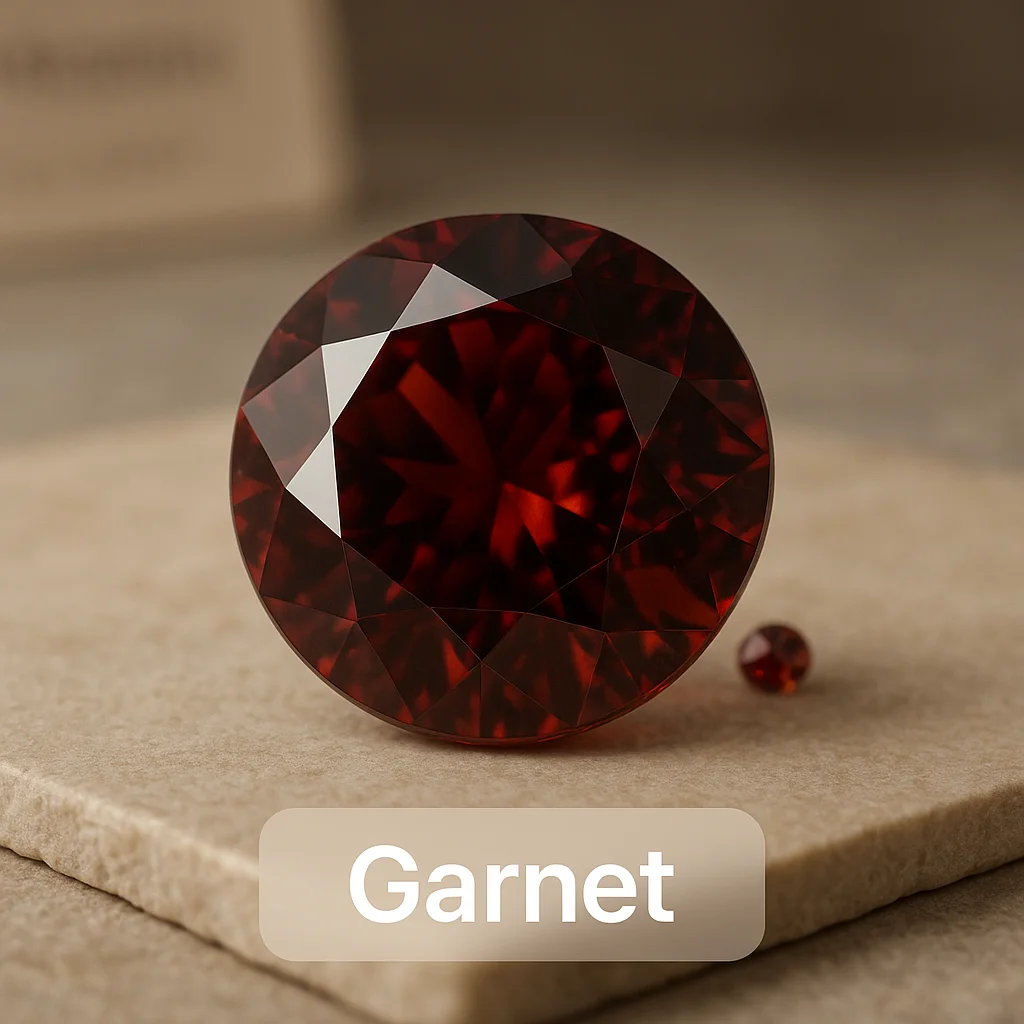
In this article, you'll discover garnet's intriguing attributes such as its appearance, formation process, and care instructions. You'll also gain insights into the origins, properties, cultural significance, and practical guidance on buying and identifying garnet.
Garnet's appeal lies in its diversity—available in virtually every color except blue, it offers a scintillating and versatile option for jewelry enthusiasts. Its properties are explored in great detail to help you appreciate its beauty and durability.
🌍 Where It Comes From
Garnets occur in a variety of geological settings, most frequently in metamorphic rocks formed under high temperature and pressure. They are also found in some igneous rocks and occasionally in sedimentary deposits. These minerals often appear as dodecahedral crystals or grainy clusters.
Historically, the largest and most famous garnet-producing regions include parts of Africa, such as Tanzania and Madagascar, as well as India and Sri Lanka in Asia. Their location can influence their color and market desirability. For example, Tsavorite, a green garnet variant, is famed for its origin in East Africa.
The origin of a garnet can affect its color, clarity, and reputation in the market. While location-specific factors might enhance the gem's appeal, experts typically judge garnet on its individual characteristics such as brilliance and purity rather than on origin alone.
🔬 How It Forms
Garnet forms through geological processes involving intense heat and pressure over numerous years. This process causes elements like aluminum, iron, magnesium, and calcium to crystallize into garnet's distinctive structure.
The color variations in garnet are largely attributed to the trace elements present during formation. For instance, iron imparts red hues, while manganese and chromium can result in vibrant greens and oranges. The diversity in color and type makes garnet particularly unique among gemstones.
The crystal habit of garnet includes well-formed dodecahedrons and trapezohedrons often embedded within host rock. These shapes can be noticed in rough specimens but are enhanced by proper cutting and polishing.
🎨 Color and Look
Garnet comes in a spectrum of hues, from the deep red known as "almandine" to the lush green of "tsavorite." While red is most traditionally associated with garnet, varieties can exhibit oranges, pinks, purples, and even color-change effects under different lights.
The gemstone's appearance is influenced by its cut, clarity, and polish. A skillful cut can enhance a garnet's luster and facets, creating a brilliant shimmer. Clarity is also important, as internal inclusions can impact the perceived quality of the stone.
Common garnet treatments are generally minimal; however, oiling can enhance luster. It's noteworthy that unlike other gems, garnet rarely undergoes treatments such as heat, irradiation, or dyeing. This makes untreated garnet a sought-after item for collectors.
🧪 Properties That Matter
On the Mohs scale of hardness, garnet scores between 6.5 and 7.5, indicating a moderate ability to resist scratching. This range makes it suitable for everyday wear in rings and bracelets, although some care is advised.
Garnet's toughness is considered fair to good, but it lacks cleavage. Cleavage refers to how a mineral breaks along flat planes, so the absence of this means garnet typically fractures along irregular surfaces, impacting its durability.
Garnets exhibit a vitreous luster and can range from transparent to opaque. This means garnet can gleam brightly when polished, ideal for jewelry. Its appearance can vary greatly depending on the amount of light and angle of viewing.
✨ Meanings, Birthstones, and Culture
In cultural contexts, garnet is traditionally associated with protection, strength, and vitality. As the birthstone for January, it is celebrated for its grounding energy and rich symbolism.
Across cultures, garnet has been used to symbolize diverse ideals, from love and friendship to safe travels. While these meanings are not scientifically proven, they add depth to the stone's allure in both historical and modern settings.
As a staple in contemporary jewelry, garnets are chosen not only for their vibrant color and brilliance but also for their symbolic meanings, making them ideal for personalized gifts and bespoke jewelry pieces.
🧼 Care and Cleaning
To maintain the beauty of garnet, gentle cleaning with mild soap and lukewarm water is recommended. Avoid abrasive cleaners and harsh chemicals to prevent surface damage.
Use a soft cloth to gently dry the stone and ensure it is stored in a fabric-lined box or away from harder gemstones to minimize scratching. Garnet should not experience extreme temperature changes, as this could compromise its integrity.
Avoid prolonged water exposure, particularly in hot water, to maintain the stone's natural sheen. Regular cleaning and careful storage will help preserve garnet's luster for years to come.
🛒 Buying Tips and What to Check
When purchasing garnet, consider the four Cs: color, clarity, cut, and carat size. Color is the most crucial factor, with vivid, saturated hues generally being more prized.
Inquire about any treatments the stone may have undergone. For high-value purchases, request an independent gemological report to confirm authenticity and details such as natural vs synthetic origins.
When buying online, check for detailed photos, seller reputation, and a clear return policy. Confirm gemstone disclosures and avoid sellers that do not provide transparency about the stone's attributes.
⚠️ Real vs Fake and Common Look-Alikes
Garnet can be natural, synthetic, or imitation. Natural garnets are mined from the earth, while synthetic garnets are lab-grown with identical chemical compositions.
Imitation garnets may be fashioned from glass, plastic, or composite materials. Assembled stones, like doublets or triplets, can imitate garnet's look by layering materials.
To ensure authenticity, professional gemological testing is essential, and home tests are often unreliable and potentially damaging to the stone.
❓ Common Questions and Misconceptions
Is it a mineral or a rock? Garnet is a mineral group.
Is it a birthstone? Yes, garnet is the birthstone for January.
Will it scratch easily? Garnet has a moderate hardness, making it resistant to everyday scratches.
Can it go in water? Brief exposure to water is fine, but avoid long soaks.
Does color fade in sunlight? Generally no, but prolonged exposure may dull the surface.
What treatments are common? Garnets are typically untreated; oiling may enhance luster.
Is lab-grown 'fake'? Lab-grown garnets aren't fake; they have the same chemical makeup as natural stones.
How do I store it safely? Store separately in fabric-lined containers to avoid scratches.
Do inclusions always lower value? Not always; they need to be evaluated in context with other factors.
How do I pick a good one for jewelry? Look for vivid color, good clarity, and an expert cut.
📌 Summary
- Garnet is a group of minerals, serving as a January birthstone and popular jewelry choice.
- Comes in various colors, mainly red, with greens, oranges, and purples.
- Forms under heat/pressure; colored by trace elements like iron or manganese.
- Moderate hardness and fair to good toughness make it suitable for daily wear.
- Usually untreated, but some may be oiled for enhanced luster.
- Clean with soap/water; store carefully to prevent scratches and damage.
- Ideal for rings, necklaces, and earrings due to its diverse color range.
- Can resemble other gems but is best identified by professional testing.
- Lab reports help confirm authenticity and quality details.
- Checklist for buying: verify color, clarity, and treatment disclosures.
- Widely linked to protection and vitality, garnet is treasured in many cultures.
- A captivating and versatile gemstone, garnet continues to enchant wearers worldwide.