💎 Jade
🪨 What It Is
Jade is a gemstone recognized for its rich cultural significance and striking appearance. There are two distinct minerals that are collectively known as jade: nephrite and jadeite. Both share similar physical properties and are valued in jewelry and decorative items. Known for its toughness, jade is often used in intricate carvings and is enjoyed worldwide as a timeless adornment.
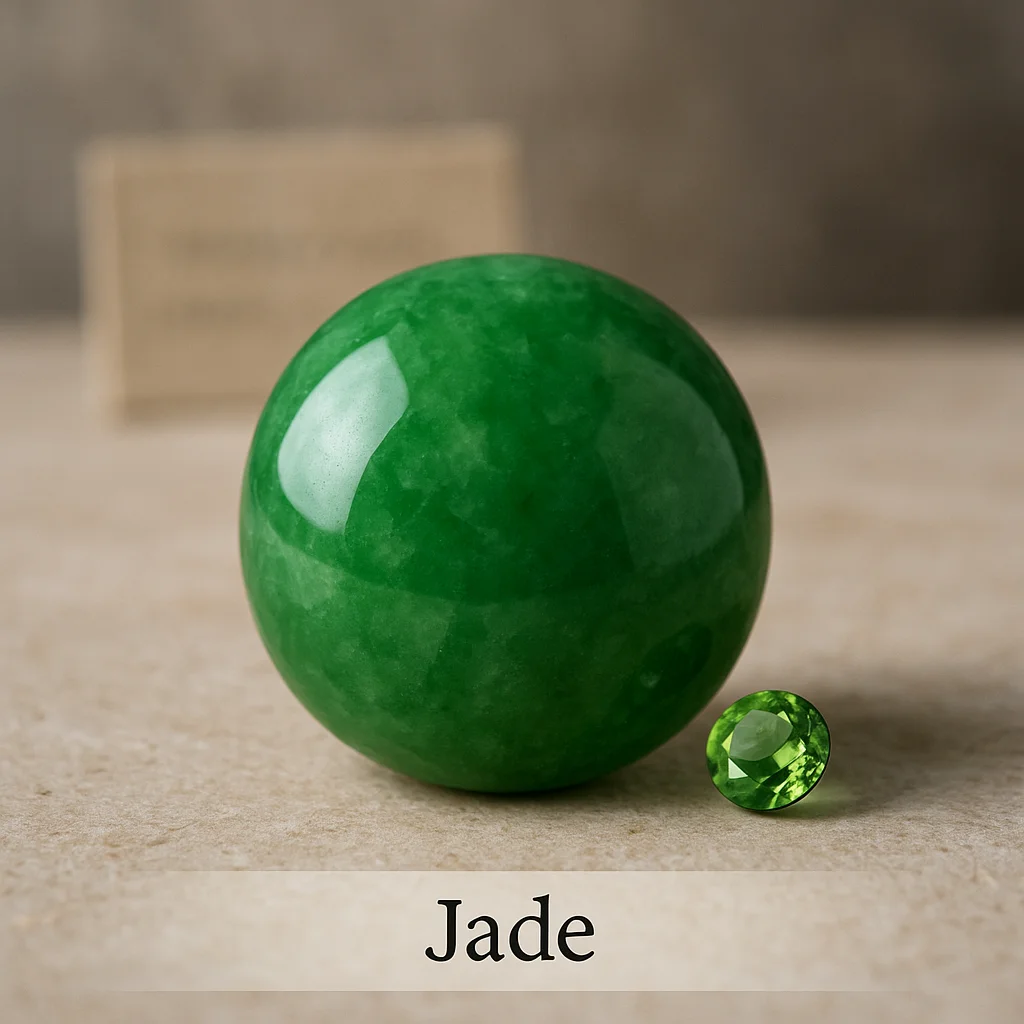
Jade is a popular choice in jewelry and is often found in pieces like rings, pendants, and bracelets. It is also considered an influential cultural symbol and has been used for centuries in various art forms and ceremonial objects, notably in Asia and Central America. In addition to its aesthetic appeal, jade has captivated people with its history and the meanings attributed to it.
This article will guide you through understanding its appearance, properties, origin, value, care, and tips for buying. You will also learn about its significance in various cultures and how true jade can be distinguished from imitations and other similar gemstones.
🌍 Where It Comes From
Jade occurs naturally in a variety of geological settings, predominantly in metamorphic rocks. Nephrite, the most common form of jade, is typically found in regions that have undergone significant geological changes, like mountain-building episodes, which subject rocks to high pressure and heat. Jadeite is formed under similar conditions, but it is less common than nephrite.
Jade is mined in several parts of the world, with significant deposits found in countries like Myanmar, Canada, New Zealand, and parts of China. Myanmar is renowned for its jadeite production, which is prized for its rich green color often called "imperial jade." In contrast, nephrite is more commonly found in regions like British Columbia, Canada, and the Xinjiang province in China.
The origin of jade can influence its value. For example, jadeite from Myanmar is highly sought after, while nephrite from China is valued for its historical significance. The geological origin can affect both the appearance and market perception of jade.
🔬 How It Forms
The formation of jade involves complex geological processes that include high pressure, heat, and time. Nephrite is primarily composed of a mineral called actinolite, while jadeite is a jade-like mineral from the pyroxene group. Both minerals form in metamorphic rocks subjected to tectonic activity.
During metamorphism, the necessary mineral components are brought together by circulating fluids in the Earth's crust, ultimately crystallizing into the interlocking fibrous structure characteristic of jade, particularly nephrite. Jadeite forms through similar processes, but tends to crystallize more as granular aggregates.
The vivid green color often associated with jadeite is primarily due to the presence of trace amounts of chromium, while iron can contribute to variations in color for both jadeite and nephrite. These trace elements, along with the specific conditions of the stones’ formation environment, impart the beautiful array of colors available in jade.
🎨 Color and Look
Jade is most commonly associated with shades of green, but it can also be found in white, yellow, lavender, and even black. Jadeite is known for its vibrant colors, including the highly prized emerald-green "imperial jade." Nephrite tends to have a creamier appearance, with colors ranging from greens to yellows and browns.
The appearance of jade can be enhanced by cutting and polishing, which bring out its luster. A well-polished jade surface has a waxy to vitreous luster, contributing to its luxurious appearance. The clarity of jade is often influenced by the presence of natural inclusions or surface blemishes.
Common treatments for jade include dyeing to enhance color and impregnation with wax to improve luster. It is important to disclose these treatments during purchasing, as they can impact the stone's value and care requirements.
🧪 Properties That Matter
Jade is valued for its toughness, which measures the ability to resist chipping and breaking. Nephrite, in particular, is renowned for its exceptional toughness, making it suitable for carving intricate designs. The Mohs hardness of jade ranges from 6 to 7, indicating moderate scratch resistance comparable to steel.
The cleavage of jade is not well-defined, meaning it doesn't break along planar surfaces, which further enhances its durability as a gemstone. Instead, jade tends to fracture in a splintery or fibrous manner, contributing to its toughness.
Jade's luster and degree of transparency can vary, but high-quality jadeite has a more vitreous luster, while nephrite displays a more waxy lustre. These properties impact jade's overall appearance and how it reflects light, making it suitable for daily wear in rings or as statement pieces in pendants.
✨ Meanings, Birthstones, and Culture
In various cultures, jade has historically been associated with nobility, durability, and virtue. It is especially significant in Chinese culture, where it symbolizes purity, beauty, and moral integrity. In Central America, jade was seen as a symbol of life and fertility and was often used in ceremonial objects and jewelry.
Although jade is not one of the modern birthstones associated with particular months, it holds a special place in traditional and folk belief systems. It is often connected with harmony and balance in one's life, though these associations are typically seen as cultural symbolism rather than scientifically verified effects.
In contemporary jewelry, jade remains popular for its beauty and historical connections, frequently incorporated into unique designs that highlight its natural colors and patterns.
🧼 Care and Cleaning
To care for jade, it is best to use gentle methods. Clean it with mild soap and water, using a soft cloth to avoid scratches. Avoid harsh chemicals or abrasive cleaners, as these can damage the stone's surface.
Jade is relatively stable under normal conditions, but it is advisable to avoid exposing it to sudden temperature changes or prolonged heat, which can lead to fractures or change in appearance. Do not soak jade for long periods, especially if it has been treated.
Store jade jewelry separately in a soft pouch or lined box to prevent it from being scratched by harder gemstones. Regular gentle cleaning will help maintain its luster and appeal over time.
🛒 Buying Tips and What to Check
When buying jade, factors like color, clarity, cut, and size will influence its value. The intensity and evenness of color are primary determiners of quality, with emerald-green jadeite being among the most sought-after.
Always inquire about any treatments the jade might have undergone, as untreated stones are typically more valuable. For high-value pieces, request a certification report that confirms the stone's authenticity and any treatments.
When purchasing online, ensure you see high-quality images, verify the return policy, and check the seller's reputation. A clear disclosure of jade's qualities and characteristics should be presented before purchase.
⚠️ Real vs Fake and Common Look-Alikes
Genuine jade can be distinguished from synthetic or imitation materials through professional testing. Synthetics are lab-grown stones chemically identical to natural jade, while imitations may include materials like glass or plastic that only mimic jade's appearance.
Common look-alikes include serpentine, aventurine quartz, and even some types of marble dyed to resemble jade. These stones may look similar but have different compositions and properties.
Reliable identification should be done in a professional setting, using techniques like spectroscopy and refractive index testing, rather than relying on unverified home tests.
❓ Common Questions and Misconceptions
Is it a mineral or a rock? Jade is a mineral group consisting of jadeite and nephrite.
Is it a birthstone? Jade is not a traditional birthstone but holds cultural significance.
Will it scratch easily? With a Mohs hardness of 6 to 7, jade is moderately resistant to scratches.
Can it go in water? Yes, but avoid prolonged soaking, especially for treated jade.
Does color fade in sunlight? Prolonged exposure may affect color, so storage in shaded areas is advisable.
What treatments are common? Dying and impregnation with wax are common treatments.
Is lab-grown 'fake'? Lab-grown jade is not natural but chemically identical to genuine jade.
How do I store it safely? Store separately in soft pouches or lined boxes to prevent scratches.
Do inclusions always lower value? Inclusions can affect value but some may add character to the stone.
How do I pick a good one for jewelry? Look for even color, good transparency, and minimal inclusions.
📌 Summary
- Jade consists of two minerals: nephrite and jadeite.
- Typical colors include green, white, yellow, and lavender.
- It forms under high pressure and heat in metamorphic rocks.
- Jade is tough, with moderate scratch resistance and unique luster.
- Common treatments include dyeing and waxing.
- Clean with mild soap and water; avoid harsh chemicals.
- Perfect for rings, pendants, and carvings due to its durability.
- Serpentine and glass often imitate jade's appearance.
- Authenticity requires professional gemological testing.
- Buyers should seek clear disclosures and reports.
- Not a birthstone but rich in cultural significance.
- Known for its historical and cultural significance worldwide.