💎 Labradorite
🪨 What It Is
Labradorite is a captivating mineral known for its unique optical phenomenon called labradorescence. It belongs to the feldspar group and is treasured for its shimmering shades of blue, green, and other colors that appear on top of a gray or dark surface. Labradorite is not a birthstone, but it remains popular in jewelry making due to its distinctive look.
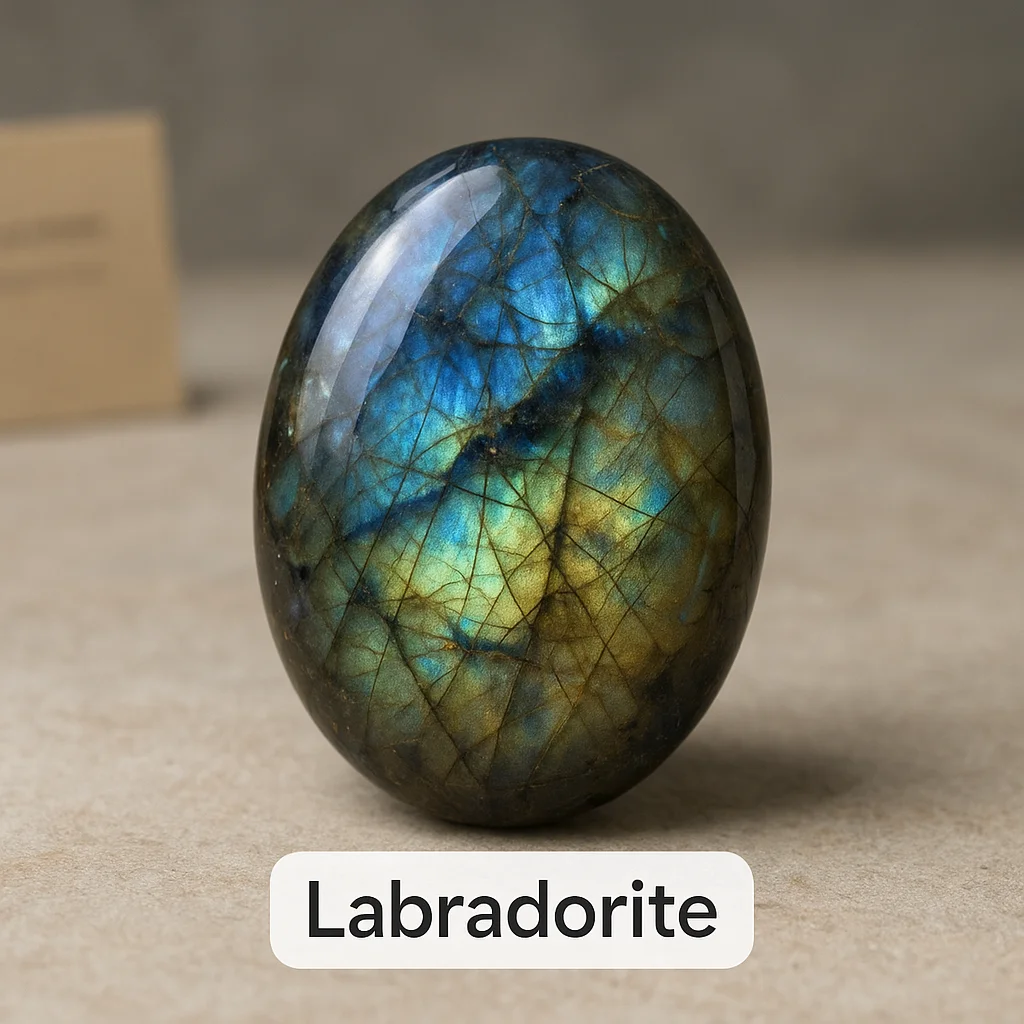
When you're learning about Labradorite, you'll discover its appearance, intriguing optical properties, origin, and how to care for and purchase it wisely. Understanding these aspects will help you appreciate this gem to the fullest and make informed decisions about acquiring it.
Labradorite is often fashioned into cabochons for jewelry. Its mystical appearance makes it a favorite among jewelry designers and enthusiasts who are seeking something unique and visually stunning.
🌍 Where It Comes From
Labradorite is found primarily in igneous rock formations. These geological settings provide the perfect environment for labradorite to develop during the slow cooling of magma. The mineral is commonly associated with dark, coarse-grained rocks called gabbros.
Significant deposits of labradorite have been found in countries such as Canada, Madagascar, Finland, and parts of Russia. The stone is named after the Labrador Peninsula in Canada, where it was first discovered in the 18th century. Each region may produce labradorite with slightly different color ranges and optical effects.
The origin of labradorite can affect its market reputation and value. For example, Labradorite from Finland is known as Spectrolite, notable for its vibrant colors. Buyers may value stones from specific locales based on the intensity and variation of their labradorescence.
🔬 How It Forms
Labradorite forms as molten rock cools and crystallizes under high pressure and heat. This process can occur deep within the Earth’s crust, often in places where tectonic plates interact. As the rock cools, the feldspar crystals, including labradorite, develop layers, which are responsible for its remarkable visual effects.
The crystalline structure of labradorite includes lamellar twinning, which means it has thin, stacked layers. These layers are key to producing the stone’s signature labradorescence. Light enters the stone and reflects off these layers, creating flashes of color.
The colors seen in labradorite are often due to the presence of trace elements, such as iron and copper, and microscopic timing defects that influence the way light interacts with the crystal structure.
🎨 Color and Look
Labradorite is typically gray to dark gray in its basic form but can exhibit a stunning play of colors when viewed from different angles. Common colors include blue, green, orange, yellow, and even hints of pink and purple in some rare stones. This optical illusion is known as labradorescence.
The way Labradorite is cut and polished affects its appearance. Skilled cutting can enhance labradorescence, showcasing its dazzling colors to the fullest. Proper lighting can also bring out the best in a labradorite piece.
Labradorite generally does not undergo treatments to enhance its color or clarity, which means the colors you see are all-natural. However, its optical effects can be diminished if improperly sliced or polished.
🧪 Properties That Matter
Labradorite has a Mohs hardness of about 6 to 6.5, making it relatively resistant to scratches compared to softer stones like opal or pearl but not as robust as sapphire or diamond. This hardness is reasonable for many types of jewelry, although care is needed to avoid scratches.
The stone has a fair level of toughness, meaning it can resist chipping moderately well. Its cleavage, however, is poor, which means it can break if struck with enough force, so handling with care is advisable.
Labradorite exhibits a vitreous to pearly luster, which adds to its visual appeal. The stone is typically opaque, although some translucent specimens can be found. Labradorite’s interplay of colors is its most appealing feature for collectors and jewelry enthusiasts.
✨ Meanings, Birthstones, and Culture
While not a traditional birthstone, labradorite is traditionally associated with various cultural beliefs and folklore. It has long been thought to have mystical properties, with some cultures believing that it brings good fortune or enhances intuition.
In some traditions, labradorite is believed to link to the cosmic realms, often thought of as a magical stone that bridges the earthly and mystical. However, these interpretations are cultural and not supported by scientific evidence.
Modern jewelry designers continue to use labradorite in their creations due to its captivating beauty and the sense of uniqueness it imparts to each piece.
🧼 Care and Cleaning
To keep labradorite looking its best, clean it with gentle soap and water. Use a soft cloth to pat it dry, avoiding abrasive materials that might scratch the stone’s surface. Steer clear of harsh chemicals and ultrasonic cleaners, as they may damage the stone.
Avoid exposing labradorite to excessive heat or rapid temperature changes, which can cause fractures. Never soak labradorite for long periods, as this can weaken the stone.
Store your labradorite pieces separately from harder gemstones to prevent scratching, and consider wrapping them in a soft cloth or placing them in a fabric-lined jewelry box.
🛒 Buying Tips and What to Check
When buying labradorite, important quality factors include the stone’s color play, clarity, and size. Opt for pieces that show vibrant and diverse labradorescence. Clarity refers to the lack of visible inclusions, which can detract from its beauty.
Always ask about any treatments the stone might have undergone. While labradorite is often untreated, confirm this with the seller, especially for high-value stones. Requesting a certification or report from a gemological lab can provide extra assurance.
For online purchases, examine the seller’s reputation, return policy, and the quality of photos provided. Look for detailed images that display the stone's colors clearly, and never hesitate to reach out with questions about authenticity and quality.
⚠️ Real vs Fake and Common Look-Alikes
Natural labradorite can be distinguished from synthetic or imitation stones by expert gemological testing, as these imitations may lack the true depth of color found in natural specimens. Makeup plastic or glass materials are common substitutes.
Assembled stones, like doublets or triplets, might incorporate a thin layer of genuine labradorite with backing materials. These should be disclosed at the point of purchase, as they differ greatly from a fully natural stone.
Common look-alikes include moonstone and opal, which share some visual similarities but can be differentiated by their unique play of color and composition. Professional evaluation can confirm authenticity and clarify doubts.
❓ Common Questions and Misconceptions
Is it a mineral or a rock? Labradorite is a mineral, part of the feldspar group.
Is it a birthstone? No, labradorite is not a traditional birthstone.
Will it scratch easily? It may scratch from harder substances, as it rates 6 to 6.5 on the Mohs scale.
Can it go in water? Yes, briefly, but avoid soaking to prevent weakening.
Does color fade in sunlight? Labradorite's color is stable under normal conditions but excessive exposure should be avoided.
What treatments are common? Labradorite is typically untreated, but confirm with sellers.
Is lab-grown 'fake'? Lab-grown versions lack the natural phenomena of genuine stones but are not entirely fake.
How do I store it safely? Keep labradorite in a soft, fabric-lined box away from harder stones.
Do inclusions always lower value? Visible inclusions can reduce value, but the vibrancy of labradorescence is more critical.
How do I pick a good one for jewelry? Choose stones with strong and varied labradorescence, free from obvious defects.
📌 Summary
- Labradorite is a mineral known for its labradorescence.
- Colors typically range across blue, green, and more.
- Forms in igneous rock settings from cooling magma.
- Hardness of 6-6.5 makes it moderately scratch-resistant.
- Usually untreated; direct inquiry for treatments.
- Clean with gentle soap and water; avoid long soaks.
- Ideal in pendants and earrings, less so in rings.
- Look-alikes include moonstone and opal.
- Professional testing verifies authenticity.
- Buying tips: check color play, seller reputation.
- Valued culturally for mystical associations.
- Remember the interplay of colors is a natural wonder.