💎 Moonstone
🪨 What It Is
Moonstone is a mesmerizing gemstone that belongs to the feldspar mineral group. It is renowned for its enchanting glow, often described as adularescence, which gives it a moon-like appearance. Moonstone has been cherished for centuries and is a popular choice for jewelry due to its unique beauty and ethereal charm.
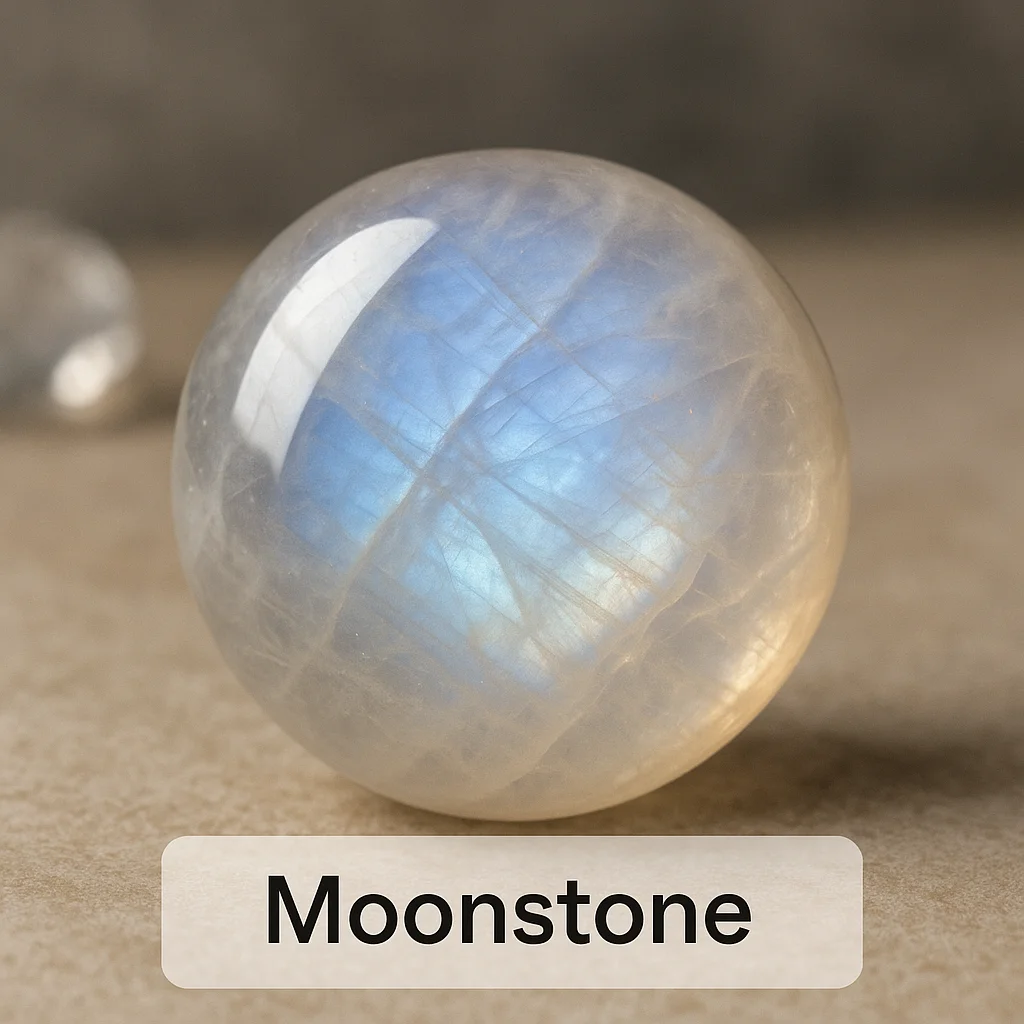
This gemstone is often associated with birthstones and is favored in modern and traditional jewelry settings. It is most commonly found in colors ranging from blue to peach, with a silky sheen that makes it highly sought after by collectors and enthusiasts alike.
In this article, we will explore moonstone's appearance, properties, origin, value, care, and buying tips. Whether you are a novice collector or simply interested in its allure, you will gain a comprehensive understanding of what makes moonstone special.
🌍 Where It Comes From
Moonstone is primarily found in igneous rocks and, less frequently, in metamorphic rocks. This gemstone forms in feldspar-rich environments, and the geological conditions must be just right for its formation. It is known for being sourced from regions such as Sri Lanka, India, and Madagascar, where the conditions favor the development of high-quality moonstone.
The origin of moonstone can significantly influence its appearance and market value. For example, Sri Lankan moonstones are often highly valued for their blue sheen and exceptional clarity, whereas Indian moonstones may exhibit warmer hues that are equally admired.
Understanding the source of a moonstone can help you appreciate its characteristics and potential value. However, it is important to remember that the gemstone's aesthetic appeal and properties are more critical than its geographic origin when determining its worth and desirability.
🔬 How It Forms
Moonstone forms as a result of specific geological processes that take place over millions of years. It begins with the formation of feldspar crystals, which are then subjected to heat and pressure. The unique interplay of these conditions creates the layered structure within the stone, contributing to its characteristic adularescence.
The mesmerizing glow of moonstone is attributed to the internal structure of fine layers within the stone. These layers reflect and scatter light, creating a soft, iridescent effect that appears to move under different lighting and viewing angles. This effect is a natural phenomenon and is not present in all gemstones, making moonstone particularly special.
The formation of moonstone is a testament to nature's ability to craft beauty over time, resulting in a gemstone that captures the imagination and inspires admiration among those who encounter it.
🎨 Color and Look
Moonstone is primarily known for its captivating play of light, which manifests as a silky blue or white shimmer across the surface of the stone. This optical effect, known as adularescence, is the result of light diffraction within the micro-layers of feldspar minerals.
Typical colors of moonstone range from colorless to hues of blue, peach, and even green. The quality of adularescence and the stone's overall appearance can be influenced by the cut and polish of the gemstone. Moonstone is often cut en cabochon—a rounded, smooth surface—to highlight its unique optical effects.
Common treatments for moonstone are minimal, as its natural beauty is often showcased without alteration. However, careful handling and proper cutting are crucial to preserving its ethereal qualities and ensuring its maximum visual impact in jewelry settings.
🧪 Properties That Matter
Moonstone has a Mohs hardness rating of approximately 6 to 6.5, which means it is relatively soft compared to other gemstones. This makes it suitable for jewelry that isn't exposed to rough wear, such as pendants or earrings, while daily-wear rings require more cautious handling to avoid scratches.
In terms of toughness, moonstone is considered fair to good, meaning it can withstand some degree of pressure but is prone to chipping along its cleavage planes. Proper mounting and careful use can help to mitigate these risks.
The gemstone's luster is typically described as a pearly to vitreous sheen, and its transparency ranges from nearly transparent to translucent. Moonstone's delicate nature and distinctive sheen underscore its elegance, making it a perennial favorite in the world of gemstone jewelry.
✨ Meanings, Birthstones, and Culture
Traditionally associated with the mysteries of the moon, moonstone is often linked to themes of intuition, protection, and feminine energy. While these attributes are not scientifically supported, they hold cultural significance and continue to captivate those who wear moonstone jewelry.
Moonstone is the birthstone for the month of June, sharing this honor with pearl and alexandrite. It is also popular in modern jewelry collections, appreciated for its unique luminescence and the sense of calm it is traditionally thought to impart to the wearer.
Although moonstone's symbolic meanings and cultural associations are rich and varied, it is important to enjoy and appreciate this gemstone primarily for its natural beauty and the striking visual qualities it offers.
🧼 Care and Cleaning
Proper care and cleaning are essential to maintain the beauty and longevity of your moonstone jewelry. It is recommended to use mild soap and warm water for cleaning, followed by gentle drying with a soft cloth. Avoid exposing moonstone to harsh chemicals or abrasive materials, as these can damage the surface.
Moonstone is sensitive to thermal shock, so it is advisable to avoid sudden temperature changes and excessive heat, such as placing it near direct sunlight or heat sources. Long periods of soaking should also be avoided, as water can seep into the stone and cause fractures over time.
For safe storage, keep moonstone separate from other jewelry pieces in a soft pouch or lined box to prevent scratches. By following these care guidelines, you can ensure that your moonstone jewelry remains as breathtaking as the day you acquired it.
🛒 Buying Tips and What to Check
When purchasing moonstone, several factors can influence the price and quality of the gemstone. These include color, clarity, cut, and the presence of adularescence. Blue and colorless moonstones with a strong adularescent effect are typically more valuable than those with less pronounced features.
Asking about any treatments and requesting a gemological report are important steps when buying high-value moonstones. Such reports can help confirm authenticity and disclose any enhancements that may affect the gemstone's value.
When buying online, ensure that the seller provides clear photographs, a reasonable return policy, and complete disclosures about the stone's characteristics. Checking the seller's reputation and reviews can also help you make an informed purchase decision when acquiring moonstone jewelry.
⚠️ Real vs Fake and Common Look-Alikes
Moonstone can be subject to imitation and confusion with other gemstones. Natural moonstone is distinct from synthetic or lab-grown alternatives, which are engineered to mimic natural characteristics. While these can be aesthetically similar, they lack the natural history and formation processes of genuine moonstone.
Common imitations include glass or plastic that are shaped and polished to resemble moonstone's appearance. Additionally, assembled stones, such as doublets or triplets, might combine multiple layers or materials to emulate the look of a genuine gemstone.
Similar gemstones, like opalite or synthetic blue opal, can often be mistaken for moonstone due to their similar optical effects. Reliable identification of moonstone and its look-alikes requires professional testing to ensure accuracy and authenticity.
❓ Common Questions and Misconceptions
Is it a mineral or a rock? Moonstone is a mineral, specifically a variety of feldspar.
Is it a birthstone? Yes, moonstone is a birthstone for June, along with pearl and alexandrite.
Will it scratch easily? Moonstone's Mohs hardness of 6 to 6.5 means it can scratch more easily than harder gems.
Can it go in water? While brief exposure is fine, avoid long soaking to prevent fractures.
Does color fade in sunlight? Prolonged exposure to sunlight may affect moonstone's appearance, so store it carefully.
What treatments are common? Moonstone is usually untreated, though cutting and polishing enhance its natural shine.
Is lab-grown 'fake'? Lab-grown stones mimic natural ones, but they lack the earth-formed history of natural gems.
How do I store it safely? Store moonstone in a soft pouch to reduce the risk of scratching from other jewelry.
Do inclusions always lower value? Inclusions can impact value if they affect appearance or durability, but minor ones may not.
How do I pick a good one for jewelry? Look for a strong adularescent effect and appealing clarity, and ensure it's well-cut.
📌 Summary
- Moonstone is a captivating feldspar mineral famous for its adularescence.
- Typical colors range from colorless to hues of blue, peach, and green.
- Forms in feldspar-rich igneous and metamorphic rocks over millennia.
- Features a Mohs hardness of 6-6.5 and fair toughness, suitable for careful wear.
- Minimal common treatments, but careful cutting enhances appearance.
- Mild soap and water recommended for cleaning; avoid harsh chemicals.
- Best for pendants, earrings, and occasional ring use due to softness.
- Common look-alikes include opalite and synthetic blue opal.
- Lab reports essential for confirming authenticity and disclosures.
- Buying tips: prioritize adularescence, clarity, origin, and seller reputation.
- Traditionally linked to June as a birthstone, with rich folklore.
- Remember: its natural adularescent glow makes moonstone truly unique.