💎 Onyx
🪨 What It Is
Onyx is a type of chalcedony, a mineral in the quartz family. It is a well-known gemstone popular in jewelry and carvings. Traditionally, onyx is recognized for its parallel bands of black and white, but it can also come in a variety of colors. As a birthstone, onyx offers a unique aesthetic appeal to those born in August.
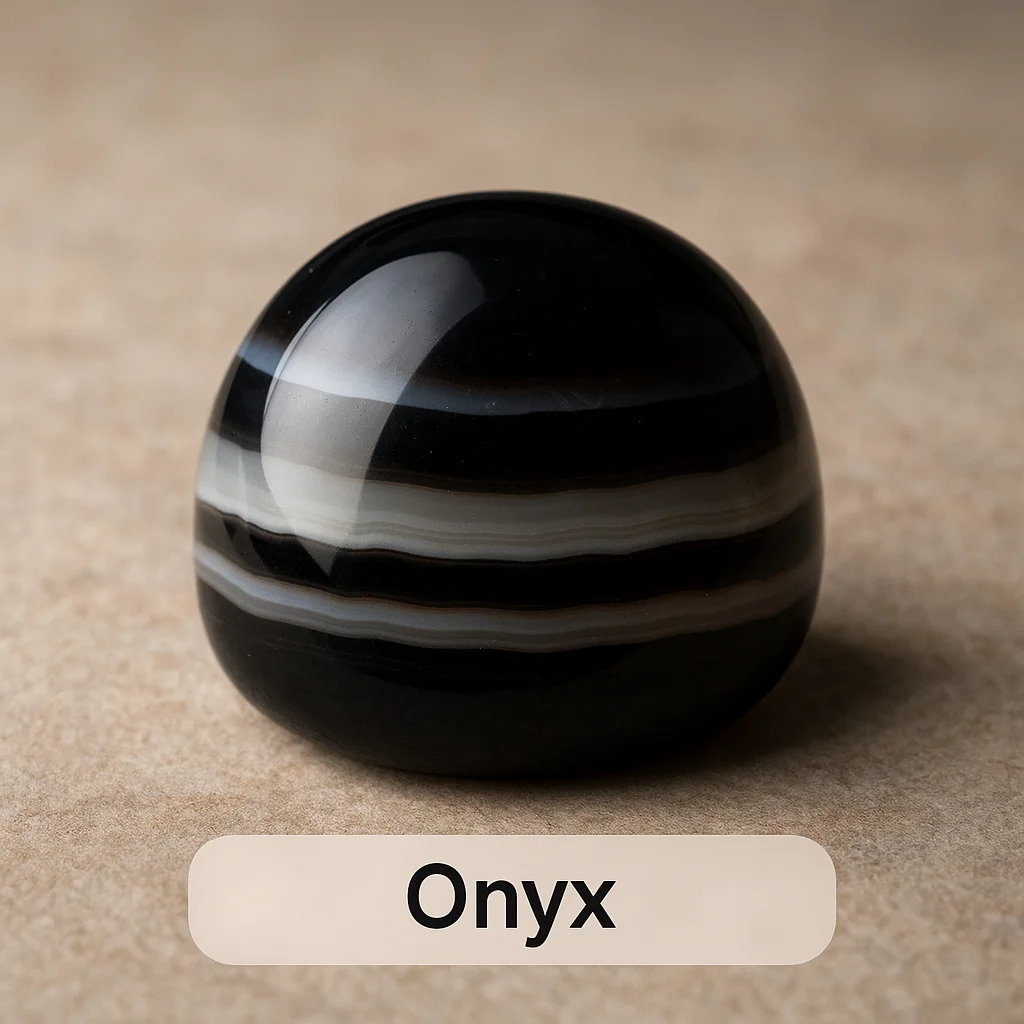
The study of onyx can help one understand its appearance, properties, and how it differs from other similar gemstones. This article will explore these aspects in depth so readers can make informed decisions about its usage and care.
In jewelry, onyx is cherished for its smooth, lustrous appearance. You are about to learn about its natural occurrence, how it can be identified, and why it holds a significant place in cultural traditions.
🌍 Where It Comes From
Onyx is formed in sedimentary environments, where silica deposits layer over time under low-temperature, aqueous conditions. These environments allow the formation of its characteristic parallel bands. The primary sources for onyx include parts of Asia, Latin America, and the United States.
The geographic source of onyx can affect its appearance and value. For instance, onyx from some regions might have more distinct bands, which are favored in certain markets. This adds to the stone's desirability and can influence pricing.
While onyx is found in many areas worldwide, the conditions that create high-quality specimens make them somewhat rare. Collectors and jewelers often consider the stone's origin when assessing its quality and value. However, the appearance and clarity of the stone can often be more significant factors than its origin.
🔬 How It Forms
Onyx is formed over millions of years under the earth's surface. It originates from the slow deposition of silica within cracks and voids in sedimentary rocks. This process results in the distinct layers characteristic of onyx.
The colors in onyx are influenced mainly by inclusions and the presence of different minerals during its formation. For instance, red hues are due to iron oxide. The thorough banding pattern results from rhythmic crystallization over time.
In terms of crystal habit, onyx typically presents itself in massive forms. While displaying the same chemical composition as quartz, its distinct banding pattern makes it stand out as a unique variety within the quartz family.
🎨 Color and Look
Onyx is best known for its smooth, lustrous surface and parallel banding. Genuine onyx typically exhibits black and white bands, but colors such as green, honey, and red can also occur. These colors are often the result of mineral inclusions present during its formation.
The appearance of onyx can be enhanced through treatments. Dying is a common treatment to intensify its color or create uniform appearance across pieces. While these treatments improve aesthetic appeal, they should be disclosed to buyers, as untreated stones might hold higher value for some collectors.
A well-polished onyx piece can reflect light beautifully, making it a favored choice for jewelry that is designed to dazzle. However, its aesthetic can change based on viewing angle and lighting conditions, adding a dynamic element to its beauty.
🧪 Properties That Matter
Onyx rates about 6.5 to 7 on the Mohs scale of hardness, indicating a moderate resistance to scratches. This makes it suitable for a variety of jewelry types, including rings and pendants, if treated with care.
In terms of toughness, onyx is considered fairly durable but can chip if handled roughly. Additionally, it exhibits a conchoidal fracture, meaning it breaks along curved surfaces.
Onyx has a vitreous luster, giving it a glass-like sheen when polished. Its opacity ranges from translucent to opaque, which can affect its shine and suitability for certain settings in jewelry.
✨ Meanings, Birthstones, and Culture
Throughout history, onyx has been traditionally associated with self-control, strength, and grounding. While these associations stem from cultural traditions rather than scientific evidence, they contribute to onyx's popularity in spiritual jewelry.
Onyx is also linked with the zodiac sign Leo and serves as a secondary birthstone for August. Jewelry featuring onyx is often given as gifts for special occasions and anniversaries, as they are considered symbols of fidelity and devotion.
Modern jewelry remains interested in onyx due to these traditional beliefs, which has sustained its popularity over the ages. However, it's essential to approach these meanings as cultural lore rather than scientific fact.
🧼 Care and Cleaning
To maintain the beauty and longevity of onyx, gentle cleaning with mild soap and water is recommended. It is crucial to avoid using harsh chemicals or abrasive cleaners, which can damage its surface.
Onyx should be stored separately from other gemstones to prevent scratching. Use a soft cloth to dry the stone thoroughly, and avoid prolonged exposure to heat and moisture, which can affect its structure and appearance over time.
Some onyx pieces may be treated with oils or resins, so any exposure to extreme conditions or chemicals can compromise these treatments and cause damage. Thus, care should be taken to preserve their treated qualities.
🛒 Buying Tips and What to Check
When buying onyx, consider the vibrancy of its color, the consistency of its bands, and the quality of its polish. These factors significantly influence the stone's value. Larger, well-polished pieces with vivid, contrasting bands are typically more prized.
Inquire about any treatments the onyx might have undergone, like dyeing or oiling, especially if you're purchasing high-value pieces. Requesting a certification for significant investments can provide assurance about the stone's authenticity and quality.
For online purchases, ensure that the seller has a favorable return policy and a strong reputation. Examine photos carefully to confirm the quality, and do not hesitate to ask the seller for additional information or documentation regarding the stone's origin and any treatments.
⚠️ Real vs Fake and Common Look-Alikes
Distinguishing between natural, synthetic, and imitation onyx requires careful analysis. While genuine onyx is naturally formed, synthetic varieties are laboratory-created and generally lack the subtle imperfections of natural stones.
Common imitations include stones made from glass or plastic, while assembled stones, such as doublets and triplets, combine thin layers to mimic onyx's appearance. These look-alikes can often fool the untrained eye.
Professional gemological testing is necessary to confirm authenticity and accurately differentiate between natural, synthetic, and imitation onyx. Relying on such tests ensures that you are purchasing exactly what is advertised.
❓ Common Questions and Misconceptions
Is it a mineral or a rock? Onyx is a mineral, specifically a variety of chalcedony, part of the quartz family.
Is it a birthstone? Yes, onyx is considered a secondary birthstone for August and is associated with the zodiac sign Leo.
Will it scratch easily? Onyx has moderate scratch resistance, with a Mohs hardness of 6.5 to 7, but be gentle with it.
Can it go in water? Occasional contact with water is okay, but avoid soaking it extensively.
Does color fade in sunlight? Treated stones might fade over time with excessive light exposure. Natural onyx is generally more stable.
What treatments are common? Dying and oiling can enhance color and appearance. Always ask the seller for disclosure.
Is lab-grown 'fake'? Lab-grown onyx replicates natural conditions and is not 'fake,' but it differs by origin and is distinct from natural stones.
How do I store it safely? Store onyx separately from other stones, ideally in a soft pouch, to prevent scratches.
Do inclusions always lower value? Not necessarily; minor inclusions can enhance a stone's character, but significant ones might affect its value.
How do I pick a good one for jewelry? Look for vibrant color, clear banding, and a polished finish. Check for any visible flaws or cracks.
📌 Summary
- Onyx is a variety of chalcedony known for its banded appearance.
- Typical colors include black and white, but can vary with different mineral inclusions.
- Onyx forms through the deposition of silica in sedimentary environments.
- It has medium hardness and toughness, suitable for jewelry with some care.
- Common treatments include dyeing and oiling to enhance appearance.
- Care includes gentle cleaning with soap and water and avoiding harsh conditions.
- Best used in pendants and rings with moderate wear settings.
- Common look-alikes include glass, plastic, and assembled stones.
- Professional testing is needed to confirm natural onyx over synthetic or imitation.
- Buying tips include checking color, banding, and asking about treatments.
- Associated with the month of August and zodiac Leo as cultural tradition.
- Onyx is a beautiful, versatile stone with both aesthetic appeal and cultural significance.