💎 Opal
🪨 What It Is
Opal is a unique gemstone celebrated for its vibrant play-of-color, a phenomenon where rainbow hues dance across its surface. Opals are primarily composed of hydrated silica, making them distinct from traditional crystalline gems. Unlike many gems, opals do not have a crystal structure.
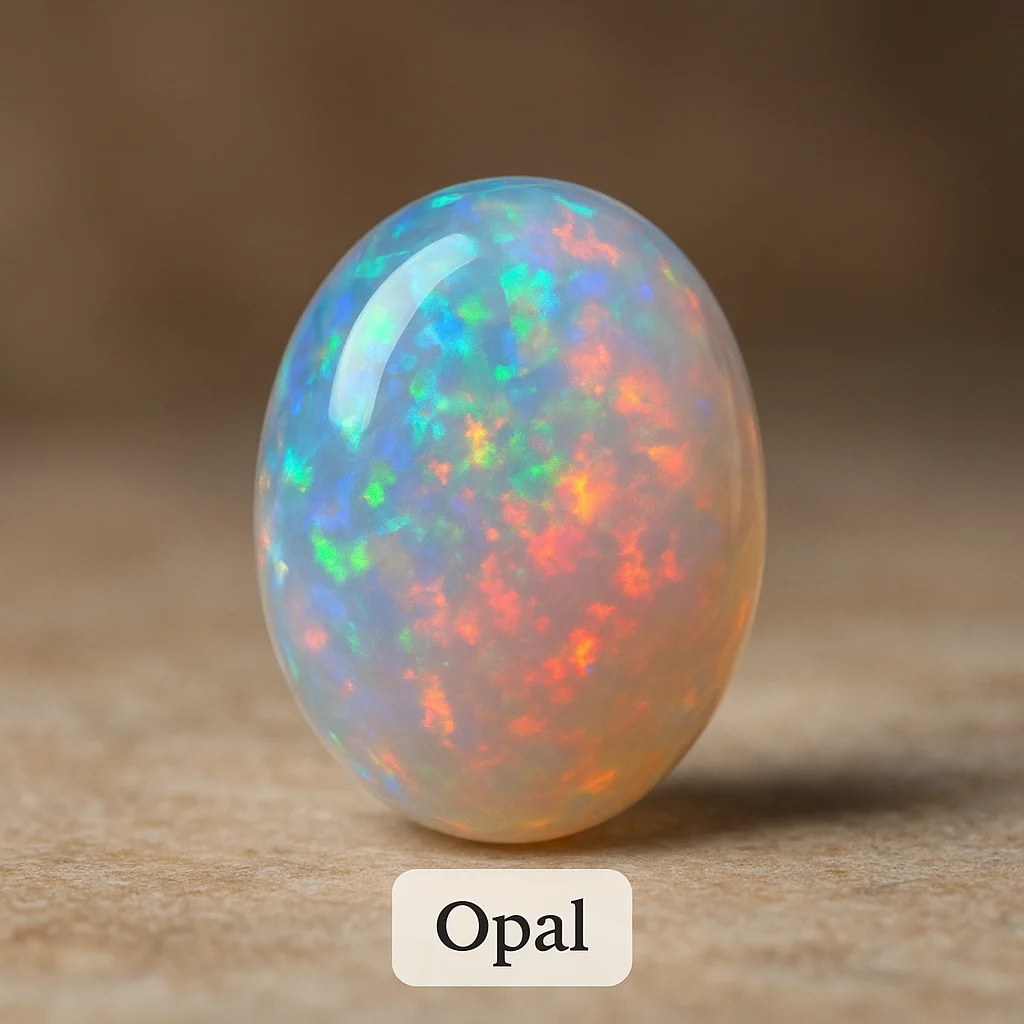
Known for their intricate patterns and diverse color palette, opals are a favorite in jewelry, adorning everything from rings to pendants. October-born individuals often cherish opals, as it serves as their traditional birthstone.
This article will explore various aspects of opals, including their origins, formation, and the properties that make them unique. Additionally, we will cover practical tips for caring for opal jewelry and guide you on what to consider when purchasing these gemstones.
🌍 Where It Comes From
Opals form predominantly in sedimentary settings, where silica-rich waters percolate through cracks and crevices in the earth. Over time, as the waters evaporate, the silica deposits and gradually form opal. This process can take millions of years.
Australia is the leading producer of high-quality opals, notably from regions like Coober Pedy and Lightning Ridge. Australian opals are renowned for their beautiful play-of-color and are highly valued in the gemstone market. Other notable sources include Ethiopia, Mexico, and Brazil, each offering opals with distinctive qualities and colors.
The origin of an opal often contributes to its market value and desirability. Australian opals, for instance, usually command higher prices due to their superior color play and durability.
🔬 How It Forms
The formation of opal begins with water seeping into the earth and absorbing silica from sandstone. As the solution travels and fills voids and fractures, the silica slowly settles and forms opal. This formation can occur over tens of millions of years.
Opals do not form in crystal structures; instead, they consist of tiny silica spheres stacked in a grid-like pattern. This specific arrangement diffracts light, resulting in the mesmerizing play-of-color that opals are famous for.
The environment of formation, including the minerals present, can affect an opal's color and quality. For example, black opals, which are highly sought after, owe their dark body color to traces of carbon or iron oxide.
🎨 Color and Look
Opals are celebrated for their opalescence—a unique display of rainbow colors that shift and change with viewing angle. This play-of-color can include vivid reds, greens, blues, and oranges, often creating stunning visual effects.
The shade and intensity of colors seen in an opal depend on the size and arrangement of the silica spheres. Larger spheres tend to produce red hues, while smaller spheres yield blues and greens.
Enhancements such as dyeing and resin filling are sometimes used to improve an opal's appearance. While these treatments can enhance visual appeal, they should be disclosed when purchasing.
🧪 Properties That Matter
Opals have a Mohs hardness of 5.5 to 6.5, meaning they are relatively soft and more prone to scratching than gems like quartz or diamond. Their delicate nature requires careful handling, especially for daily-wear jewelry.
The stone's toughness is also moderate, as opals can chip or crack under impact. Due to their lack of cleavage, opals do not split along specific planes, which is a beneficial trait for cutters but requires caution in wear.
Opals are usually opaque or translucent with a vitreous (glass-like) to waxy luster. These attributes contribute to their enchanting appearance but necessitate careful maintenance.
✨ Meanings, Birthstones, and Culture
Traditionally, opals are associated with hope, purity, and truth. While these meanings vary across cultures, they often symbolize creativity and emotional expressiveness.
Opals are considered the birthstone for October, and those born in this month might wear opal jewelry for luck or as a personal symbol.
Though modern gemstone enthusiasts appreciate opals for their beauty, many historical superstitions surround the stone, including beliefs in its protective and mystical powers.
🧼 Care and Cleaning
When cleaning opal jewelry, use mild soap and water followed by gentle wiping with a soft cloth. Avoid abrasive cleaners and chemicals, which can damage the surface of the stone.
Opals are sensitive to sudden temperature changes, which can cause cracking. When storing, keep opals in a padded case away from harder gemstones to prevent scratching.
It's crucial to store opals in locations that will not dry out the stone, as they can lose moisture over time, leading to potential cracking.
🛒 Buying Tips and What to Check
When purchasing opals, look for stones with vibrant play-of-color that can be seen from multiple angles. The consistency of color and pattern can significantly influence the gem's value.
Consider asking about any treatments applied to the stone, as these can affect its long-term value and care requirements. It's also prudent to request a lab report for any high-value opals to confirm authenticity.
For online purchases, review seller reputations and return policies carefully, ensuring ample photographs that clearly show the opal's play-of-color and any inclusions it might have.
⚠️ Real vs Fake and Common Look-Alikes
Natural opals can sometimes be confused with synthetic (lab-grown) or imitation opals created from materials like glass or resin. While synthetic opals have similar structures, their play-of-color can appear more regular and uniform.
Opal doublets and triplets are common assembled stones that use thin opal layers backed by other materials, making them more affordable but also different in value from solid opals.
Professional gem testing is recommended for accurate verification, as distinguishing between genuine opals and high-quality imitations can be challenging with the naked eye.
❓ Common Questions and Misconceptions
Is it a mineral or a rock? Opal is a mineraloid, not a true mineral, due to its lack of a crystal structure.
Is it a birthstone? Yes, opal is the birthstone for October.
Will it scratch easily? With a Mohs hardness of 5.5 to 6.5, opal can scratch more easily than many other gemstones.
Can it go in water? Brief contact is fine, but avoid prolonged submersion to prevent water absorption issues.
Does color fade in sunlight? Opals can be sensitive to light; prolonged exposure may cause fading or discoloration.
What treatments are common? Common treatments include dyeing and resin filling to enhance appearance.
Is lab-grown "fake"? Lab-grown opals are genuine but chemically identical to natural opals; they are not fake, but they have different value considerations.
How do I store it safely? Store opals in a cool, dark place with consistent humidity to prevent drying and cracking.
Do inclusions always lower value? While inclusions can impact clarity and value, a unique play-of-color can often compensate for minor imperfections.
How do I pick a good one for jewelry? Look for a vivid, full-spectrum play-of-color, and consider the setting to protect the stone when worn.
📌 Summary
- Opal is a mineraloid, celebrated for its vibrant play-of-color.
- Typical colors range from white to black, with multi-hued flashes of color.
- Forms from silica-rich water depositing over millions of years.
- Has a Mohs hardness of 5.5–6.5, requiring careful wear.
- Common treatments include dyeing and resin stabilization.
- Simple care: mild soap and water, avoid harsh chemicals and abrasion.
- Best for pendants and occasional-wear rings due to fragility.
- Common look-alikes include synthetic opals and doublets/triplets.
- Lab testing is recommended for definitive identification.
- Ensure comprehensive seller information when purchasing online.
- October birthstone, traditionally associated with hope and creativity.
- Opal's play-of-color makes it one of the most visually captivating gems.