💎 Peridot
🪨 What It Is
Peridot is a gemstone known for its vibrant green color. It is a variety of the mineral olivine, which is composed of magnesium iron silicate. Unlike many gems, which derive their color from trace impurities, peridot's green hue comes from the metal content within the stone itself.
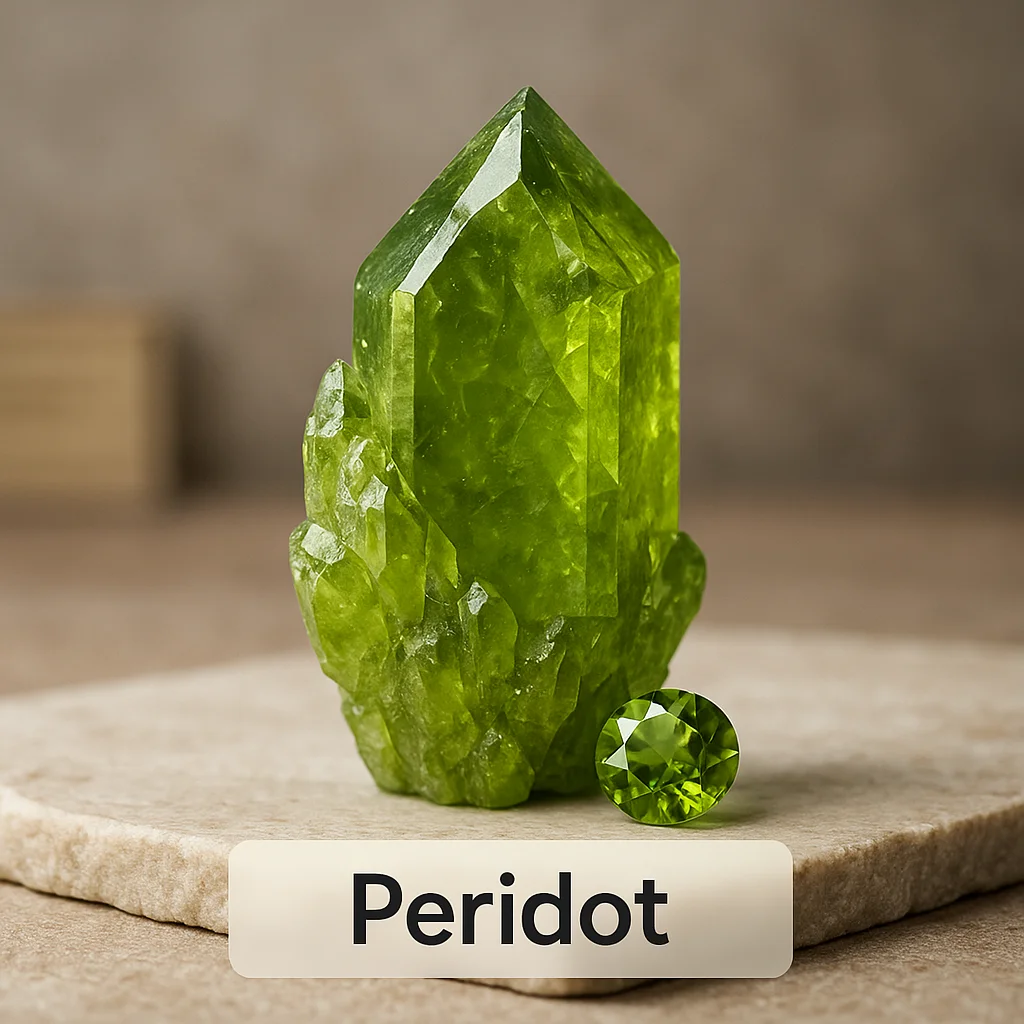
This gemstone is often associated with the month of August and is recognized as its official birthstone. Its known history of use in jewelry dates back thousands of years, making it a popular choice for adornment across various cultures.
In this article, you'll discover more about peridot's unique characteristics, where it's typically found, how it forms, and tips on buying and caring for this delightful gem. Whether you're a budding gem enthusiast or just curious about one of August's famed birthstones, peridot offers much to explore.
🌍 Where It Comes From
Peridot commonly forms deep within the Earth's mantle, brought to the surface through volcanic activity. Its occurrence is typically associated with igneous environments, making it a fascinating gem from a geological perspective. It can also be found within meteorites, offering a celestial origin for some spec imens.
Notable regions known for producing peridot include parts of the United States, particularly Arizona, Pakistan, China, Myanmar, and Egypt. Each locale can influence the gem’s shade and clarity, such as the vivid greens often seen in stones from Pakistan.
The origin of peridot can play a significant role in its market value. Buyers often seek stones from these renowned regions, not just for their color but also due to historical and cultural significance tied to their sources. However, high-quality peridot can be found from many locales around the world.
🔬 How It Forms
Peridot forms under intense heat and pressure within the Earth’s mantle. These conditions allow for the formation of olivine crystals, which comprise peridot. Volcanic activity brings these crystals closer to the Earth's surface, where they can be mined or collected.
The green color found in peridot is primarily due to iron, a fundamental component of its crystal structure. Unlike many gemstones that gain color from trace impurities, this vibrant shade is a core feature of its composition.
Typically, peridot occurs as small crystals, often within basalt rocks or in peridotite, a primary igneous rock. When looking for raw peridot, one would expect to find it alongside volcanic or ultramafic rocks, offering a window into the Earth's inner workings.
🎨 Color and Look
Peridot is renowned for its distinct green hue, which ranges from a yellowish-green to a more intense olive green. The color remains consistent in different lighting conditions, though its intensity can vary based on the gem's size and quality. Larger stones often exhibit more pronounced color.
Factors like cut and polish can significantly impact peridot's appearance. A well-cut gem will enhance the stone's natural brilliance and maxim ize its lively color, while poor cutting can lead to a dull or washed-out appearance.
Unlike other gems, peridot is typically not subjected to treatments like heating or dyeing to enhance its color, as its natural appearance is highly valued. However, inclusions, which are natural imperfections within the stone, are common, and buyers should expect some presence of these in most stones.
🧪 Properties That Matter
Understanding peridot's physical properties is essential when considering it for jewelry. Its Mohs hardness rating is around 6.5 to 7, indicating moderate scratch resistance. While harder than materials like opal or pearl, it requires care to prevent scratches.
Peridot has good toughness, meaning it can resist chipping reasonably well, but this does not make it invulnerable. It lacks cleavage, meaning it does not break along defined lines, which is advantageous for setting in jewelry.
It is typically transparent with a vitreous (glass-like) luster. This optical quality contributes significantly to its appeal, enhancing the bright, refreshing look that peridot is famous for. The combination of these properties makes it suitable for various types of jewelry, though it's best for pieces like pendants and earrings rather than rings, where damage risk is higher.
✨ Meanings, Birthstones, and Culture
Traditionally, peridot is associated with notions of prosperity and growth, both personal and spiritual. It is believed in some cultures to bring good luck and protect its wearer from negative forces.
As August's birthstone, peridot holds a place in modern jewelry traditions. Its striking green color makes it an appealing choice for crafting birthstone jewelry, celebrated for its beauty and the positive attributes it is thought to embody.
While scientific validation of these beliefs is lacking, peridot continues to be cherished for its cultural associations and vibrant appearance, representing a link between earthly beauty and mythical heritage.
🧼 Care and Cleaning
To maintain peridot's brilliance and luster, it should be cleaned gently using mild soap and lukewarm water. Avoid using harsh chemicals as these could damage the surface of the stone.
After washing, it's advisable to pat the gem dry with a soft cloth. It's best to avoid exposing peridot to sudden temperature changes or prolonged soaking, as these conditions may lead to potential damage or discoloration over time.
Storing peridot away from harder gemstones will prevent scratches. Using a soft pouch or a dedicated jewelry box compartment is ideal to preserve its clarity and brilliance when not in use.
🛒 Buying Tips and What to Check
When purchasing peridot, pay close attention to color, clarity, and cut. A vivid green color without brownish tints is highly desirable. Clear stones with minimal inclusions are typically more valuable, though some inclusions are common.
Ensure you inquire about any treatments the stone may have undergone. While rare for peridot, transparency is key to understanding its value and authenticity.
Consider obtaining a gemological report, which can verify the gemstone’s identity and disclose any treatments. When buying online, pay close attention to seller reviews, look for detailed photos, confirm the return policy, and check for full disclosure on the stone's origin and treatments.
⚠️ Real vs Fake and Common Look-Alikes
Peridot can be natural or synthetic, though synthetic variants are less common. It’s crucial to distinguish between natural gemstones and imitations made from glass or other materials that mimic peridot's color.
Common look-alikes include green tourmaline or glass that can resemble peridot's green. However, these may not share peridot's unique properties and should be identified correctly by a professional gemologist.
Authentic identification involves more than visual inspection. Reliable gem identification requires specialized tools and expertise, emphasizing the importance of professional evaluation for questionable stones.
❓ Common Questions and Misconceptions
Is it a mineral or a rock? Peridot is a mineral and a gem variety derived from olivine.
Is it a birthstone? Yes, peridot is the birthstone for August.
Will it scratch easily? With a Mohs hardness of 6.5 to 7, it resists scratches better than some gems but requires care.
Can it go in water? Peridot can be cleaned with water, but avoid long soaking and extreme temperature changes.
Does color fade in sunlight? Peridot generally maintains its color but should be stored properly to avoid potential fading.
What treatments are common? Peridot is rarely treated, with its natural color being its most desirable feature.
Is lab-grown 'fake'? Lab-grown peridot is not fake, but there are minimal instances. It is chemically identical but lacks natural origin.
How do I store it safely? Store peridot in a soft pouch or separate compartment to prevent scratches.
Do inclusions always lower value? Minor inclusions are common and do not severely impact peridot's value, but clarity is desirable.
How do I pick a good one for jewelry? Choose a stone with vibrant color, good clarity, and an expert cut for maximum appeal in jewelry.
📌 Summary
- Peridot is a bright green gemstone, often a variety of olivine.
- Its typical colors range from yellow-green to olive green.
- Peridot forms in igneous environments, often associated with volcanic activity.
- With a Mohs hardness of 6.5 to 7, it balances wearability and care.
- Peridot typically requires no treatments, valued for its natural color.
- For cleaning, use gentle soap, and avoid harsh chemicals.
- Best suited for pendants and earrings, where damage risk is lower.
- Common look-alikes include green tourmaline and glass.
- Authenticity is confirmed through professional gemological testing.
- A buying checklist includes checking color, clarity, and seller reputation.
- August's birthstone, culturally associated with growth and prosperity.
- Peridot offers a unique glimpse into Earth's and Space's geological processes.