💎 Quartz Clear
🪨 What It Is
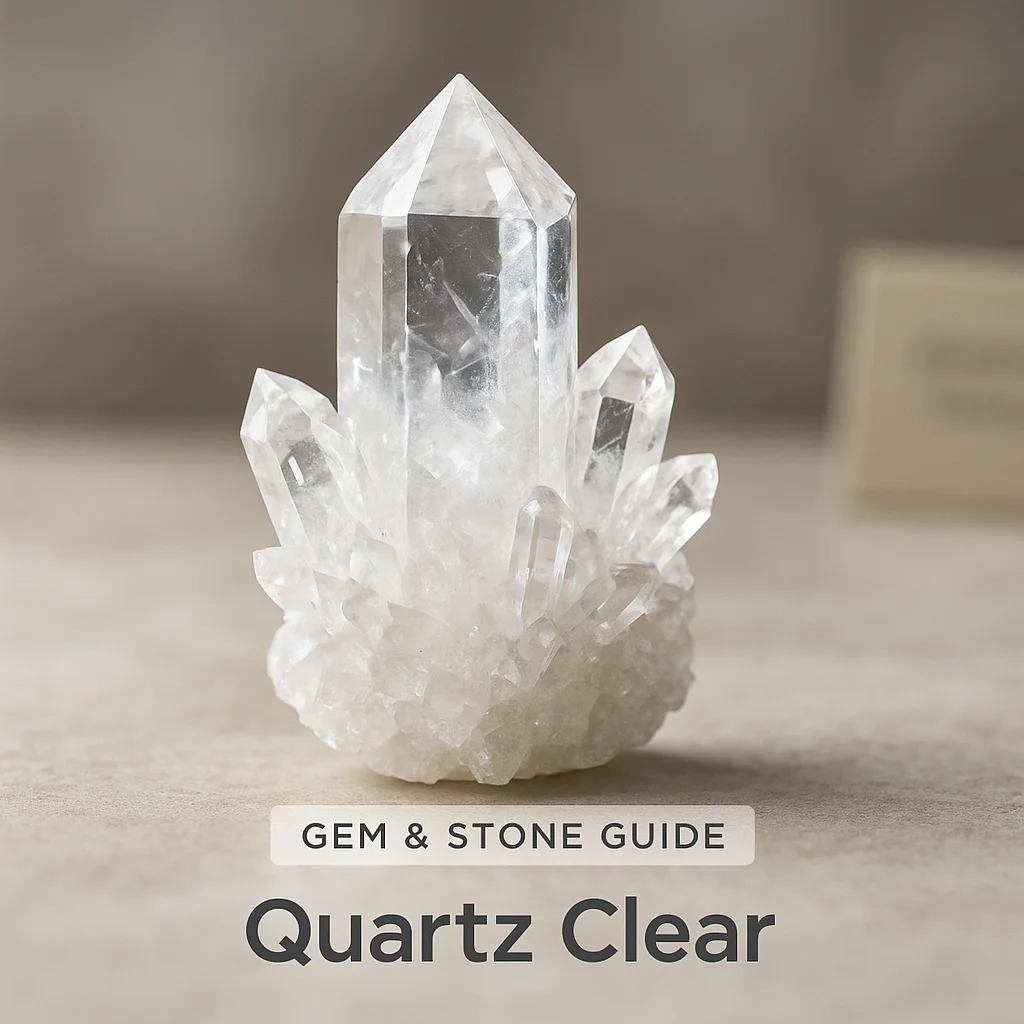
Quartz Clear, often referred to simply as "clear quartz," is a type of mineral known for its transparent appearance. It is one of the most abundant minerals found on Earth and can be used in various forms, including as gemstones and in jewelry. Despite its commonality, the pure and clear nature of this quartz variation makes it a popular choice for collectors and enthusiasts.
As a gemstone, clear quartz is not assigned to any specific birthstone month, but it is cherished in jewelry design for its versatility and ability to complement other gems. Its classic, neutral appearance means it can be fitted into different styles and suits a wide range of settings, from formal to casual.
This article will guide you through understanding clear quartz, covering its appearance, geological origins, properties, cultural significance, and practical tips for caring, buying, and identifying genuine pieces.
🌍 Where It Comes From
Clear quartz can be found in a variety of geologic environments. It typically forms in igneous, metamorphic, and sedimentary rocks, appearing as veins, geodes, or crystalline formations. The presence of quartz in vast geologic settings contributes to its remarkable abundance.
It is commonly extracted from regions known for rich mineral deposits. Clear quartz is mined all over the world, with notable sources in Brazil, Madagascar, the USA, and South Africa. Each of these regions has unique geological conditions influencing the formation of quartz, yet they all maintain the same crystal structure and composition.
The origin of clear quartz can occasionally influence its overall market reputation and hence its value, especially when certain regions are considered more desirable due to their traditional mining practices or the perceived purity of their crystals.
🔬 How It Forms
Clear quartz is formed through the process of crystallization from silica-rich solutions. When these solutions cool and solidify over time, quartz crystals begin to develop. This process usually occurs in high-temperature and high-pressure environments, such as those found deep within the Earth's crust.
The characteristic clear appearance of quartz is due to the lack of impurities and inclusions within the crystal structure. While other quartz varieties derive their colors from trace elements, clear quartz remains free from these, maintaining its transparent nature.
Quartz crystals exhibit a hexagonal crystal habit, often developing into robust, well-formed crystals. These are frequently found within geodes—hollow, spherical rocks that are lined with these stunning crystals.
🎨 Color and Look
Clear quartz is aptly named for its lack of color, giving it a crystal-clear, ice-like appearance. In its purest form, it is entirely transparent but may occasionally contain wispy inclusions or internal fractures, leading to interesting optical effects when light passes through.
The appearance of clear quartz can be significantly enhanced by cutting and polishing. A well-cut quartz will exhibit excellent luster, reflecting light in a way that enhances its beauty. The transparency of the stone means it can vary in brilliance depending on the quality of cut and the angle of light.
Unlike colored quartz varieties, clear quartz typically does not undergo treatments like heat or dyeing to alter its appearance, although irradiation is sometimes used in other types of quartz to achieve different colors.
🧪 Properties That Matter
Clear quartz ranks 7 on the Mohs scale of hardness, which implies a good level of scratch resistance, making it a durable option for daily-wear jewelry. However, it is not as hard as corundum-type gemstones, like sapphires and rubies, which are more resilient to everyday wear.
This mineral has no cleavage, meaning it doesn’t tend to break along defined planes; instead, it fractures conchoidally (like glass), which provides resistance to chipping. Still, care should be taken to avoid hard knocks, which could cause fractures.
Quartz has a vitreous luster, giving a shiny, glass-like quality when polished. It is typically transparent to translucent, allowing for various jewelry applications, such as rings, pendants, or beads. Despite its toughness, it's best set in protective settings for rings or bracelets exposed to frequent contact.
✨ Meanings, Birthstones, and Culture
Throughout history, clear quartz has been associated with numerous cultural meanings and traditions. Traditionally, it is thought to symbolize clarity and purification, often believed to have been used for enhancing spiritual growth or wisdom.
While it is not officially recognized as a birthstone, clear quartz maintains a presence in modern jewelry practices due to its versatile and understated beauty. Its neutrality makes it a popular choice for those seeking pieces that complement a wide range of outfits.
In various cultures, clear quartz has been linked to amplifying other energies, although these beliefs are rooted in tradition rather than scientifically proven effects.
🧼 Care and Cleaning
Caring for clear quartz is relatively straightforward due to its resilience. A gentle soap and water solution, used with a soft cloth, typically suffices for cleaning. Avoid using harsh chemical cleaners, which could damage the stone's surface over time.
While clear quartz can withstand slight temperature variations, it’s best to avoid exposing it to extreme temperatures or thermal shocks, as sudden changes can potentially cause fractures.
Store clear quartz jewelry separately to prevent it from scratching softer materials. Ideally, keep it in a soft cloth pouch or a lined jewelry box compartment to maintain its shine and clarity.
🛒 Buying Tips and What to Check
When purchasing clear quartz, assess the standard 4Cs: color (or its clarity in this case), cut, carat weight, and clarity. Given its transparent nature, look for pieces without major inclusions or fractures that could affect appearance.
Education about synthetic and treated stones is crucial; request disclosure of any treatments from the seller. Lab reports from reputable sources can offer assurance but understand that they may not cover the stone's entire history or origins.
When buying online, inspect detailed photographs, confirm the seller's return policy, and research their reputation through customer reviews. Clear quartz is widely available, so ensure you are purchasing from a reputable source with transparent selling practices.
⚠️ Real vs Fake and Common Look-Alikes
Clear quartz can be confused with more affordable imitation materials like glass and plastic. Glass is often used as a substitute due to its similar look and texture, but lacks the hardness and durability of quartz.
Assembled stones like doublets or triplets might consist of layers of clear quartz combined with other materials to simulate a full stone, usually to enhance natural features or for economic reasons.
Professional gemstone testing and authentication can determine the authenticity of quartz. Attempting to test gemstones at home is not recommended, as it can lead to damaging the stone or misleading outcomes.
❓ Common Questions and Misconceptions
Is it a mineral or a rock? Clear quartz is a mineral, known for its widespread availability and usage.
Is clear quartz a birthstone? No, but it often finds a place in many jewelry collections due to its clarity and neutral color.
Will it scratch easily? With a Mohs hardness of 7, it is resistant to everyday scratches but precautions should be taken against harder substances.
Can it go in water? Yes, clear quartz can be safely cleaned with water but should not be soaked for extended periods.
Does color fade in sunlight? Clear quartz’s transparency remains stable under sunlight and won't fade.
What treatments are common? Clear quartz is typically untreated, though it may be irradiated for other colors in different quartz varieties.
Is lab-grown 'fake'? Lab-grown quartz is not fake, but a synthetic version; structurally similar with potentially fewer inclusions.
How do I store it safely? Store separately in a soft cloth to prevent scratching. Keep away from harder gemstones.
Do inclusions always lower value? Not necessarily, but major inclusions can detract from visual appeal.
How do I pick a good one for jewelry? Look for pieces with minimal inclusions and a brilliant, thoughtful cut for the best appearance.
📌 Summary
- Clear quartz is a transparent mineral, commonly used in jewelry.
- Typically, it is colorless and resembles ice in appearance.
- Formed by crystallization in silica-rich environments over time.
- A tough stone with a Mohs hardness of 7, suitable for regular wear.
- Commonly untreated, free from discolorations or internal fractures.
- Clean with gentle soap and water; store in protective conditions.
- Ideal for everyday jewelry items like pendants and earrings.
- Common look-alikes include glass; professional testing ensures authenticity.
- Check clarity, cut, and certification when buying.
- While not a birthstone, it holds traditional symbolic value in various cultures.
- Memorable for its pure clarity and flexibility in design.