💎 Quartz Smoky
🪨 What It Is
Quartz Smoky is a variety of quartz, a common mineral composed of silicon dioxide. This gemstone is known for its translucent to opaque nature and its distinctive smoky brown to gray color, which can range from light to almost black hues. Quartz is one of the most abundant minerals on Earth, and smoky quartz is a particularly popular choice for jewelry and decorative items.
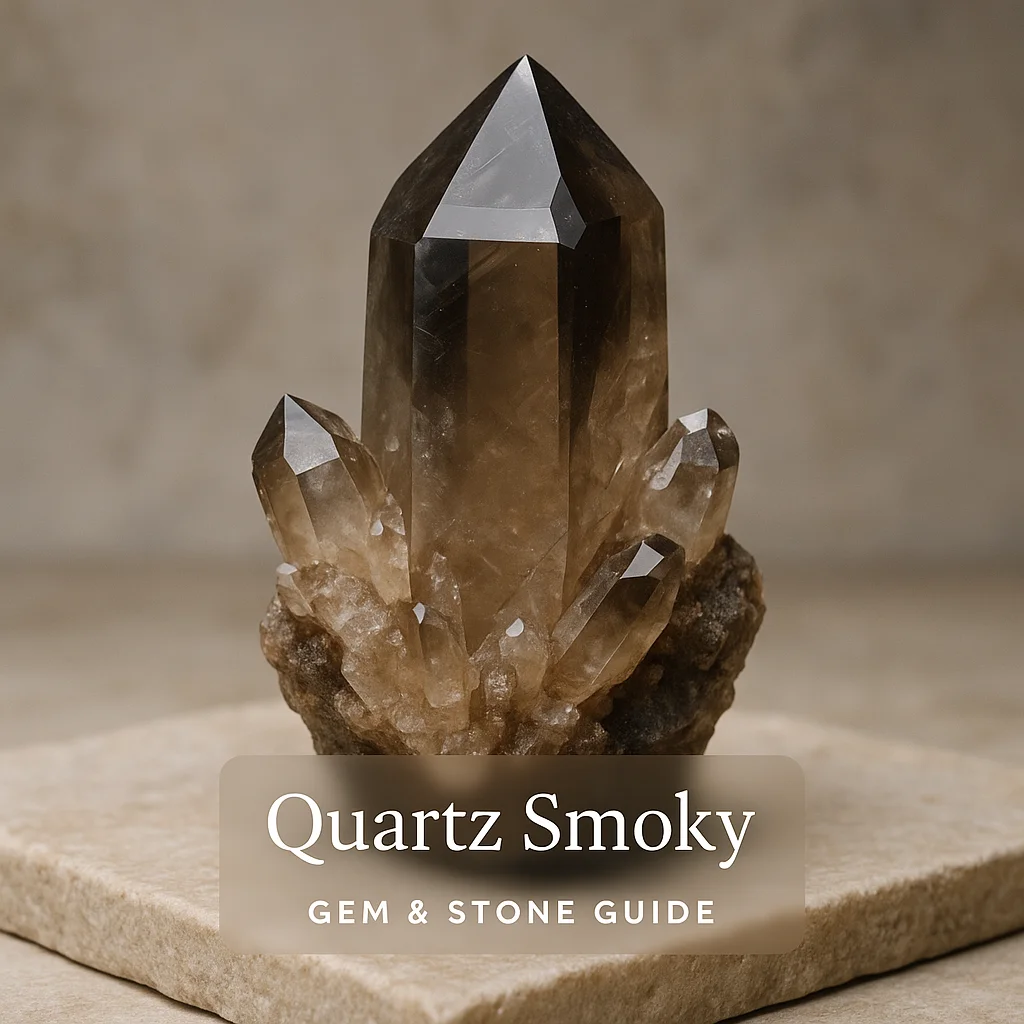
Often considered a versatile gem, smoky quartz is frequently used in various forms of jewelry, including rings, necklaces, and earrings. It is steady in demand not only for its attractive appearance but also for its affordability compared to many other gemstones. Many people are drawn to its earthy tones and elegant look, making it an appealing choice for both casual and formal settings.
In this article, you will learn about the appearance, properties, formation, and care of smoky quartz. We will also explore its origins, cultural significance, and tips on how to purchase and identify genuine smoky quartz.
🌍 Where It Comes From
Smoky quartz is primarily found in igneous and metamorphic rocks. These geological settings provide the necessary conditions for quartz crystal formation, including ample silicon dioxide, time, and enough space for crystals to grow. In some cases, smoky quartz is also found in sedimentary settings, though this is less common.
Smoky quartz deposits are located in many parts of the world. Some of the most well-known sources include Brazil, which is famous for producing large crystals, and regions in the United States, such as Colorado. Other notable sources include the Swiss Alps, Madagascar, and Australia. The specific locality can impact the color and clarity of the quartz, which in turn can influence its value and desirability in the marketplace.
The origin of smoky quartz can affect its market reputation. For example, stones from well-established locales with a tradition of producing high-quality gemstones may carry more prestige and sometimes a higher price tag.
🔬 How It Forms
Smoky quartz forms as part of the larger family of quartz minerals, which crystallize from silicon dioxide under a range of temperatures and pressures. The formation process involves the cooling of silicate-rich fluids, often within cavities or fractures in host rocks, where crystals can grow over long periods.
The smoky color of this quartz variety is primarily due to natural irradiation from nearby radioactive minerals, combined with the presence of trace elements like aluminum within the crystal lattice. This irradiation process can vary in intensity, which results in the wide range of colors seen in smoky quartz stones.
Smoky quartz crystals often appear in well-formed prismatic shapes, similar to other quartz varieties. Occasionally, these crystals occur in geodes and nodules, making them appealing for collectors due to their dramatic and intricate formations.
🎨 Color and Look
Quartz Smoky is celebrated for its rich, earthy colors that range from a light, translucent brown to deep, opaque grays and blacks. The depth of color is a result of the degree of natural irradiation during gem formation, with some stones exhibiting distinct zoning of lighter and darker shades.
Common factors affecting the appearance of smoky quartz include the quality of cut and polish, which enhance its natural luster and can significantly impact its visual appeal. Clarity is essential for gemstones used in jewelry; thus, stones with fewer inclusions are often more desirable, although minor inclusions can add to the character of the stone.
Treatments such as irradiation and heat are sometimes applied to enhance or alter the color of smoky quartz. It is essential to disclose any treatments to potential buyers since untreated stones usually hold more value. Buyers should be aware that some treatments may affect the stone's durability.
🧪 Properties That Matter
Quartz, including its smoky variety, ranks a 7 on the Mohs hardness scale, which is a measure of scratch resistance. This places it on the harder end of the scale, making smoky quartz suitable for most types of jewelry, including rings that experience higher wear.
In terms of toughness, which refers to a mineral's resistance to breaking or chipping, quartz is moderately durable. It does not possess cleavage, meaning it does not tend to split along defined planes, which adds to its sturdiness during normal wear.
The luster of smoky quartz ranges from vitreous (glass-like) to waxy depending on the cut and polish. Its transparency can range from completely transparent to nearly opaque, with top-quality stones being more transparent and free from visible inclusions.
✨ Meanings, Birthstones, and Culture
Traditionally, smoky quartz is associated with grounding and balancing properties. Its earthy colors evoke themes of stability and connection to nature. While these descriptions are more cultural than scientific, they play a significant role in the stone's popularity and usage.
Though smoky quartz is not a traditional birthstone, it holds cultural significance for several groups. It is linked to protection and was revered by some ancient cultures for its connection to earth and endurance. These traditional associations continue to influence modern jewelry decisions and preferences.
In jewelry, smoky quartz is often used to complement neutral and natural themes. Its subtle yet elegant hues make it a versatile choice for many styles and occasions.
🧼 Care and Cleaning
Proper care for smoky quartz involves using mild soap and water for cleaning. A soft cloth should be used to pat the quartz dry to avoid scratches, and one should steer clear of harsh chemicals or cleansers that might damage the stone's surface.
Sudden temperature changes should be avoided, as they can lead to fractures or internal damage in the stone. It's also prudent to avoid prolonged soaking to prevent any risk of surface erosion or damage.
When storing smoky quartz jewelry, ensure it is kept separate from harder gemstones and metals to prevent scratches. Soft pouches or lined jewelry boxes are excellent choices for storage.
🛒 Buying Tips and What to Check
Several factors affect the price and quality of smoky quartz, including color saturation, clarity, cut quality, and stone size. Deep, even colors with good clarity are generally more valuable. Ask for the disclosure of any treatments, and consider obtaining a lab report for high-value purchases.
When buying online, ensure that detailed photos are available and that the seller has a strong return policy. It's essential to assess the seller's reputation through reviews and feedback, and insist on full disclosure of the stone's origin, treatments, and any enhancement techniques used.
A beginner's checklist for online buying would include evaluating the return policy, verifying the seller's credibility, ensuring clear and accurate product descriptions, and understanding the treatment history of the gemstone.
⚠️ Real vs Fake and Common Look-Alikes
Naturally occurring smoky quartz is distinct from synthetic (lab-grown) or imitation stones, which include glass or plastic substitutes. Identifying true smoky quartz requires specialized testing for assurances of authenticity.
Common look-alikes for smoky quartz include synthetic quartz varieties and other brownish stones like certain forms of topaz or citrine. These can easily confuse newcomers due to their similar coloration, so professional verification is encouraged for accurate identification.
While assembled stones like doublets and triplets are less common with smoky quartz than with other gemstones, buyers should still be vigilant for any stones represented falsely or enhanced beyond natural qualities.
❓ Common Questions and Misconceptions
Is it a mineral or a rock? Smoky quartz is a mineral, part of the quartz family.
Is it a birthstone? No, smoky quartz is not traditionally considered a birthstone.
Will it scratch easily? With a hardness of 7 on the Mohs scale, it is relatively scratch resistant.
Can it go in water? Yes, but avoid prolonged exposure and sudden temperature changes.
Does color fade in sunlight? Prolonged exposure to sunlight may fade its color over time.
What treatments are common? Irradiation is the most common treatment used to enhance color.
Is lab-grown 'fake'? Lab-grown quartz is real quartz but not naturally occurring.
How do I store it safely? Store in a soft pouch or separated in a lined box to prevent scratches.
Do inclusions always lower value? Not always, but higher clarity is generally more valued.
How do I pick a good one for jewelry? Look for even color, good clarity, and a quality cut for enhanced luster.
📌 Summary
- Quartz Smoky is a mineral known for its brown to gray colors.
- Typical colors range from light tan to deep blackish brown hues.
- Forms through natural irradiation in silicon-rich environments.
- Hardness of 7 makes it suitable for most jewelry forms.
- Irradiation can alter or enhance color; disclosures are important.
- Care involves gentle cleaning and storing separately.
- Ideal for rings, pendants, and earrings due to its durability.
- Look-alikes include some topaz and citrine stones.
- Authenticity confirmed through professional inspection.
- Buyers should check for clear policies and seller reputation.
- Not a birthstone, but carries grounding symbolism traditionally.
- Memorable takeaway: A durable gem with earthy elegance and versatile use.