💎 Ruby
🪨 What It Is
Ruby is a magnificent gemstone known for its striking red color. It is a variety of the mineral corundum, which is primarily composed of aluminum oxide. The distinct red hue of ruby distinguishes it from sapphires, which are other colors of corundum.
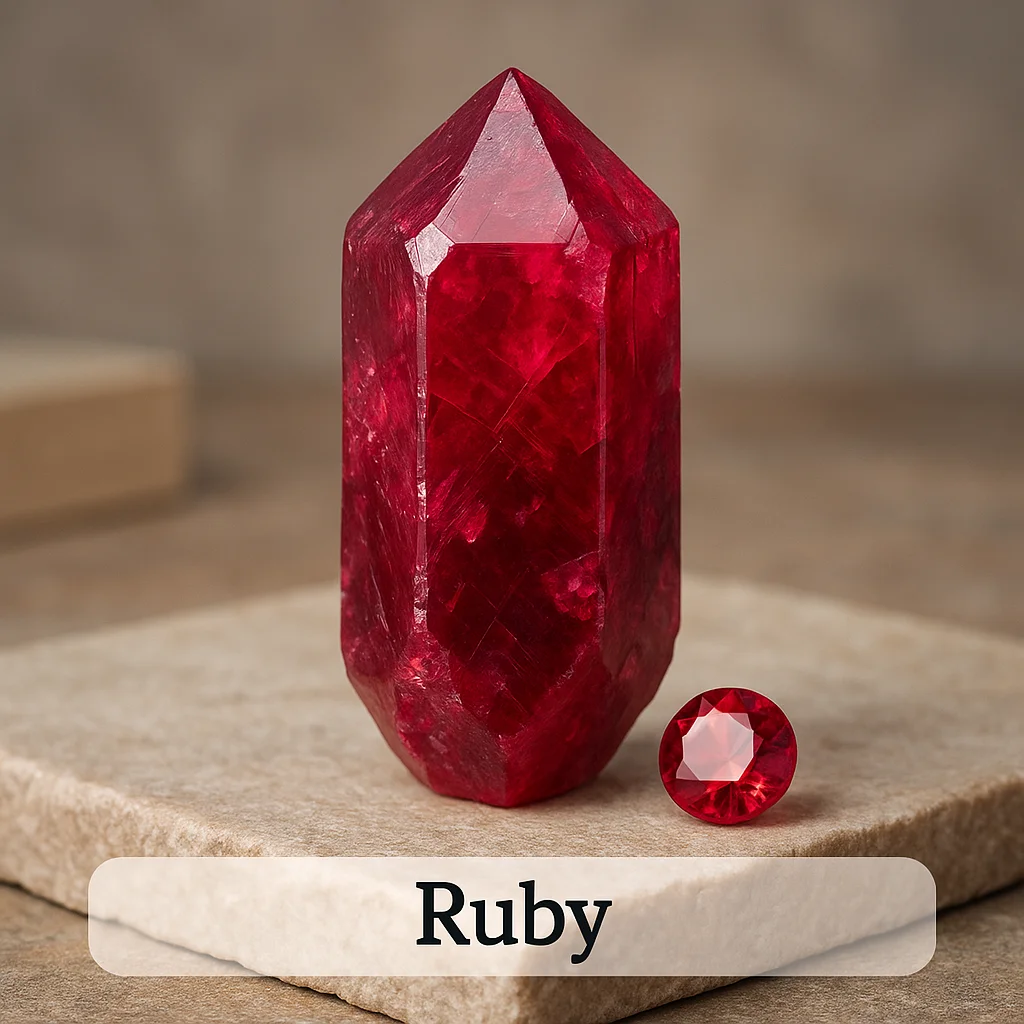
Ruby holds a special place among gemstones, not only for its beauty but also because it is one of the four precious gemstones, alongside diamonds, sapphires, and emeralds. Additionally, ruby is the traditional birthstone for July, making it a popular choice for birthday jewelry.
This article will introduce readers to various aspects of ruby, including its appearance, properties, origins, value, care, and tips for purchasing. Whether you're a budding gem enthusiast or someone keen on buying jewelry, understanding these facets will enrich your appreciation of this captivating stone.
🌍 Where It Comes From
In nature, ruby is predominantly found in metamorphic and igneous rock formations. The gemstone forms under high-pressure conditions in the Earth's crust, where aluminum and chromium-rich minerals are present.
The most well-known rubies come from regions in Myanmar (formerly Burma), but they are also mined in Thailand, Sri Lanka, and parts of Africa, such as Mozambique. Each region's rubies often have distinct color characteristics, influenced by the local geology.
Origin significantly impacts a ruby's value and appearance. For instance, Burmese rubies are highly prized for their vibrant "pigeon's blood" red color. However, when purchasing, one should weigh the origin's influence cautiously, as treatments can enhance or modify a ruby’s natural appearance.
🔬 How It Forms
Rubies form over millions of years in the Earth's crust due to geological processes involving heat and pressure. The presence of trace elements like chromium is crucial, as it gives ruby its iconic red color.
This gemstone typically crystallizes in hexagonal forms and is often found in marble or basalt-hosted deposits. The exact environmental conditions, including temperature and pressure, contribute to the growth and size of the ruby crystals.
While pure corundum is colorless, small amounts of chromium incorporated during crystal growth result in the distinct red coloration that characterizes ruby. This process is a marvel of natural geology and chemistry.
🎨 Color and Look
Rubies are known for their rich red coloration, but the shades can range from pinkish-red to a deeper, darker maroon. The exact color of a ruby depends on the chromium content and the presence of other trace impurities.
Inclusions, or internal features, can affect the ruby's transparency and appearance. Some rubies exhibit a star-like effect known as asterism, which occurs when light reflects off parallel needle-like crystals within the gem. A well-cut ruby with good clarity can enhance its natural beauty.
Rubies may undergo treatments such as heat treatment, which is common and generally accepted in the trade to improve color and clarity. However, buyers should be aware that untreated rubies often command a higher price in the market.
🧪 Properties That Matter
Understanding the properties of ruby can help in assessing its suitability for different types of jewelry. Ruby ranks 9 on the Mohs hardness scale, indicating excellent scratch resistance, just below diamond and surpassing many other gemstones.
While rubies are hard, they aren't indestructible. They have no cleavage planes, making them less likely to break along specific lines. However, they can still chip if subjected to a hard impact.
With a vitreous luster, rubies can be incredibly lustrous when polished, enhancing their visual appeal in jewelry. This makes them suitable for everyday wear, such as rings and bracelets, as well as special occasion pieces.
✨ Meanings, Birthstones, and Culture
Ruby has been traditionally associated with passion, love, and courage. It has long been revered across many cultures for its rich color and perceived magical properties. In ancient times, rubies adorned the crowns and armor of royalty.
As the birthstone for July, rubies hold cultural significance for those born in that month. Some believe rubies bring good fortune and protection to their wearers, although these beliefs are cultural traditions rather than scientifically proven.
In modern jewelry, rubies continue to symbolize love and passion, making them a popular choice for engagement rings and special gifts that convey deep personal expression.
🧼 Care and Cleaning
To maintain a ruby's beauty, it should be cleaned gently with mild soap, water, and a soft cloth. Avoid using harsh chemicals and ultrasonic cleaners, which could damage the stone.
While rubies are durable, they should be protected from hard knocks and extreme temperature changes, which might cause cracks. Long soaking is unnecessary and should be avoided.
For storage, place rubies separately from other gems to prevent scratches. Keeping them in a soft pouch or lined jewelry box is ideal to maintain their luster and appearance.
🛒 Buying Tips and What to Check
Several factors influence the price and quality of rubies, including color, clarity, cut, and carat weight. A vibrant red color with minimal inclusions is highly valued, but small inclusions do not significantly diminish worth.
When buying, inquire about any treatments the ruby has undergone. For high-value stones, requesting a gemological report is wise, as it verifies authenticity and details any enhancements.
If purchasing online, research the seller's reputation, ensure a reliable return policy, and carefully examine photographs or videos of the stone to get as accurate a sense of its appearance as possible.
⚠️ Real vs Fake and Common Look-Alikes
Natural rubies should not be confused with synthetic ones, which are created in a lab with the same chemical composition but do not form naturally. These lab-grown rubies are not 'fake,' but they are different from natural rubies.
Imitations such as red glass or composite stones can mimic ruby's appearance but are less durable and valuable. Assembled stones, like doublets or triplets, combine materials to mimic the look of genuine rubies.
Testing by a qualified gemologist is necessary to confirm a ruby's authenticity. It is critical to avoid attempting risky home experiments that could damage the stone or provide unreliable results.
❓ Common Questions and Misconceptions
- Is it a mineral or a rock? Ruby is a mineral, specifically a variety of corundum. - Is it a birthstone? Yes, ruby is the traditional birthstone for July. - Will it scratch easily? No, with a Mohs hardness of 9, ruby is highly scratch-resistant. - Can it go in water? Yes, briefly, but avoid long soaking. - Does color fade in sunlight? Generally, no, but prolonged exposure can affect the stone. - What treatments are common? Heat treatment is common and accepted for enhancing ruby's color and clarity. - Is lab-grown 'fake'? No, lab-grown rubies have the same properties as natural ones, but they lack natural origins. - How do I store it safely? Store rubies separately in a soft pouch or lined box. - Do inclusions always lower value? Not always; minor inclusions are acceptable, but heavy inclusions can reduce transparency. - How do I pick a good one for jewelry? Look for vibrant red color, good clarity, and a reputable seller.
📌 Summary
- Ruby is a red variety of the mineral corundum.
- Typical colors range from pinkish-red to deep maroon.
- Formed under high pressure with trace chromium.
- Scratch-resistant but vulnerable to hard impacts.
- Heat treatment is common to enhance appearance.
- Use gentle cleaning methods, avoid harsh chemicals.
- Ideal for rings, earrings, and pendants.
- Look-alikes include synthetic rubies and imitation stones.
- Professional testing can confirm authenticity.
- Consider color, clarity, and origin when buying.
- July birthstone, associated with passion and love.
- Remember: Ruby's allure lies in its fiery red beauty and durability.