💎 Tiger Eye
🪨 What It Is
Tiger Eye, also known as Tiger's Eye, is a captivating gemstone recognized for its unique chatoyancy, a shimmering, cat-eye effect. This stone is a variety of quartz, specifically a type of microcrystalline gemstone, which includes the presence of fibrous structures that create its distinctive appearance.
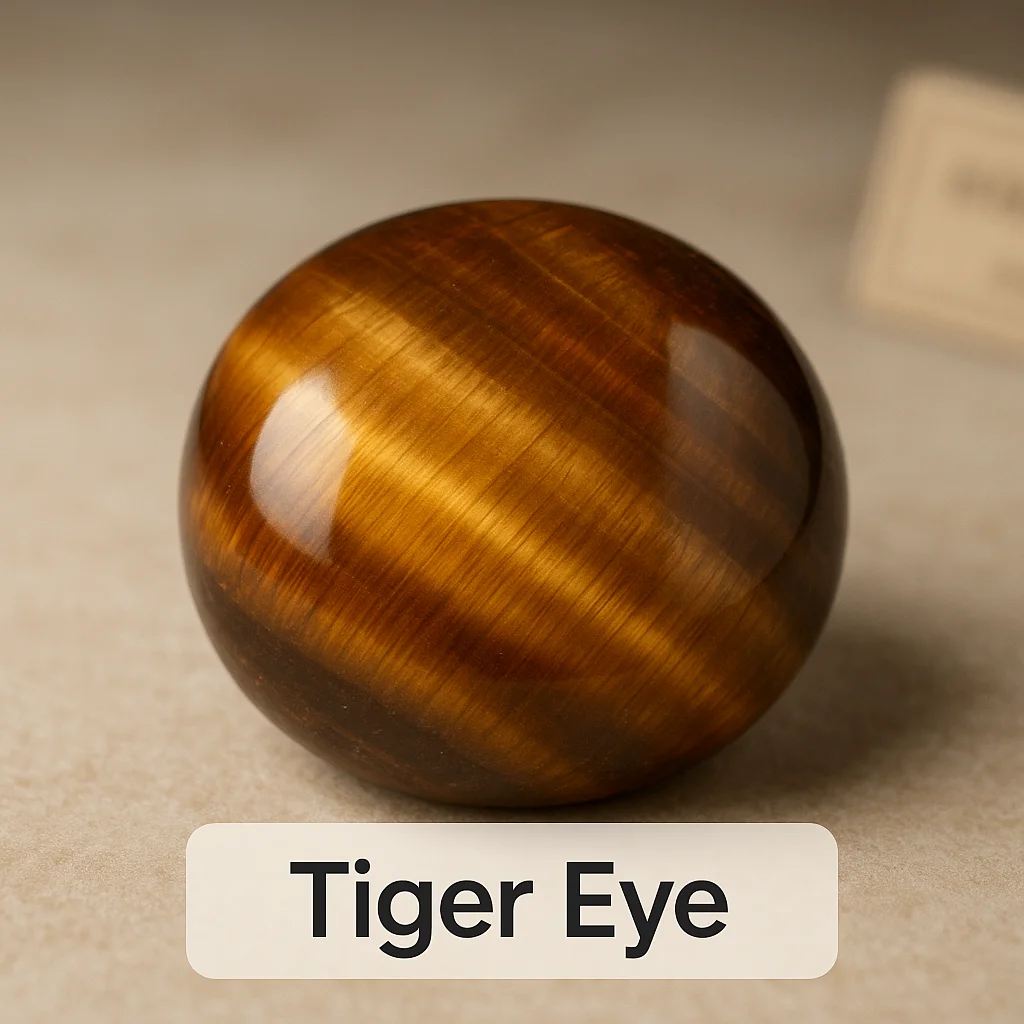
Often used in jewelry, Tiger Eye is a popular choice for beads, pendants, and rings, thanks to its striking appearance and moderate hardness. It is a stone celebrated both for its visual appeal and its place in cultural traditions. Many people are drawn to it not only for its beauty but also for its supposed symbolic meanings.
In this article, you will learn about the appearance and optical properties of Tiger Eye, where it is typically found and how it forms in nature. We will also explore practical details about its properties, such as hardness and care tips, and discuss cultural aspects and buying guidelines.
🌍 Where It Comes From
Tiger Eye forms in metamorphic rocks, originating through a combination of heat and pressure that affects its host rock. The process involves the transformation of crocidolite, a type of fibrous mineral, which is replaced by quartz, while retaining the fibrous structure that causes the chatoyancy effect.
Major sources of Tiger Eye include regions of South Africa and Western Australia, among others. These areas provide the geological conditions necessary for its formation, yielding stones with notable quality and beauty. The origin of Tiger Eye can impact its market perception and quality, as certain regions produce stones with particular visual characteristics.
When selecting a Tiger Eye piece, some buyers consider the origin to gauge color quality and optical effects. For instance, South African Tiger Eye is well-regarded for its warm, golden hues. However, regional preferences should be balanced with personal aesthetic considerations when choosing this gemstone.
🔬 How It Forms
The formation of Tiger Eye involves several natural processes. Initially, crocidolite fibers are laid down within a rock formation. This precursor mineral undergoes alteration as silica-rich fluids percolate through the rock, gradually replacing the fibers with quartz while maintaining their fibrous texture.
The specific arrangement of the fibers within the quartz gives rise to the shimmering chatoyancy effect. This optical phenomenon is due to the parallel orientation of the fibrous structures, which reflect light in a distinct, undulating manner, similar to the eye of a tiger, hence the name.
The color of Tiger Eye varies depending on trace amounts of iron within the fibers. Iron oxide imparts the characteristic golden-yellow to deep brown hues observed in the gemstone. Some specimens may present with reddish or blue tones due to additional mineral inclusions or treatments.
🎨 Color and Look
Tiger Eye is known for its chatoyant, silky luster, which can range from golden yellow to rich brown hues. This gemstone displays a fascinating interplay of light across its surface, thanks to its fibrous internal structure. The stone's colors can be influenced by its cut and polish, as these aspects affect how light interacts with its surface.
Common treatments for enhancing the appearance of Tiger Eye include gentle polishing to accentuate its chatoyancy. While some stones may be heat-treated or dyed to enrich their color, such practices should be transparently disclosed by sellers to inform potential buyers about any enhancements.
When selecting Tiger Eye jewelry, consider how various lighting conditions can affect the perception of its optical effects. Bright, direct light can amplify the stone's shimmer, making it an attractive choice for jewelry worn in both daytime and evening settings.
🧪 Properties That Matter
Tiger Eye has a Mohs hardness of approximately 7, ranking it among the more durable gemstones. This makes it suitable for various jewelry applications, including rings, pendants, and bracelets. Its resistance to scratching allows it to endure everyday wear, while its compact structure contributes to its toughness.
The gemstone exhibits an uneven fracture pattern as opposed to having defined cleavage planes, which means it can break with irregular surfaces rather than along straight lines. This characteristic affects how Tiger Eye pieces are cut and set in jewelry to minimize damage.
The luster of Tiger Eye is distinctly silky, contributing to its appeal. This visual quality, combined with its inherent chatoyancy, enhances its desirability, making it a cherished choice for collectors and jewelry enthusiasts alike.
✨ Meanings, Birthstones, and Culture
Culturally, Tiger Eye is traditionally associated with strength and protection. While these attributes reflect more folklore than scientific fact, they contribute to the gemstone's popularity in jewelry and talismans. Tiger Eye is not specifically linked to any birth month as a traditional birthstone but is often featured in pieces that emphasize personal empowerment and stability.
Tiger Eye's appeal transcends its symbolism, as it remains a beloved material for artisans and jewelers who value its unique optical properties. It is celebrated for its natural beauty, capable of complementing a variety of personal styles and preferences.
In modern times, Tiger Eye is frequently used in contemporary jewelry designs, providing a touch of warmth and sophistication. Its unique visual characteristics offer a timeless appeal, making it a versatile gemstone for both classic and modern designs.
🧼 Care and Cleaning
To maintain the beauty of Tiger Eye, gentle cleaning is recommended. A soft cloth with mild soap and warm water is effective for removing surface dirt and oils. Avoid harsh chemicals or abrasive materials that could damage the stone's surface.
It's wise to avoid long soaking or sudden temperature changes which may affect stones structurally. For storage, keep it separate from harder gemstones to prevent scratches. Using individual pouches or soft cloth bags can help preserve its luster.
If the Tiger Eye is set in regularly-worn jewelry, inspect setting prongs to ensure they are secure. Regular cleaning will help maintain the integrity and appearance of the gemstone over time.
🛒 Buying Tips and What to Check
When purchasing Tiger Eye, consider factors such as color uniformity, chatoyancy intensity, and cut quality. Generally, stones with well-defined chatoyancy and rich, even color are more valued in the market. Asking about treatments is crucial, as treated stones may require different care or impact their valuation.
For high-value pieces, seeking a gemological report can offer insights into the stone's origin and authenticity, though it may not guarantee value. When buying online, review detailed photos and the seller's reputation. A robust return policy is essential for ensuring satisfaction with the purchase.
Build confidence in your buying decisions by familiarizing yourself with the common characteristics and qualities of Tiger Eye. This understanding helps you choose pieces that suit both your aesthetic preferences and practical needs.
⚠️ Real vs Fake and Common Look-Alikes
Distinguishing between natural and synthetic stones is crucial when buying Tiger Eye. Synthetic or imitation pieces, often made from glass or plastic, may attempt to mimic the stone's chatoyancy without the same natural appeal. Assembled stones, like doublets or triplets, layer materials to enhance appearance and cost-effectiveness.
Common look-alikes include materials like pietersite or hawk's eye, which share some visual similarities but differ in composition. Reliable identification of these gems typically requires professional testing to determine exact material composition and authenticity.
Avoid attempting risky home experiments to identify genuineness; instead, prioritize certified jewelers and gemological assessments for accurate information regarding your Tiger Eye purchase.
❓ Common Questions and Misconceptions
Is it a mineral or a rock? Tiger Eye is a variety of quartz, which is a mineral.
Is it a birthstone? Though not a traditional birthstone, Tiger Eye is popular for its symbolic meanings.
Will it scratch easily? With a Mohs hardness of 7, it's relatively resistant to scratching.
Can it go in water? A quick rinse is safe, but avoid prolonged soaking to prevent damage.
Does color fade in sunlight? Generally, Tiger Eye's color is stable under normal lighting conditions.
What treatments are common? Polishing to enhance chatoyancy is common; some stones may be heat-treated or dyed.
Is lab-grown 'fake'? Lab-grown stones maintain the same chemical properties but are not naturally formed.
How do I store it safely? Keep it separate from other stones to prevent scratches, using soft pouches or bags.
Do inclusions always lower value? Not necessarily. Some inclusions can add to a stone's character, though excessive ones may devalue it.
How do I pick a good one for jewelry? Look for well-cut stones with clear chatoyancy and even color.
📌 Summary
- Tiger Eye is a variety of quartz with a chatoyant effect.
- Typical colors range from golden yellow to deep brown.
- Forms through the replacement of crocidolite fibers by quartz.
- Has a Mohs hardness of 7, making it suitable for various jewelry uses.
- May be treated for color enhancement; such treatments should be disclosed.
- Clean with mild soap and water; store separately to avoid scratches.
- Popular in rings, pendants, and beads for its durability and appearance.
- Common look-alikes include pietersite, which shares visual features.
- Authenticity and quality can be confirmed via gemological reports.
- For buying, check color, chatoyancy, and seller reputation.
- Has cultural associations with strength and protection, particularly in folklore.
- Remember, Tiger Eye is durable for everyday wear but requires gentle care for longevity.