💎 Turquoise
🪨 What It Is
Turquoise is a captivating blue-green mineral renowned for its unique color and cultural significance. It is a hydrated phosphate of copper and aluminum, falling under the category of precious stones. Turquoise is often used in jewelry, making it a popular choice for adornments across various cultures.
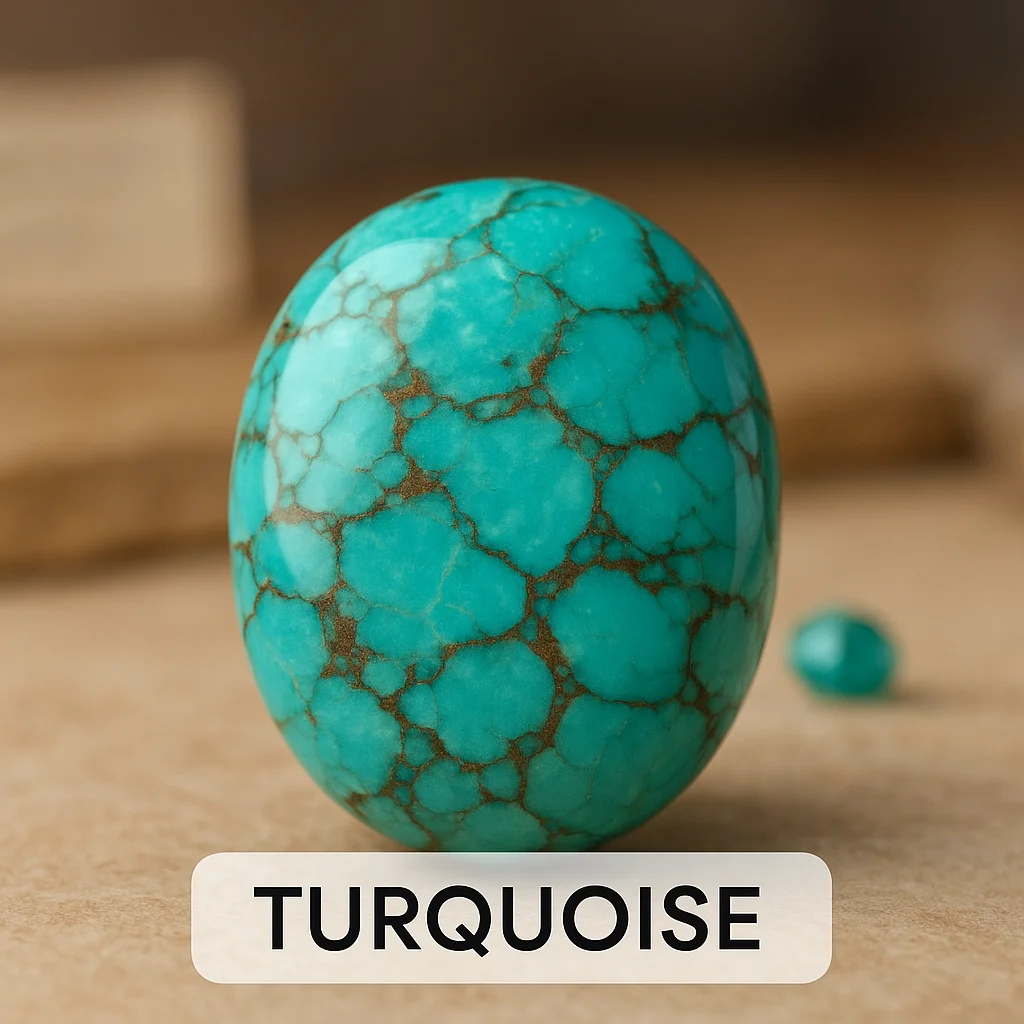
This gemstone is traditionally linked to joy and fortune, making it a favored choice in many jewelry designs. Additionally, turquoise is celebrated as the birthstone for December, symbolizing friendship and peace.
In this article, you will gain insight into turquoise's visual appeal, properties, origins, and other essential aspects. We also cover care tips, buying advice, and how to distinguish genuine turquoise from imitations.
🌍 Where It Comes From
Turquoise forms in arid locations as a secondary mineral in the oxidation zones of copper deposits. It can be found in regions with significant copper concentrations, often in association with other minerals such as malachite and chrysocolla. Geologically, turquoise is commonly discovered in igneous and sedimentary rocks.
Notable turquoise deposits are located in the southwestern United States, Iran, China, and Egypt. These areas are renowned for producing high-quality turquoise, with variations in color and matrix patterns that affect market value. For example, Iranian turquoise is often prized for its bright blue color and absence of matrix.
The origin of turquoise can affect its color and clarity, which in turn influences its market reputation. Collectors and enthusiasts often seek turquoise from specific locales due to the prestige associated with those areas, enhancing both its aesthetic and monetary value.
🔬 How It Forms
Turquoise forms through the interaction of groundwater with copper-rich rocks in arid environments. Over time, as water percolates through these rocks, it leaches copper, aluminum, and phosphorus, which eventually precipitate as turquoise. This process occurs over millions of years, resulting in the distinct blue-green nodules or vein patterns commonly associated with the gemstone.
The vibrant blue color of turquoise is primarily due to the presence of copper, while varying amounts of iron can produce green hues. These color variations contribute to the unique appearance of each turquoise specimen, as no two stones are exactly alike.
Turquoise typically forms in irregular nodules, encrustations, or as veins within host rocks. These formations lead to different cutting styles, from polished cabochons to beads, each showcasing the stone's natural beauty and distinctive characteristics.
🎨 Color and Look
Turquoise is famous for its striking blue and green hues. Its color can range from a pale sky blue to a deep greenish-blue, often exhibiting unique patterns. These patterns, known as matrix, are contrasting black, brown, or even gold-colored veins that run through the stone.
The appearance of turquoise is influenced by its cut and polish. A well-polished turquoise gemstone will display an attractive luster, enhancing its visual appeal. The quality of the matrix can also impact aesthetics, with some buyers preferring stones with minimal veining, while others appreciate the character added by the matrix.
Common treatments used to enhance turquoise include stabilization, where a binding agent is applied to increase durability, and dyeing to enhance or alter color. Buyers should be aware of these treatments, as they can influence both the value and care requirements of the stone.
🧪 Properties That Matter
Turquoise is known for its unique combination of properties, contributing to its popularity in various applications. Its Mohs hardness ranges from 5 to 6, indicating moderate scratch resistance. This makes turquoise suitable for jewelry that experiences occasional wear, such as pendants or earrings, but caution is needed for daily-wear rings.
The gemstone is relatively soft and porous, meaning it can be susceptible to scratches and chemical damage. Toughness, or resistance to chipping, is lower in turquoise compared to harder gemstones like diamonds.
Turquoise typically exhibits a waxy luster and is opaque to semi-translucent. This combination gives it a distinctive appearance that draws many people to its beauty.
✨ Meanings, Birthstones, and Culture
Throughout history, turquoise has been revered for its symbolism and cultural significance. It is traditionally associated with healing, protection, and good fortune. These attributes have made it a cherished gem in many cultures for thousands of years.
In modern times, turquoise is recognized as the birthstone for December, symbolizing peace and friendship. These associations are reflective of the gem's soothing colors, which evoke a sense of calmness and serenity.
While scientific studies do not confirm these symbolic meanings, the cultural traditions and beliefs surrounding turquoise add to its allure and desirability in the gem market.
🧼 Care and Cleaning
To maintain the beauty and integrity of turquoise, gentle care is required. Cleaning should be done with mild soap and warm water, using a soft cloth to gently wipe the stone. Harsh chemicals and ultrasonic cleaners should be avoided, as they can damage the gemstone's surface.
Due to its porous nature, turquoise can be sensitive to prolonged exposure to water and oils, which can alter its color. It is advisable to avoid wearing turquoise jewelry while bathing or swimming.
Proper storage is essential to prevent scratches and damage. Keeping turquoise separate from harder gemstones and storing it in a soft pouch or jewelry box can safeguard its appearance over time.
🛒 Buying Tips and What to Check
When selecting turquoise, factors such as color intensity, matrix pattern, and size influence its value. Stones with a strong, even color and minimal matrix are typically more desirable. However, personal preference plays a significant role in the selection process.
Inquiring about any treatments that the turquoise has undergone is essential, as this can affect both value and care. Requesting a certification or lab report for high-value pieces can provide assurance of authenticity and quality.
When purchasing online, seek reliable sellers with transparent policies and detailed photographs of the turquoise. Ensuring a return policy is in place offers protection in the case the purchased stone does not meet your expectations.
⚠️ Real vs Fake and Common Look-Alikes
Turquoise can be found as natural, synthetic, or imitation stones. Natural turquoise is mined from the earth, while synthetic turquoise is lab-grown, possessing the same chemical properties as natural stones. Imitations, however, often include dyed howlite or plastic meant to mimic turquoise's appearance.
Assembled stones, such as doublets and triplets, are common look-alikes, featuring a thin slice of turquoise fused with other materials to improve stability or appearance. These should be disclosed by sellers, as they differ in value from solid pieces.
A reliable gemologist or certification can differentiate between real and fake turquoise. Avoid attempting home tests that may damage the stone or provide unreliable results.
❓ Common Questions and Misconceptions
Is turquoise a mineral or a rock? It is a mineral, specifically a hydrated phosphate of copper and aluminum.
Is turquoise a birthstone? Yes, it is the birthstone for December.
Will turquoise scratch easily? Due to its Mohs hardness of 5-6, it can scratch or chip if not handled carefully.
Can turquoise go in water? Prolonged exposure can alter its color, so it's best to avoid water.
Does color fade in sunlight? Prolonged exposure could potentially affect color, so storing it away from direct sunlight is advised.
What treatments are common for turquoise? Stabilization and dyeing are common treatments.
Is lab-grown turquoise 'fake'? Lab-grown turquoise is chemically the same as natural, so it is not considered 'fake' but should be disclosed as synthetic.
How should turquoise be stored? Store separately in a soft pouch or box to avoid scratches.
Do inclusions always lower turquoise's value? Not always, as matrix patterns can enhance visual appeal based on personal preference.
How do I pick a good one for jewelry? Choose based on color preference, matrix patterns, and clarity. Ensure the piece meets your intended use and personal style.
📌 Summary
- Turquoise is a blue-green mineral highly prized for jewelry and cultural significance.
- Typical colors range from sky blue to greenish-blue, often with matrix patterns.
- It forms in arid regions through copper-rich rock interactions over time.
- Mohs hardness of 5-6, requiring careful wear to avoid scratches and chips.
- Treatments like stabilization and dyeing are common and should be disclosed.
- Clean with gentle soap and water, store separately to avoid damage.
- Ideal for use in pendants and earrings; handle with care in rings.
- Common look-alikes include dyed howlite and plastic imitations.
- Authenticity confirmed through professional gemological testing.
- Buying tips include considering color, treatments, and seller reputation.
- December birthstone with cultural traditions of peace and friendship.
- Memorable takeaway: Turquoise is treasured for its unique beauty and rich history.