💎 Amber Inclusions What They Mean
🪨 What It Is
Amber is an organic gem formed from the fossilized resin of ancient trees. Unlike conventional gemstones, which are typically minerals or rocks, amber is the result of resin that has hardened over millions of years. Its origins contribute to its unique characteristics, making it a fascinating study for gemologists and enthusiasts alike.
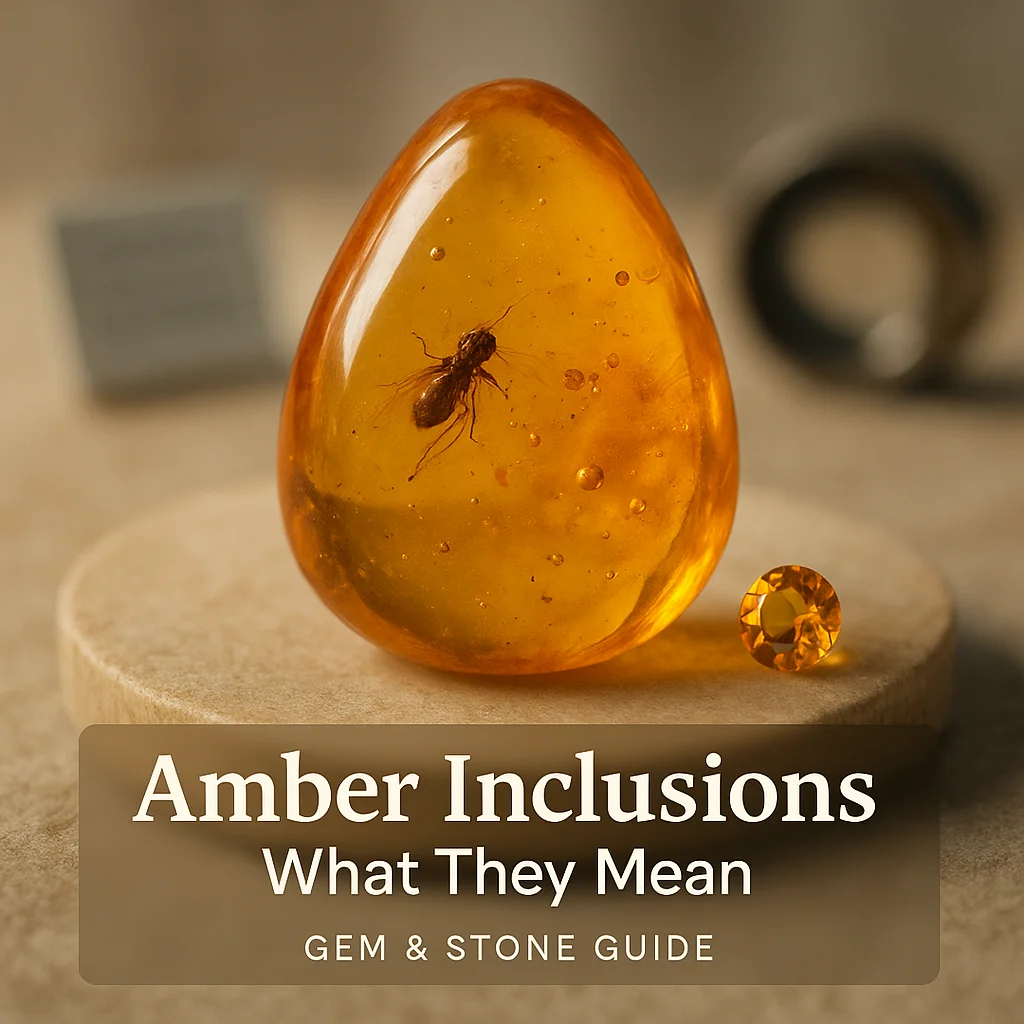
Often celebrated for its warm, honey-like appearance, amber is a popular choice for jewelry due to its unique allure and historical significance. Although not a birthstone, amber holds a special place in heartwarming traditions and adornments around the world.
This article aims to provide a comprehensive overview of amber, focusing on its appearance, properties, origin, value, and care techniques. By the end, readers should have a thorough understanding of what amber inclusions are and what they signify.
🌍 Where It Comes From
Amber forms in sedimentary environments, which accumulate organic material over time. As trees exude resin, it often drips and gathers, eventually being buried by earth and sediments. Through the eons, resin transforms under pressure, percolating down to form amber.
Notably, amber is found in regions like the Baltic, the Dominican Republic, and parts of Myanmar. Its origin can significantly affect its color and clarity—Baltic amber is often clearer, whereas Dominican amber sometimes exhibits unique color variations.
The reputation of the source region can heavily influence market perceptions and pricing. Baltic amber, for instance, is esteemed for its clarity and warm hues, whereas Dominican amber is prized for its rare blue color, although both regions offer highly collectible variations.
🔬 How It Forms
The formation of amber begins with the secretion of resin by ancient trees. Over thousands of years, this resin becomes buried and protected from the elements. As it is subjected to geological pressure and heat, it undergoes chemical changes that transform it into amber.
Resin that becomes amber undergoes polymerization, a process where molecules combine to form a more stable substance. This change alters its physical properties, resulting in the hardened, often translucent material we find today.
Inclusions, which are often small organic fossils, get trapped within the resin before it solidifies. These inclusions, like insects or plant material, provide valuable insights into the ancient ecosystems when the amber was forming.
🎨 Color and Look
Amber is most commonly associated with shades ranging from golden yellow to deep orange, but it can also appear in hues of green, blue, and even red. The color depends on factors like the resin's source tree type and environmental aspects during formation.
Optical effects such as fluorescence can occur in certain ambers, adding to their visual intrigue. The light reflection and refraction within the gem can significantly enhance its color and luminous appeal, especially when cut and polished expertly.
Some types of amber might undergo treatments to improve appearance or stability. Heat treatment is occasionally applied to darken or enhance the color, but genuine amber is usually left untreated to preserve its natural charm.
🧪 Properties That Matter
Amber boasts a Mohs hardness of about 2 to 2.5, which is relatively soft compared to other gemstones. This means it's prone to scratching and requires careful handling, especially in jewelry.
Its toughness, or resistance to chipping, depends largely on the condition of the amber itself. Due to its organic nature, amber can fracture along existing lines but is generally resilient with appropriate care.
Amber's luster, a term referring to the way it reflects light, is typically resinous, contributing to its warm glow. While often transparent, many amber pieces contain inclusions, affecting their transparency and enhancing their uniqueness.
✨ Meanings, Birthstones, and Culture
While amber is not a traditional birthstone, it has been associated with various cultural beliefs and practices over the centuries. Traditionally, amber is thought to represent protection, healing, and purification.
In modern jewelry, amber's significance is largely aesthetic, with its captivating look making it an attractive option for a wide range of accessories. It is particularly favored for its mystical inclusions, which make each piece genuinely one-of-a-kind.
Many cultures prize amber for its historical and ornamental value. Scandinavian traditions often feature amber prominently, given its prevalence in the Baltic region, while other cultures use it in ceremonial objects.
🧼 Care and Cleaning
To clean amber safely, use warm soapy water and a soft cloth. Avoid harsh chemicals or ultrasonic cleaners, as these can damage the stone. Prolonged exposure to heat or sunlight can cause amber to become brittle or fade.
Special precautions should be taken when storing amber. Store each piece separately in a soft pouch or lined box to prevent scratches. Avoid leaving amber jewelry in very dry or hot conditions for extended periods.
If the amber displays surface scratches, they may be polished out by a professional. For the most part, maintaining amber's beautiful appearance involves gentle cleaning and mindful storage.
🛒 Buying Tips and What to Check
When purchasing amber, factors like color, clarity, and size can affect its price. Amber with rare colors or significant inclusions, such as insects, typically fetch higher prices due to their uniqueness and appeal.
Always ask if the amber has been treated and verify the information with a lab report for high-value pieces. A gemological report can offer insight into the amber's authenticity and any enhancements.
For online purchases, scrutinize photographs for clarity and review the seller’s return policy to ensure satisfactory buying conditions. Reputable sellers should openly document any treatments or enhancements applied to the amber.
⚠️ Real vs Fake and Common Look-Alikes
Distinguishing natural amber from synthetic or imitation materials can be challenging. True amber might be confused with plastics or resins, which are lighter and less valuable.
Synthetic amber is lab-manufactured to mimic the natural look, while imitations like glass or doublets (assembled stones) can visually resemble amber but lack its organic origins and authenticity.
Expert gemological testing can confirm authenticity and determine whether what seems real is indeed natural amber. Avoid at-home tests requiring burning or acids, as these can damage the stone and decrease its value.
❓ Common Questions and Misconceptions
"Is it a mineral or a rock?" Amber is an organic gem, not a mineral or rock.
"Is it a birthstone?" No, amber is not a traditional birthstone.
"Will it scratch easily?" Yes, amber is soft and scratches easily.
"Can it go in water?" Briefly, yes. Long immersion should be avoided.
"Does color fade in sunlight?" Prolonged exposure can lead to fading.
"What treatments are common?" Heat treatment may enhance color in some ambers.
"Is lab-grown 'fake'?" Lab-grown lacks organic history but can visually resemble amber.
"How do I store it safely?" Store separately in soft-tissue pouches or lined boxes.
"Do inclusions always lower value?" Not necessarily. Unique inclusions can increase appeal.
"How do I pick a good one for jewelry?" Examine clarity, ensure stability, and note any unique features.
📌 Summary
- Amber is an organic gem formed from tree resin.
- Comes in shades of yellow, orange, with rare blues.
- Formed over millennia under pressure and heat.
- Has a low Mohs hardness of 2-2.5; handle with care.
- Heat treatments can alter color, always ask sellers.
- Clean gently with mild soap and water, avoid harsh chemicals.
- Use in pieces like pendants; earrings show off its beauty.
- Often confused with plastic and synthetic resins.
- Lab reports confirm authenticity and treatment disclosures.
- Reputation, photos, and policies are key for online buying.
- Historically and culturally cherished despite no birthstone link.
- Amber's allure lies in its unique inclusions trapped in time.