💎 Mother of Pearl
🪨 What It Is
Mother of Pearl is an organic gem formed from the inner shell layer of mollusks, primarily oysters and abalones. Known for its iridescent look, this material is often used in jewelry and decorative objects. Unlike traditional minerals, it is derived from marine environments, giving it unique properties.
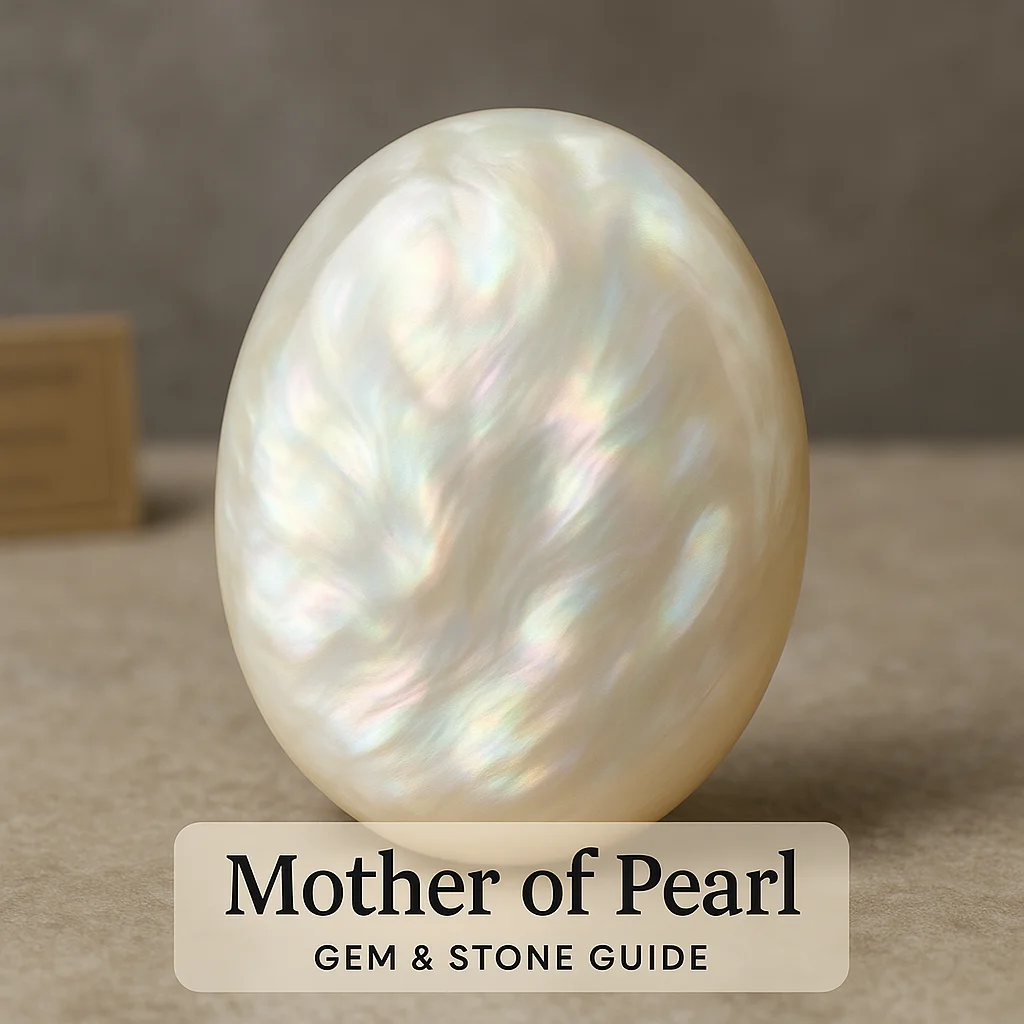
This gem is not a traditional birthstone, but it is incredibly popular in jewelry due to its soft luster and wide range of colors. Mother of Pearl can be found in many types of accessories, from rings to pendants, enhancing their appeal with its gentle sheen.
In this article, beginners can expect to learn about Mother of Pearl's origins, appearances, properties, cultural relevance, care tips, and buying advice. Understanding these elements will help you appreciate its value and make informed decisions when choosing jewelry featuring this captivating gem.
🌍 Where It Comes From
Mother of Pearl is extracted from the inner lining of mollusk shells. It forms in marine environments, particularly in the shells of oysters and abalones. The material develops as the mollusk secretes layers of nacre, a combination of calcium carbonate and conchiolin.
This organic gem is found globally, from the warm waters of the Pacific Ocean to the cooler seas of the Atlantic. Regions like Australia, Indonesia, and Japan are known for producing high-quality Mother of Pearl thanks to the presence of abundant mollusk populations.
The origin of Mother of Pearl can affect its appearance, with certain areas known for producing specific colors or patterns. However, its beauty and iridescence remain a hallmark of this gem, irrespective of origin. While some consumers may prefer material from well-known regions, quality primarily depends on the craftsmanship and care during extraction.
🔬 How It Forms
Mother of Pearl forms naturally inside mollusk shells due to a biological process involving nacre secretion. Over time, the mollusk deposits thin, overlapping layers of nacre on the inner shell surface, creating a durable and iridescent structure. This process is a natural defense mechanism, protecting the mollusk from irritants or parasites.
The process of nacre formation involves the secretion of calcium carbonate crystals called aragonite, bound together by an organic protein called conchiolin. This continuous layering results in the gem's characteristic smooth and shiny surface, which varies in color depending on the minerals present during formation.
Unlike crystalline minerals, Mother of Pearl lacks a crystal habit. Instead, its appeal lies in its unique layered structure, enhancing its visual depth and creating a play of color that shifts with light angle changes.
🎨 Color and Look
Mother of Pearl is renowned for its pearly luster and iridescent color play. This gem can appear white, cream, or pink, but its color can also range into green and blue hues, depending on the mollusk species and specific environmental conditions.
The optical effect known as iridescence gives Mother of Pearl its magical appeal. This effect is due to light interacting with the microscopic layers of nacre, reflecting and refracting to create a rainbow-like appearance.
Treatments such as bleaching or dyeing can enhance or modify Mother of Pearl's color. While these practices can augment appearance, buyers should inquire if treatments have been applied, ensuring transparency during purchase decisions.
🧪 Properties That Matter
The practical properties of Mother of Pearl make it suitable for various jewelry applications. It has a Mohs hardness of about 2.5 to 4, indicating moderate scratch resistance. This means it can be worn daily with reasonable care, especially in pendants or earrings.
Mother of Pearl's toughness, however, is generally good, allowing it to resist chipping and breaking better than many other organic materials. It features a smooth, even fracture when broken, contributing to its sheen.
The gem's luster is described as pearly or nacreous. Its soft glow and gentle shine make it particularly appealing for those seeking a natural yet elegant look. Its appearance is most striking when polished smoothly.
✨ Meanings, Birthstones, and Culture
Though not a traditional birthstone, Mother of Pearl holds significant cultural and symbolic value. Traditionally associated with protection and soothing emotions, it has been used in various cultures as a talisman for nurturing and care.
In modern jewelry, Mother of Pearl is cherished for its calming and balancing energy, often said to represent purity and innocence. While these attributes are culturally rooted rather than scientifically proven, they add layers of meaning to jewelry pieces.
Mother of Pearl's universal appeal makes it a gift cherished for its understated elegance and meaningful symbolism, particularly in milestone events or as a token of appreciation.
🧼 Care and Cleaning
Proper care for Mother of Pearl ensures its beauty endures. The safest approach is to clean it with mild soap and water, wiping its surface gently with a soft cloth. Avoid abrasive cleaners or brushes that could scratch or dull the surface.
Exposure to extreme temperatures or prolonged soaking should be avoided, as Mother of Pearl can become damaged or lose its luster. Storing it separately from other harder gemstones will prevent scratches.
Since Mother of Pearl can be sensitive to acids and chemicals, keeping it away from perfumes or household cleaners is essential. Treat it with the care you would extend to any precious natural material.
🛒 Buying Tips and What to Check
When purchasing Mother of Pearl, examine factors such as color, luster, and size. A smooth, reflective surface without chips or cracks generally indicates higher quality. Vibrant, consistent iridescence is also a sign of desirable Mother of Pearl.
Ask sellers about any treatments and request documentation for high-value pieces, as this helps verify authenticity and quality. A reputable seller will willingly provide details about the origin, treatments, and other specifics.
For online purchases, ensure the seller has positive reviews and offers a reliable return policy. Detailed photos and clear product descriptions are vital for assessing the piece's true appearance and value.
⚠️ Real vs Fake and Common Look-Alikes
Mother of Pearl can be imitated with materials like plastic or glass, making it crucial to distinguish between genuine and artificial options. The real version offers a unique iridescence and texture that imitations struggle to replicate.
Look-alikes might also involve composite materials where thin layers of real Mother of Pearl are glued over substrates, known as doublets or triplets. Synthetic Mother of Pearl is rare but possible, and is lab-grown rather than naturally harvested.
Professional testing is the safest way to confirm authenticity, which experienced gemologists or jewelers can perform. Avoid attempting risky home tests that could damage both imitations and authentic pieces.
❓ Common Questions and Misconceptions
Is it a mineral or a rock? Mother of Pearl is an organic gem, not a mineral or rock.
Is it a birthstone? It is not a traditional birthstone but is appreciated for its cultural meaning.
Will it scratch easily? With a Mohs hardness of 2.5 to 4, it can scratch, so protective care is advisable.
Can it go in water? Occasional water exposure is fine, but prolonged soaking is not recommended.
Does color fade in sunlight? Extended exposure to sunlight can dull Mother of Pearl, so storage in a shaded area is suggested.
What treatments are common? Dyeing is a common treatment to enhance or change color.
Is lab-grown 'fake'? Lab-grown shares some properties of genuine Mother of Pearl but is not natural.
How do I store it safely? Store separately, ideally in a soft pouch to protect from scratches.
Do inclusions always lower value? Inclusions may affect value but are less common in Mother of Pearl than in gemstones.
How do I pick a good one for jewelry? Look for smooth, consistent luster and even coloration.
📌 Summary
- Mother of Pearl is an organic gem from mollusk shells.
- Known for its iridescent, pearly appearance.
- Forms in marine environments through nacre secretion.
- Moderate hardness suitable for jewelry, especially pendants and earrings.
- Beware of treatments like dyeing, and inquire when buying.
- Clean gently with soap and water; avoid harsh chemicals.
- Most popular in necklaces and earrings for its luster.
- Common look-alikes include plastic and glass imitations.
- Professional testing can confirm authenticity.
- Purchase from reputable sellers with positive feedback.
- While not a birthstone, it carries cultural symbolism.
- Remember: Its luster and play of color make it uniquely captivating.