💎 Pearl Tahitian
🪨 What It Is
Pearl Tahitian is an organic gem known for its captivating dark luster and exotic appeal. Unlike mineral gemstones which form in the earth, pearls are created by living organisms, specifically saltwater oysters. This makes them quite unique in the world of gemstones.
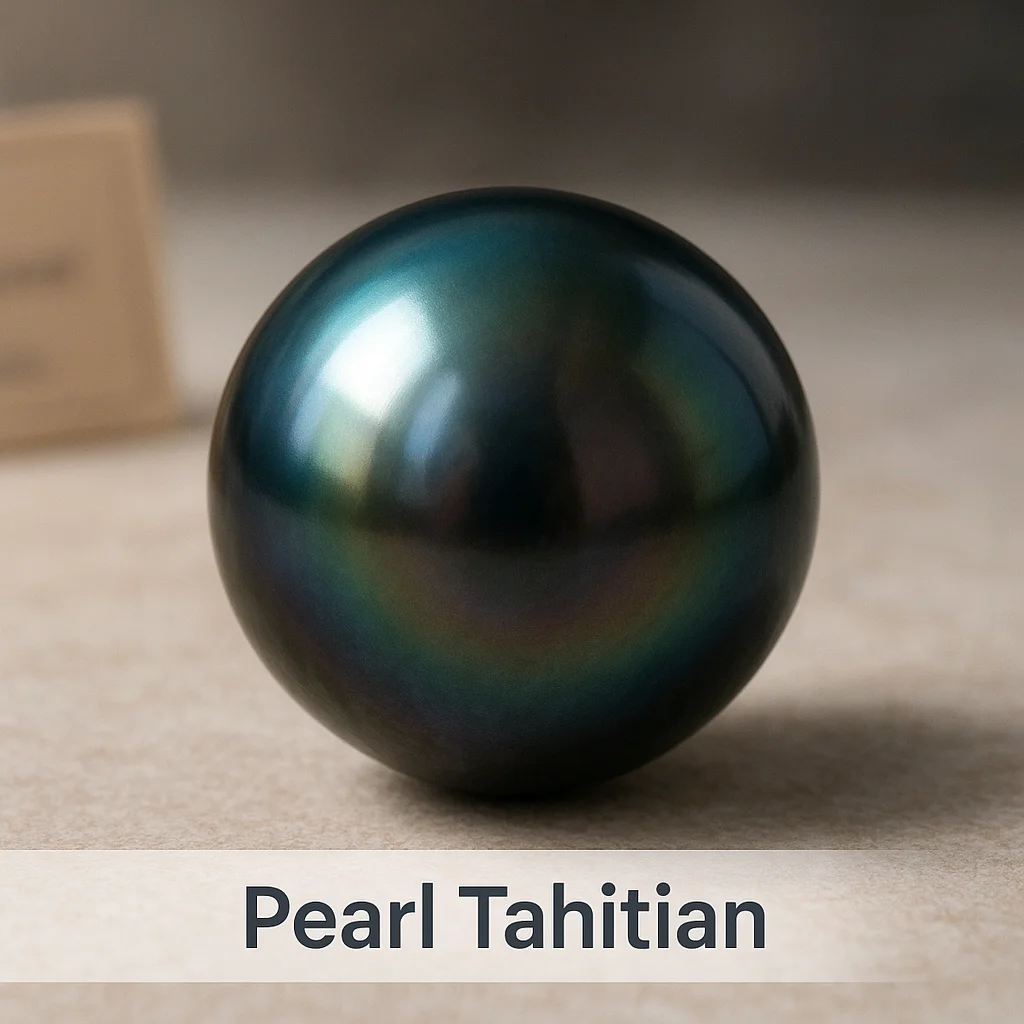
Often sought after for their intriguing colors and luminous sheen, Tahitian pearls are a popular choice for jewelry, particularly necklaces and earrings. They are highly prized in the jewelry market for their natural beauty and rarity.
This article will guide you through the fascinating world of Tahitian pearls, including their formation, appearance, origins, properties, and how to care for them. We'll also cover tips for buying and how to distinguish them from look-alikes.
🌍 Where It Comes From
Tahitian pearls originate from the black-lipped Pinctada margaritifera oyster, which thrives in the warm waters of the South Pacific. These exotic marine gems are primarily harvested in French Polynesia, often referred to as the gateway to Tahitian pearls due to its prolific production.
The oysters are cultivated in lagoons and bays, where the combination of clean water, rich nutrients, and optimal temperatures create the perfect environment for pearl formation. Tahitian pearls are especially known for their wide range of deep colors, which are a result of the unique environment they develop in.
While French Polynesia is the best-known source, smaller quantities of Tahitian pearls are also produced in other parts of the Pacific Ocean. The origin of a pearl can influence its market reputation, adding to its allure and often affecting its value.
🔬 How It Forms
Unlike gemstones formed through heat and pressure, Tahitian pearls form organically within oysters. This process begins when a foreign substance enters the oyster, triggering a defensive response from the mollusk.
The oyster secretes layers of nacre, a combination of calcium carbonate and organic substances, around the intruding object. Over time, these layers build up to form a pearl. The stunning colors of Tahitian pearls come from overtones of metallic hues and the natural pigmentation of the oyster's nacre.
The formation process can take several months to years, with thicker nacre generally indicating a higher quality pearl.
🎨 Color and Look
Tahitian pearls are renowned for their exceptional range of colors, including deep black, charcoal, silver, green, blue, aubergine, and even peacock hues that combine several shades. This diverse palette distinguishes them from other types of pearls.
The appearance of a pearl is influenced by its surface quality, luster, and size. A well-formed pearl will have a bright, shiny finish, and the smoothness of its surface will further enhance its appeal.
Unlike some gemstones, Tahitian pearls are rarely treated. They are often left in their natural state to preserve their unique beauty, although some may undergo minor polishing to enhance their luster.
🧪 Properties That Matter
Pearls have a lower Mohs hardness of around 2.5 to 4.5, making them relatively soft compared to mineral gemstones. This means they can scratch easily and require careful handling when worn as jewelry.
Despite their softness, pearls are remarkably tough due to their resilient structure. They do not have cleavage, which grants them some resistance against chipping, although sharp blows should be avoided.
The luster of a pearl—its capacity to reflect light—is one of its most treasured qualities. As pearls are opaque, their luster and surface condition take on greater significance for their overall beauty.
✨ Meanings, Birthstones, and Culture
Traditionally associated with wisdom, purity, and elegance, pearls hold a revered place in various cultures. Though not linked to a specific month, they are popular choices for June birthstones in various traditions.
Tahitian pearls carry a sense of mystery and allure, making them a favorite among jewelry enthusiasts seeking something unique and stylish. They're often presented as gifts to mark special occasions and achievements.
While they are embedded in cultural lore and tradition, remember, these symbolisms are renowned for their charm, not scientifically backed effects.
🧼 Care and Cleaning
To maintain the beauty of Tahitian pearls, it's best to clean them with mild soap and water. Use a soft, non-abrasive cloth to gently clean the surface, and avoid harsh chemicals and rough cloths that may scratch.
Pearls are sensitive to acid, heat, and humidity. Steering clear of prolonged sun exposure and high temperatures is essential, and they look their best when stored in a cool, dry place.
Store your pearls separately from other jewelry to prevent scratches, ideally in a soft pouch or lined box.
🛒 Buying Tips and What to Check
When purchasing Tahitian pearls, consider their color, size, luster, surface quality, and shape. Various factors including these influence the pearl’s overall value and appearance.
Asking about the origin, treatment history, and any certification accompanying the pearl is wise, especially for pearls carrying a significant price tag.
Email communication or video calling can verify the quality further when buying online. Ensure the seller has a good return policy, and a good reputation to ensure your purchase is secure.
⚠️ Real vs Fake and Common Look-Alikes
Tahitian pearls can be natural or cultured. It's essential to differentiate them from synthetic pearls, which are lab-grown, and imitation pearls, which may be made from glass, plastic, or compounds.
While natural pearls form without human intervention, cultured pearls like Tahitian ones are the result of this delicate cultivation process.
Determining authenticity often requires professional assessment, as reliable identification generally needs advanced equipment and expertise beyond simple home tests.
❓ Common Questions and Misconceptions
Is it a mineral or a rock? Neither—Tahitian pearls are organic gems from oysters.
Is it a birthstone? They're commonly part of June birthstones traditions.
Will it scratch easily? Yes, with a Mohs hardness of 2.5 to 4.5, pearls are comparatively soft.
Can it go in water? Yes, but not for long periods and always dry thoroughly after.
Does color fade in sunlight? Prolonged exposure can dull pearls, so cautious wear is advised.
What treatments are common? Most Tahitian pearls are not treated, though cleaned and polished.
Is lab-grown 'fake'? Lab-grown pearls are synthetic but priced as replicas, distinct from real ones.
How do I store it safely? Store sexlparate from other jewelry to prevent scratching and tarnishing.
Do inclusions always lower value? Not necessarily; the quality surface dictates matter more for pearls.
How do I pick a good one for jewelry? Focus on luster and surface smoothness for visually appealing choices.
📌 Summary
- Tahitian pearls are organic gems sourced from South Pacific oysters.
- They come in diverse colors, including unique peacock hues.
- Form naturally as layers of nacre build around irritants in oysters.
- Soft but tough, needs careful treatment to prevent scratches.
- Rarely treated, natural state is cherished for purity.
- Gentle cleaning with soap and water, avoid chemicals.
- Ideal for necklaces and earrings due to visual appeal.
- Often confused with synthetic or imitation pearls.
- Professional testing confirms authenticity, not DIY.
- Choosing pearls involves assessing size, luster, and origin.
- Symbolizes elegance and beauty in cultural traditions.
- Tahitian pearls evoke an air of mystery and allure.