💎 Black Opal Lightning Ridge
🪨 What It Is
Black Opal from Lightning Ridge is renowned as one of the most precious and unique gemstones in the world. It is a distinctive variety of opal, known for its dark body tone and vibrant play-of-color, a term that describes the way opal reflects light in a dazzling array of colors.
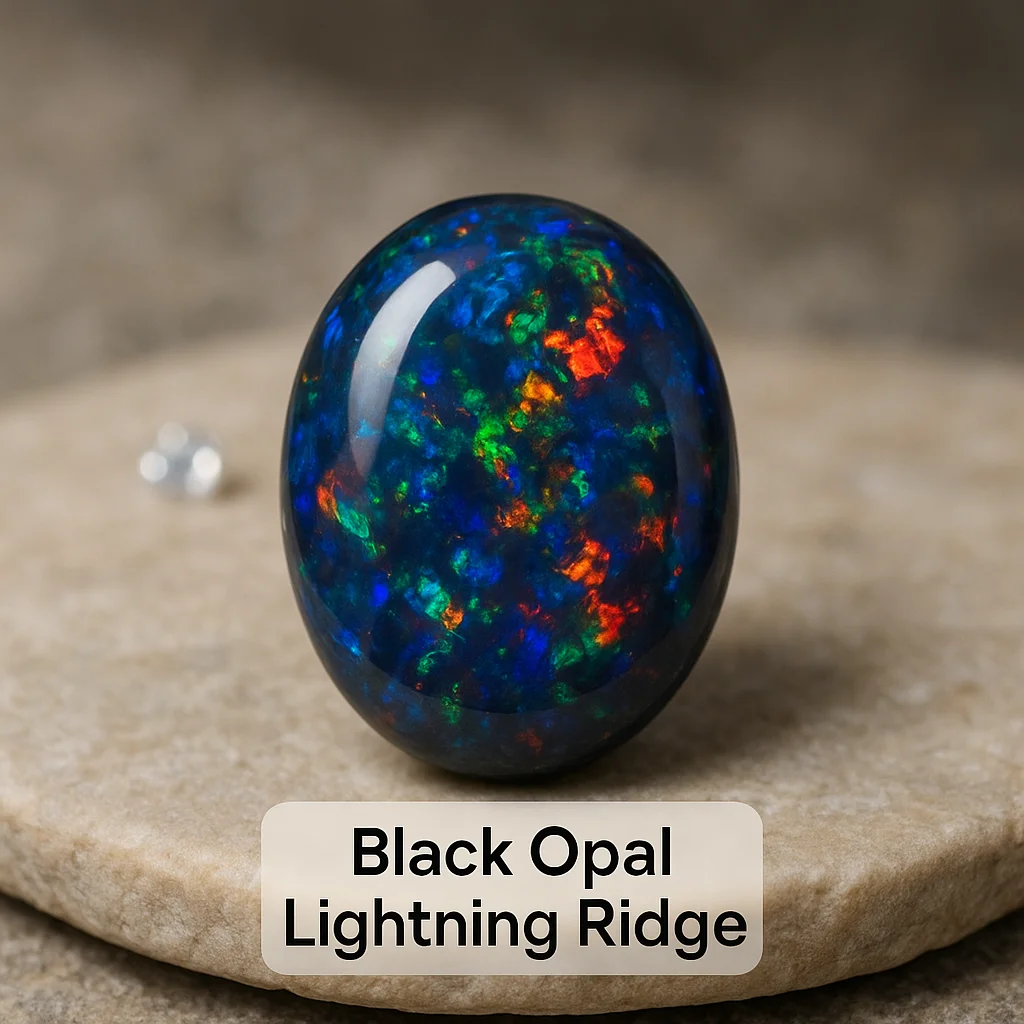
Opal is classified as a mineraloid, rather than a true mineral, due to its lack of a crystal structure. Lightning Ridge Black Opal stands out for its exceptional quality and intense colors, which often include rich blues, greens, and reds.
Commonly used in fine jewelry, Black Opal is considered a national gemstone of Australia. It is not officially recognized as a birthstone but is celebrated for its aesthetic and cultural significance in the jewelry world.
🌍 Where It Comes From
Black Opal is typically sourced from sedimentary rock formations. This gemstone is a product of unique geological processes occurring over millions of years, involving water and silica-rich environments.
Lightning Ridge, located in New South Wales, Australia, is the most famous and significant source of Black Opal. The opals from this region are particularly valued for their deep body tones and vibrant display of colors, setting them apart from opals found in other locations.
The origin of Black Opal plays a crucial role in its value. Gem enthusiasts and collectors highly prize stones from reputable areas like Lightning Ridge, as these are often considered superior in quality and desirability.
🔬 How It Forms
Black Opal forms through a fascinating process where water carrying silica seeps into cracks and voids in rock formations. Over time, the water evaporates, leaving behind a silica deposit. With the right conditions of pressure and temperature, these deposits eventually form opals.
The dark body tone characteristic of Black Opal is typically attributed to trace elements present during the formation process. The play-of-color, the gemstone's most captivating feature, results from light diffracting internally through microscopic silica spheres.
Opals are usually found in nodules or seams, and their unique formation process means that each opal is truly one-of-a-kind, contributing to their allure and rarity.
🎨 Color and Look
Black Opal is celebrated for its stunning play-of-color, displaying a full spectrum of colors across its dark background. Shades of blue, green, and red are most common, with the finest specimens exhibiting intense, vibrant flashes.
The appearance of Black Opal can be influenced by how it is cut and polished. The orientation of colors within the stone dictates the style of the cut, and a high-quality polish enhances the stone's luster and color display.
Treatments such as dying or sugar-acid treatments are known to enhance color in opals, but reputable sellers should always disclose such treatments to buyers. Untreated opals tend to be more valuable, especially when they exhibit natural, vivid color patterns.
🧪 Properties That Matter
On the Mohs scale of hardness, Black Opal rates between 5.5 and 6.5, which makes it relatively soft compared to other gemstones like sapphire or diamond. This softness necessitates careful wearing, especially in rings or bracelets prone to daily wear and tear.
Opals lack cleavage but can fracture, potentially chipping easily if not handled with care. They have a vitreous to waxy luster, contributing to their mesmerizing appearance.
Due to their delicate nature, Black Opals are ideally set in jewelry pieces that are protected, such as pendants or earrings, where the risk of damage is minimized.
✨ Meanings, Birthstones, and Culture
Historically, opals have been associated with a wide range of symbolism and beliefs. They are traditionally thought to represent hope, purity, and truth. Many cultures view opal as a stone of protection and luck, though these associations are more folklore than fact.
While Black Opal isn't officially designated as a birthstone, its uniqueness and beauty make it a desirable choice for gifting and personal adornment. It stands out in modern jewelry for its vibrant color play and distinctive appearance.
The rich cultural history and exceptional beauty of Black Opal from Lightning Ridge make it a beloved gemstone, often used to create heirloom jewelry with deep personal value.
🧼 Care and Cleaning
Due to its porous nature, Black Opal requires gentle care. Cleaning should be done using warm, soapy water and a soft cloth. Avoid harsh chemicals and prolonged exposure to water, which can compromise its structure.
Sudden temperature changes can also damage opals, so it's important to store them in a stable environment. Keeping them away from hard stones and in individual pouches or cushioned settings helps prevent scratches and fractures.
When worn, opals should be the last piece of jewelry put on and the first to be removed to minimize the risk of contact with cosmetics, perfumes, and physical impact.
🛒 Buying Tips and What to Check
When purchasing Black Opal, be sure to assess the stone's color vibrancy and pattern. The intensity and distribution of play-of-color significantly affect the gemstone's value and appeal.
Ask about any treatments the opal may have undergone, and if investing in a high-value piece, consider obtaining a gemological report to confirm authenticity and quality.
For online purchases, ensure the seller has a detailed return policy, clear photographs of the stone, and a strong reputation. Transparency about origin and treatments is key for informed buying decisions.
⚠️ Real vs Fake and Common Look-Alikes
Distinguishing between natural and synthetic opals can be challenging. Synthetic opals are lab-grown stones designed to mimic the features of natural opals, while imitation opals are often made from glass or plastic.
Assembled stones, such as doublets or triplets, consist of a thin layer of real opal attached to another material to enhance durability or appearance. These are often used in more affordable jewelry.
Professional gemologists can provide reliable identification through testing, while buyers should avoid attempting potentially damaging home experiments to determine authenticity.
❓ Common Questions and Misconceptions
Q: Is it a mineral or a rock? A: Black Opal is a mineraloid, not a true mineral, due to its lack of a crystal structure.
Q: Is it a birthstone? A: Though not officially, Black Opal is cherished for its cultural significance and beauty.
Q: Will it scratch easily? A: Yes, due to its lower hardness, it is more prone to scratches compared to harder stones.
Q: Can it go in water? A: It's best to avoid long soaking, as opals are porous and may react negatively.
Q: Does color fade in sunlight? A: Prolonged sun exposure may impact opals, so limit their time in direct sunlight.
Q: What treatments are common? A: Treatments such as dying or sugar-acid treatments can enhance opals but should be disclosed by sellers.
Q: Is lab-grown 'fake'? A: Lab-grown opals are not fake; they simply replicate natural formation conditions in a controlled environment.
Q: How do I store it safely? A: Store opals separately in soft cloth or padded boxes to prevent scratches.
Q: Do inclusions always lower value? A: Not always; unique inclusions can add interest and do not necessarily diminish value significantly.
Q: How do I pick a good one for jewelry? A: Look for vibrant color, seamless patterns, and ensure it fits the style and durability needs of the intended jewelry piece.
📌 Summary
- Black Opal Lightning Ridge is a unique and precious gemstone.
- It is famous for its dark body tone and vibrant play-of-color.
- Formed through geological processes involving silica and water.
- Soft on the Mohs scale, requiring care in wear and setting.
- Treatments can enhance color but should be disclosed.
- Gentle care needed: soap and water cleaning, avoid chemicals.
- Optimal for protected jewelry settings like pendants and earrings.
- Common look-alikes include synthetic and assembled stones.
- Professional testing confirms authenticity more reliably than DIY approaches.
- Check for vibrant color, reputable origin, and full disclosure when buying.
- While not a birthstone, it holds cultural and aesthetic value.
- Its natural beauty and rarity make it a memorable and sought-after gem.