💎 Clarity vs Color Which Impacts Price More
🪨 What It Is
In the world of gemstones, clarity and color are two of the most important factors that determine a stone's desirability and value. Gemstones are minerals that have been cut and polished to be used in jewelry or as collectibles. While some gems, like pearls and amber, are organic rather than mineral, the majority are crystals, such as diamonds, rubies, sapphires, and emeralds.
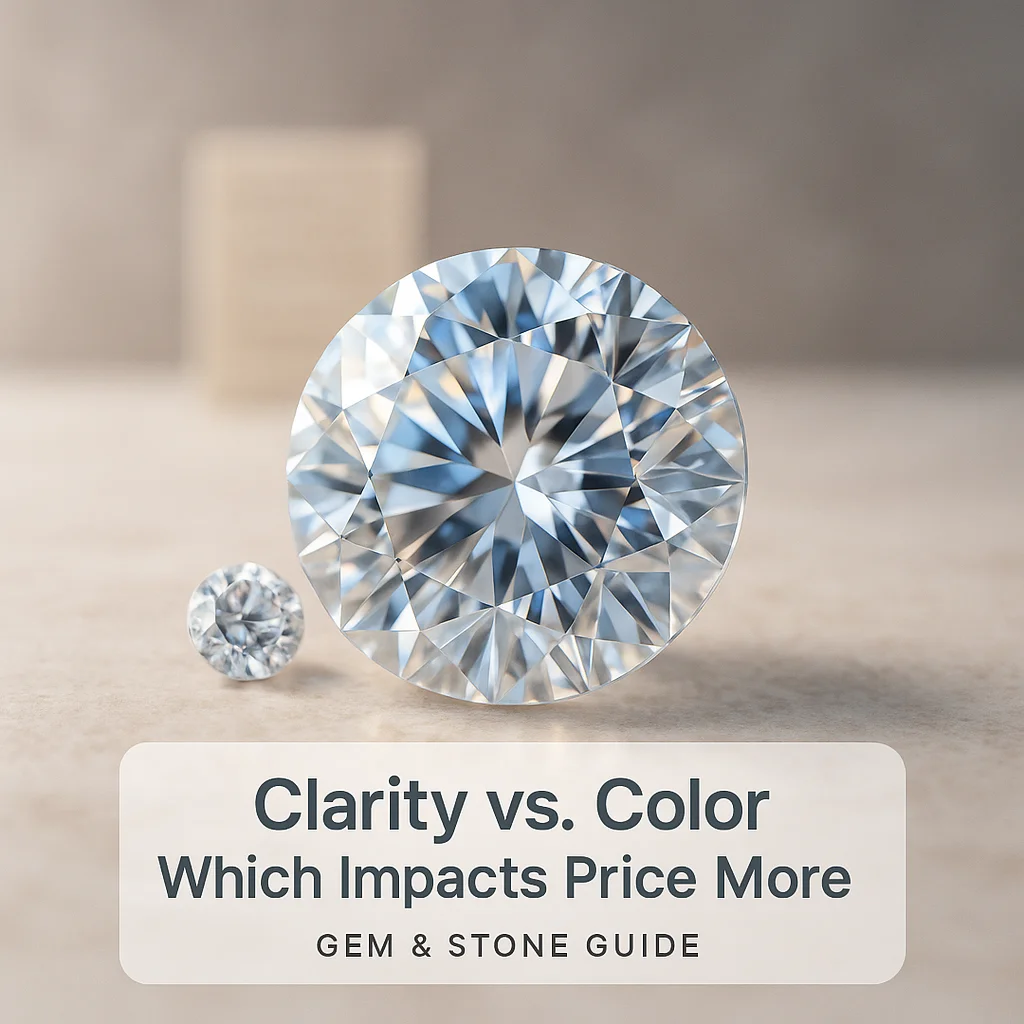
When considering a gemstone purchase, understanding the balance between clarity and color can significantly affect your decision. Clarity refers to the presence or absence of inclusions and blemishes within the gem, while color pertains to the hue, tone, and saturation. Both these factors, among others, contribute to a gemstone's visual appeal and price point.
This article will guide you through the basics of gemstone clarity and color, where they are found, how they form, and what affects their quality and value. You'll also learn how to care for them and what to look for when purchasing them.
🌍 Where It Comes From
Gemstones are found in various geological settings across the world. They can form in igneous rocks when molten rock cools and crystallizes, as seen with diamonds and rubies. Metamorphic processes, involving heat and pressure changes, can create gems like sapphires and spinels. Sedimentary environments can yield opals and malachite, while hydrothermal processes can produce emeralds.
Some well-known gemstone-producing regions include parts of Africa, Australia, South America, and Asia. For example, rubies have a strong association with Myanmar, sapphires with Sri Lanka and Kashmir, and emeralds with Colombia. The origin of a gemstone can affect its market reputation, especially if the region is known for high quality or unique colors.
Collectors and buyers often consider the origin of a gemstone not only for its beauty but also for its contribution to the gemstone's identity and historical significance. However, it's worth noting that origin does not always guarantee quality or high value.
🔬 How It Forms
Gemstones form in nature over millions of years through unique geological processes. They may result from the cooling and solidification of magma or changes caused by heat and pressure in the earth's crust. For instance, diamonds form at high temperatures and pressures deep within the earth, while opals form from silica-rich solutions.
The color of a gemstone is typically due to trace elements or impurities in its crystal structure. For example, the presence of chromium gives emeralds their vivid green color, while iron and titanium can turn corundum into blue sapphires.
Gemstones can occur as individual crystals, in clusters, or as part of larger mineral deposits. Some, like quartz and amethyst, are common in geodes, hollow rocks lined with crystals. Understanding how gemstones form offers insight into their rarity and value.
🎨 Color and Look
The color of a gemstone is one of its most striking features and a major determinant of its beauty. Colors can range widely even within a single type of gem, impacting perceived quality and worth. Gemologists often describe gemstones using terms like hue (color), tone (lightness or darkness), and saturation (intensity).
Several factors can enhance or affect a gemstone's appearance, including its cut, polish, and surrounding light conditions. For example, the way a diamond is cut can greatly enhance its fiery brilliance. Lighting can also affect how colors appear, with some gems changing color under different light sources.
Common treatments used to enhance the color and clarity of gemstones include heat treatment, irradiation, and oiling. These are generally accepted practices that can significantly improve a gemstone's appearance, although they should always be disclosed when making a purchase.
🧪 Properties That Matter
When considering gemstones for jewelry, several properties affect their suitability for certain types of wear. The Mohs hardness scale, which measures a mineral's scratch resistance, is crucial. Diamonds, with a hardness of 10, are ideal for all types of jewelry, while softer stones like opal (hardness 5.5–6.5) require more cautious handling.
Toughness, which refers to a gemstone's resistance to chipping and breaking, also impacts its use in jewelry. Cleavage describes how a mineral breaks along certain planes; gems like topaz, which cleave easily, might not be suitable for daily wear.
Luster and transparency influence how light interacts with a gemstone, contributing to its shine and brilliance. Understanding these properties helps buyers choose the right stone for the intended purpose—whether it's a daily-wear ring or an exquisite pendant reserved for special occasions.
✨ Meanings, Birthstones, and Culture
Throughout history, gemstones have held cultural significance and symbolic meanings. Many stones are traditionally associated with birth months or zodiac signs. For example, garnet is the birthstone for January, while sapphire represents September. Folklore suggests these stones can bring luck or protection, though these beliefs are cultural rather than scientific.
Gemstones often feature in modern jewelry traditions as well, with engagements and anniversaries being prime times for giving these treasured materials. The symbolic meanings can enhance their appeal, offering personal connections beyond their aesthetic value.
While these traditions contribute to a gemstone's appeal, it's essential to recognize them as cultural associations rather than proven effects or guarantees. They enrich the history and enduring allure of gemstones, enhancing their value to collectors and enthusiasts alike.
🧼 Care and Cleaning
Proper care is essential to maintain the beauty and longevity of gemstones. It is generally safe to clean most stones using lukewarm water, mild soap, and a soft cloth. Harsh chemicals should be avoided, as they can damage the stone or its setting.
Some stones, such as opal, pearl, and turquoise, are porous or sensitive to temperature changes. They should not be subjected to prolonged soaking and should be kept away from heat sources. Sudden temperature changes can cause cracking or damage.
For storage, it's advisable to keep gemstones separated in soft cloth pouches or lined jewelry boxes to prevent scratches. By following these guidelines, you can ensure the long-lasting beauty of your gemstones.
🛒 Buying Tips and What to Check
When purchasing gemstones, several factors can affect their price and quality: color, clarity, cut, carat weight, origin, and market reputation. High-quality stones with vivid colors and few inclusions tend to be more valuable.
It is important to inquire about any treatments the gem may have undergone. For high-value purchases, request a lab report to verify the stone's authenticity and quality. These reports can confirm natural origin, treatments, and other critical features but cannot assign absolute value.
For online purchases, ensure detailed photos, clear return policies, and check the seller's reputation. Enhanced disclosure builds trust and assists in making informed decisions about your purchase.
⚠️ Real vs Fake and Common Look-Alikes
Understanding the differences between natural, synthetic, and imitation gemstones is crucial. Natural stones form in the earth, while synthetic gemstones are lab-grown but chemically identical to natural ones. Imitations, like glass or plastic, merely mimic the appearance without the same properties.
Assembled stones, such as doublets and triplets, consist of multiple layers sometimes involving natural and synthetic materials. This makes professional identification important, as many look-alikes can be difficult to distinguish from genuine gems without advanced testing.
For authenticity, trustworthy identification methods involve professional evaluation rather than unsound or risky home tests. This helps ensure that your gemstone purchases are genuinely presented in both origin and quality.
❓ Common Questions and Misconceptions
Is it a mineral or a rock? Gemstones are typically minerals, though some, like amber, are organic.
Is it a birthstone? Many gemstones are associated with specific months, like ruby for July or amethyst for February.
Will it scratch easily? That depends on the stone's hardness. Diamonds are very scratch-resistant, while opals are softer.
Can it go in water? Most gemstones can be rinsed in water, but prolonged exposure should be avoided for porous stones.
Does color fade in sunlight? Some stones, like amethyst, can fade if exposed to strong sunlight for long periods.
What treatments are common? Heat treatment, oiling, and irradiation are commonly used to enhance color and clarity.
Is lab-grown 'fake'? Lab-grown gems are chemically identical to natural ones and are not "fake," just synthetic.
How do I store it safely? Keep gemstones separated in soft cloth pouches to prevent scratches.
Do inclusions always lower value? Not always; minor inclusions can affect clarity but might not detract significantly from value.
How do I pick a good one for jewelry? Balance factors like color, clarity, and durability according to the jewelry's intended use.
📌 Summary
- Gemstones are minerals valued for beauty and rarity.
- They come in various colors, affected by trace elements.
- Formed through unique geologic processes over millennia.
- Durability depends on hardness and toughness.
- Common treatments enhance appearance but should be disclosed.
- Gentle cleaning with soap and water is safest.
- Ideal for rings, pendants, and earrings depending on wearability.
- Look-alikes include synthetic and imitation stones.
- Professional testing confirms authenticity and quality.
- Key buying tips: ask about origin, treatments, and obtain reports.
- Symbolic meanings offer cultural connections to birthstones.
- Gem acquisition combines science, art, and cultural allure.