💎 Grandidierite
🪨 What It Is
Grandidierite is a rare mineral that is recognized for its striking bluish-green color. As a mineral, it falls under the orthosilicate category, composed primarily of magnesium, aluminum, and boron silicate. This gem is highly coveted among collectors and gem enthusiasts due to its remarkable transparency and brilliant hue.
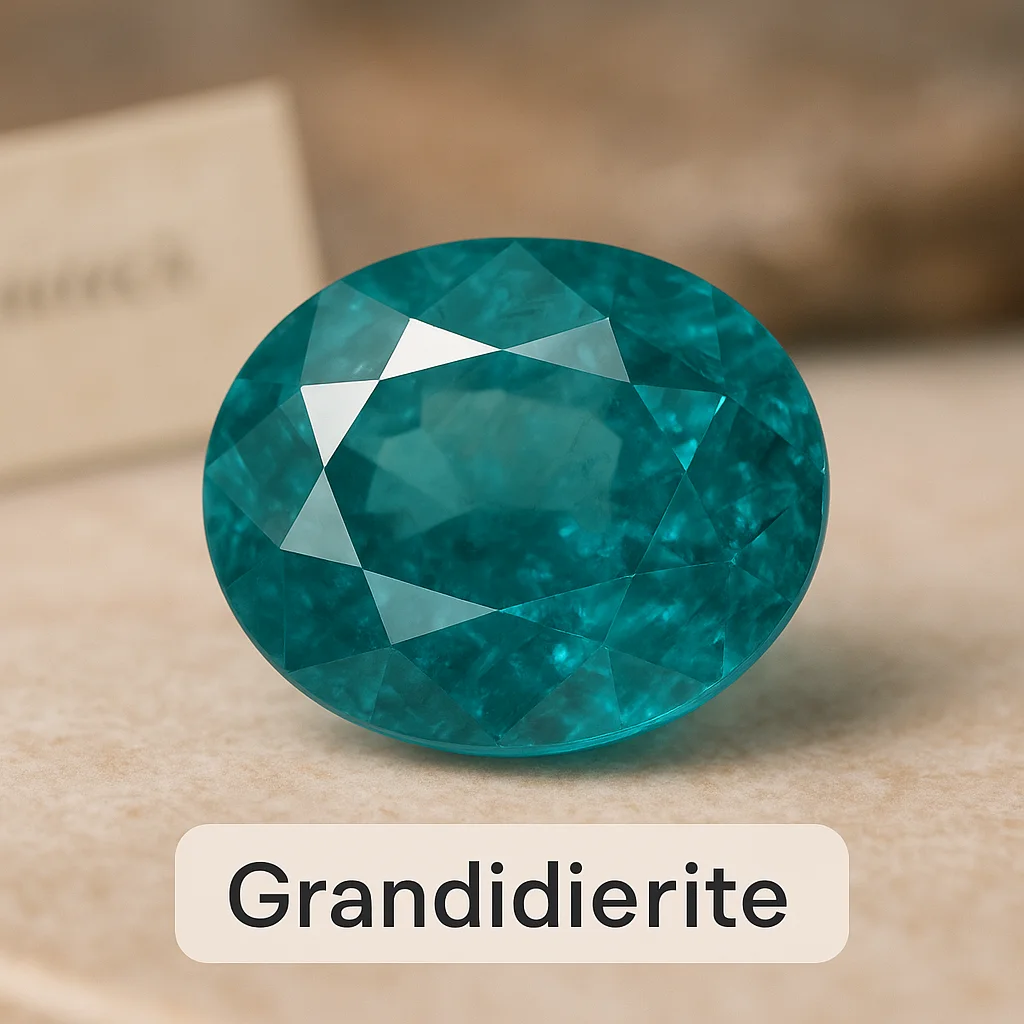
In the world of gemstones, it is primarily used in jewelry despite the challenges in sourcing quality specimens. While Grandidierite is not one of the traditional birthstones, its beauty makes it a unique choice for custom and designer jewelry pieces.
This article will guide you through understanding Grandidierite, including its formation, geological origins, distinctive appearance, intrinsic properties, cultural significance, and tips for care and purchase.
🌍 Where It Comes From
Grandidierite is primarily discovered in metamorphic rocks. These stones are formed through intense heat and pressure over long periods, typically deep within the Earth's crust. Such environments are conducive to the development of this unique mineral.
The most notable deposits have been located in Madagascar, where the gem was first discovered. This region is renowned for producing specimens with significant size and exceptional color. Smaller deposits have also been found in parts of Sri Lanka and Myanmar, but these localities produce fewer and less impressive specimens compared to Madagascar.
The origin of Grandidierite can impact its color, clarity, and value. For instance, stones from Madagascar are often considered more desirable in the market due to their depth of color and transparency. Knowledge of the gem's origin is crucial when determining its market value and potential investment.
🔬 How It Forms
Grandidierite forms through geological processes involving heat and pressure over millions of years. These conditions typically occur in regions with a dynamic geological history, where tectonic plate movement and volcanic activity are prevalent.
The gemstone's characteristic bluish-green color is mainly due to the presence of iron within its crystal structure. The amount and distribution of iron can significantly influence the intensity of the coloration observed in individual specimens.
Often occurring as elongated or tabular crystals, Grandidierite can form as part of larger mineral assemblages within the host metamorphic rock. This makes extracting clear, sizeable gemstones challenging, adding to the rarity and value of quality specimens.
🎨 Color and Look
Grandidierite is revered for its unique bluish-green color, reminiscent of tranquil ocean waters. The gem appears in various depths of color, primarily influenced by its iron content and type of lighting, with some examples exhibiting more intense greens or blues.
The gem's optical properties, including pleochroism, can create different colors when viewed from various angles. This effect adds a dynamic aspect to the gem's appearance, contributing to its desirability in jewelry making.
Treatments to enhance color and clarity are not common for Grandidierite. However, its natural beauty is often highlighted through skilled cutting and polishing, which enhance its inherent luster and sparkle.
🧪 Properties That Matter
Grandidierite ranks between 7 and 7.5 on the Mohs hardness scale, making it sufficiently durable for many types of jewelry. Its compromise between hardness and toughness implies that while it can resist scratches to a fair degree, care should still be taken to avoid activities that may cause impacts or chips.
Cleavage is poorly developed in Grandidierite, meaning it is less likely to split along specific planes. This property aids its durability when used in jewelry. The gem's luster is typically vitreous, providing a glass-like sheen that enhances its visual appeal.
In everyday terms, Grandidierite's properties make it an excellent choice for pendants, earrings, and occasionally rings, provided the wearer is mindful of potential impacts.
✨ Meanings, Birthstones, and Culture
In terms of cultural symbolism, Grandidierite does not have a long-established history as a traditional birthstone. However, it is often associated with themes of tranquility and clarity due to its remarkable color clarity and calming hue.
Jewelry featuring Grandidierite often celebrates contemporary design and is cherished for its rarity and unique appearance rather than any historical or mystical associations.
🧼 Care and Cleaning
To ensure Grandidierite maintains its beauty and integrity, it should be cleaned with mild soap and warm water, followed by a gentle polish with a soft cloth to restore its luster. Avoid using harsh chemicals or ultrasonic cleaners, which can damage the stone.
Skip prolonged exposure to heat and sudden temperature changes, as these can compromise the gem's structure. For the best storage, Grandidierite should be kept in a soft, cushioned pouch or compartment to prevent scratching by harder gemstones like diamonds.
🛒 Buying Tips and What to Check
When purchasing Grandidierite, quality is influenced by color, clarity, cut, and origin. Deeper, more vivid colors are generally more valuable, with clarity allowing more light to enhance the stone's beauty.
Be cautious of treatments, even if they are rare, and always ask for full disclosure or a gemological report for high-value pieces. Such reports will provide crucial information about the gem's authenticity and any treatments performed.
When shopping online, ensure you review clear photographs, check the return policy, confirm the seller's reputation, and obtain proper disclosure about the stone's origin and characteristics.
⚠️ Real vs Fake and Common Look-Alikes
Distinguishing natural Grandidierite from synthetics or imitations requires professional testing. Lab-grown stones mimic natural counterparts but are considered genuine. However, imitations like glass or plastic aim only to replicate the appearance without the same mineral properties.
Common look-alikes include other bluish-green gems such as tourmaline or topaz. Assembled stones like doublets or triplets may also resemble Grandidierite but consist of multiple layers rather than a single crystal.
For accurate identification, expert gemological analysis is essential, as home testing can be misleading and potentially damaging to the stone.
❓ Common Questions and Misconceptions
Is it a mineral or a rock? Grandidierite is a mineral.
Is it a birthstone? No, it is not a traditional birthstone.
Will it scratch easily? With a hardness of 7-7.5, it resists scratching better than softer stones but still requires care.
Can it go in water? Yes, but avoid long soaking to preserve its luster.
Does color fade in sunlight? It is generally stable, but minimizing exposure to bright light is advised.
What treatments are common? Grandidierite is rarely treated; natural beauty is preferred.
Is lab-grown 'fake'? Lab-grown Grandidierite is real but not naturally formed.
How do I store it safely? Store separately in soft pouches to avoid scratches from harder stones.
Do inclusions always lower value? Not necessarily; clarity influences value but doesn't solely determine it.
How do I pick a good one for jewelry? Look for depth of color, clarity, skilled cutting, and reputable origin.
📌 Summary
- Grandidierite is a rare bluish-green mineral.
- It exhibits a unique pleochroic color effect.
- Formed under high heat and pressure in metamorphic rocks.
- Hardness allows for use in jewelry but requires care.
- Rarely treated; valued for natural appearance.
- Clean with soap and water; avoid harsh chemicals.
- Best suited for pendants and earrings, less for rings.
- Look-alikes include tourmaline; expert testing needed.
- Professional reports confirm authenticity and treatment.
- When buying, check color, clarity, cut, and origin.
- Not a traditional birthstone, prized for contemporary appeal.
- Rare and discerning choice for collectors and designers.