💎 Investment Gemstones Risks and Reality
🪨 What It Is
Investment gemstones are minerals, rocks, and organic materials regarded for their beauty, durability, and rarity. They are often used in jewelry and cherished for their potential financial value. Common gemstones include diamonds, sapphires, rubies, and emeralds.
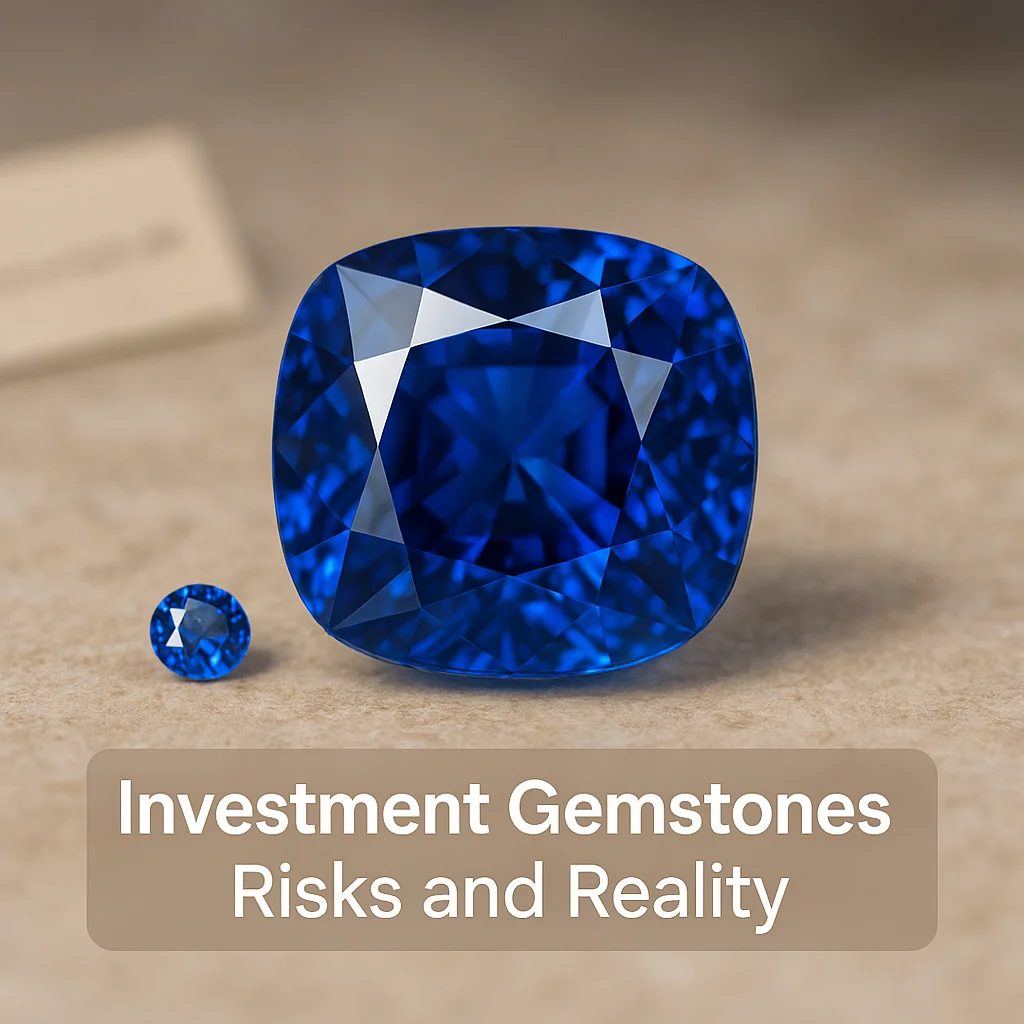
These stones can be classified into different categories: minerals such as quartz and topaz; organic gems like pearls and amber; and rock varieties such as lapis lazuli. They are popular choices for jewelry due to their allure and range of available colors.
In this article, readers will learn about the appearance, properties, origin, value, care, and buying tips related to investment gemstones. These elements are crucial for anyone considering purchasing gemstones as a form of investment or for personal enjoyment.
🌍 Where It Comes From
Gemstones form in various geologic settings, depending on their type. Diamonds, for instance, are typically found in igneous rocks known as kimberlites, while sapphires and rubies are commonly associated with metamorphic rocks. Opals are found in sedimentary environments.
The origin of a gemstone can significantly influence its color, clarity, and market reputation. For example, sapphires from Kashmir are highly prized for their deep blue hue, while diamonds from the Argyle mine in Australia are known for their rare pink coloration.
While gemstones are mined worldwide, notable sources include parts of Africa, Asia, and South America. The geographic origin can also affect the gemstone's market value, making it an important consideration for collectors and investors alike.
🔬 How It Forms
Gemstones form over millions of years under specific conditions of heat and pressure. For example, diamonds crystallize deep within the Earth's mantle at high temperatures and pressures, while emeralds form through hydrothermal processes that involve the interaction of hot fluids with surrounding rocks.
The color of gemstones is often dictated by trace elements present during formation. Chromium gives rubies their red hue, while iron and titanium can result in the blue color of sapphires. These elements create unique colors that are highly valued in the gemstone market.
Most gemstones crystallize in distinct shapes known as crystal habits. For instance, quartz crystals typically form hexagonal prisms, and tourmaline crystals often exhibit a striated, columnar form.
🎨 Color and Look
Gemstones are renowned for their vibrant colors and dazzling appearances. The color of a gemstone can vary from light pastels to deep, rich hues, depending on the mineral composition and trace elements present.
Various optical effects can enhance a gemstone's appearance, such as chatoyancy in cat's eye chrysoberyl or the star-like asterism seen in star sapphires. Proper cutting and polishing amplify these effects by maximizing light reflection and refraction.
Many gemstones undergo treatments to enhance their color and clarity. Heat treatment is common for sapphires and rubies, while emeralds are often oiled to improve their appearance. These treatments can significantly impact the stone's value and should be disclosed to potential buyers.
🧪 Properties That Matter
The properties of gemstones determine their suitability for different types of jewelry. The Mohs hardness scale measures a mineral's resistance to scratching, with diamonds being the hardest at a rating of 10, making them ideal for daily-wear rings.
Toughness refers to a gemstone's resistance to chipping or breaking. Jade is highly regarded for its toughness, making it suitable for intricate carvings. In contrast, opal is relatively fragile and better suited for earrings or pendants where impact is limited.
Cleavage and fracture describe how a gemstone breaks. Diamonds exhibit perfect cleavage, meaning they can split along specific planes. This property requires careful handling during cutting and setting to prevent breakage.
✨ Meanings, Birthstones, and Culture
Cultural symbols and birthstone associations add sentimental value to gemstones. For example, amethyst, the birthstone for February, is traditionally associated with calm and clarity.
In folklore, gemstones have often been attributed to various powers and properties. However, it's important to note that these cultural associations are not scientifically proven and should be enjoyed as part of a rich historical tapestry rather than factual attributes.
Each month in the year is linked with specific birthstones that have become popular choices for gifts and personal adornment. These traditions have endured centuries, influencing modern jewelry practices and consumer choices.
🧼 Care and Cleaning
Proper care is essential to maintain the beauty and integrity of gemstones. Gentle soap and water are generally recommended for cleaning, alongside a soft cloth for drying. It's crucial to avoid harsh chemicals that can damage the stone's surface.
Some gemstones, like opal and turquoise, are porous and can absorb liquids. These stones should avoid long soaking or exposure to lotions and perfumes to prevent discoloration.
For storage, gemstones should be kept separately in soft pouches or lined compartments to prevent scratching and keep them free from dust and debris.
🛒 Buying Tips and What to Check
Understanding what affects a gemstone's price and quality is vital for making informed purchases. Factors like color, clarity, cut, carat weight, and origin play significant roles in determining value.
When purchasing high-value stones, asking about treatments and requesting a gemological report is advisable. These reports can verify authenticity and detail any enhancements made to the stone.
For online buying, ensure clear photos, understand the return policy, check the seller's reputation, and ensure full disclosure regarding any treatments or origins. These steps form a beginner's checklist that can help avoid potential pitfalls.
⚠️ Real vs Fake and Common Look-Alikes
The market includes natural, synthetic, and imitation gemstones. Natural stones form in the earth, synthetic stones are lab-grown with the same chemical makeup, and imitations may include glass or plastic composites.
Assembled stones like doublets and triplets combine different materials to mimic more expensive gems. Common look-alikes include cubic zirconia for diamonds and glass reproductions of opals.
Proper identification often requires professional testing, such as spectroscopy or inclusion analysis, rather than unreliable methods like home tests which can yield inaccurate results.
❓ Common Questions and Misconceptions
Is it a mineral or a rock? Gemstones can be either, depending on their composition.
Is it a birthstone? Many gemstones are birthstones, chosen by month or zodiac sign.
Will it scratch easily? This depends on the Mohs hardness; diamonds resist scratches best.
Can it go in water? Some stones can, but porous ones like opals should avoid water.
Does color fade in sunlight? Some gems like amethyst may fade under prolonged light exposure.
What treatments are common? Heat treatment and oiling are common to enhance appearance.
Is lab-grown 'fake'? Lab-grown stones are real in composition but not naturally formed.
How do I store it safely? Use individual pouches to prevent scratching.
Do inclusions always lower value? Not always; some inclusions add uniqueness to gemstones.
How do I pick a good one for jewelry? Consider durability, aesthetics, and personal preference for style.
📌 Summary
- Gemstones can be minerals, rocks, or organic materials.
- Colors range widely, influenced by trace elements and conditions.
- Formation involves heat, pressure, and time, creating unique appearances.
- Mohs hardness and toughness determine wearability.
- Common treatments include heat and oiling to enhance color and clarity.
- Gentle care is essential, avoiding harsh chemicals and proper storage.
- Rings require durable stones; pendants and earrings offer more flexibility.
- Common look-alikes include cubic zirconia for diamonds.
- Authenticity is best confirmed through professional reports.
- Buying checklist includes photos, return policies, and full disclosures.
- Birthstones and cultural meanings add sentimental and traditional value.
- Investing in gemstones combines aesthetics with financial consideration.