💎 Origin and Treatment How They Affect Value
🪨 What It Is
Gemstones are naturally occurring materials that range from minerals and gem varieties to organic gems and rocks. They are often appreciated for their beauty, rarity, and durability, making them popular choices for jewelry and collectors. Many people know gemstones as birthstones, each representing a specific month, adding a layer of cultural richness and tradition.
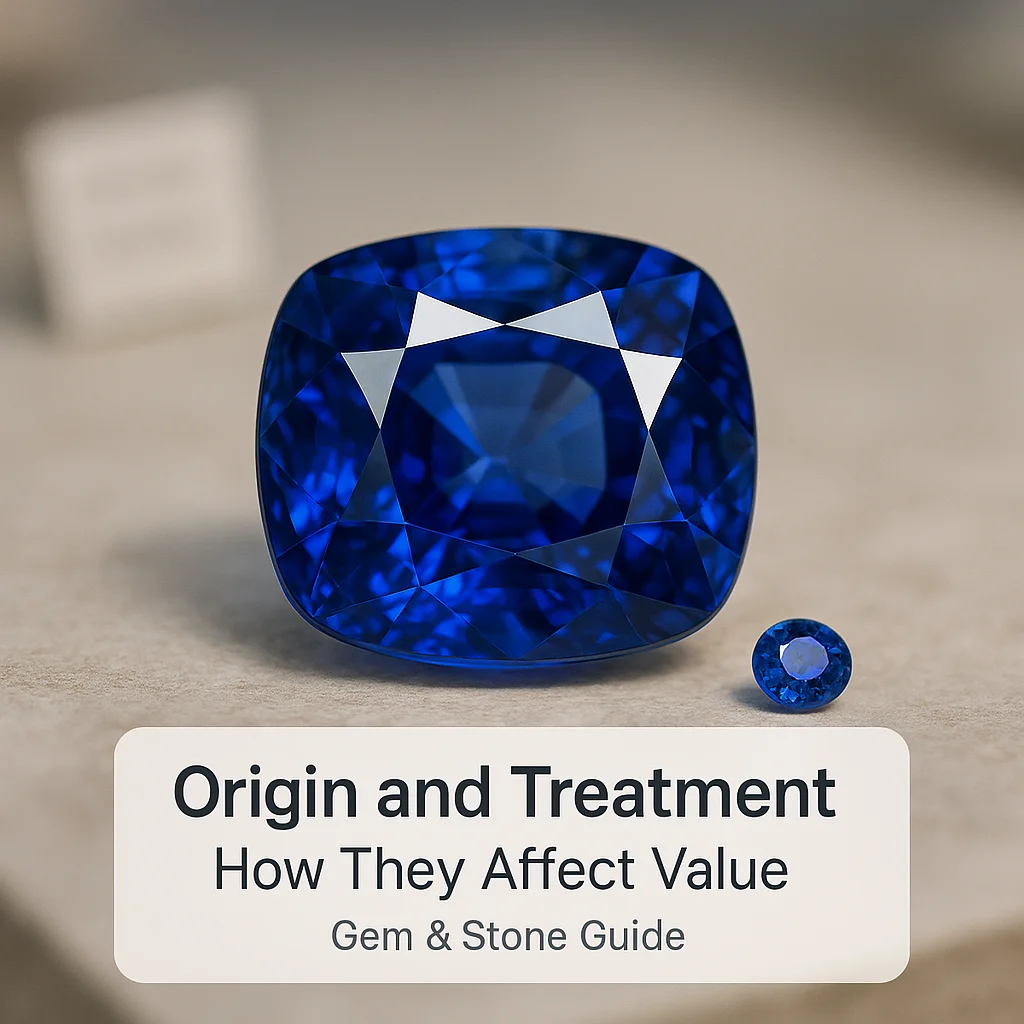
This article will guide you through the essential aspects to understand how the origin and treatment of gemstones affect their value. We will explore various characteristics such as appearance, properties, origin, care, and practical tips for buying.
By the end, you'll be equipped with the knowledge to make informed decisions about gemstones, whether you wish to wear them as jewelry, add them to your collection, or gift them to someone special. Understanding the factors influencing their value can also enhance the appreciation of their natural beauty and artisanal work.
🌍 Where It Comes From
Gemstones form under a variety of geological conditions. Some are formed in igneous rocks from cooling magma, while others are products of metamorphic processes involving heat and pressure. You will also find gems that originate from sedimentary rocks or those formed through hydrothermal processes, where mineral-laden water solidifies into crystals.
The significance of a gemstone's origin lies in its impact on color, clarity, and overall appeal. Certain regions are famed for producing gemstones with distinctive characteristics. For instance, sapphires from Kashmir are renowned for their deep blue hue, while emeralds from Colombia are celebrated for their vivid green color. However, a gemstone's location of origin can also affect its market reputation.
Though well-known sources are highly regarded, it's important not to downplay gemstones originating from lesser-known locations. These gems can offer comparable beauty and quality, extending the palette of options to suit different aesthetic preferences and budgets.
🔬 How It Forms
The formation of a gemstone is a fascinating process that involves various natural forces over extended periods. Heat and pressure contribute to the molecular crystal structures, while trace elements or defects can lead to the stunning colors we see. In the case of varieties like sapphire and ruby, the presence of trace elements such as iron or chromium defines their color.
Crystal habit, or the characteristic external shape of a crystal, also plays a crucial role in how gemstones are cut and ultimately presented. While some crystals form as large, well-shaped structures, others may form in nodules or geodes that conceal their inner beauty until they are opened and cut.
🎨 Color and Look
Color is one of the most enticing aspects of gemstones. They come in many hues, from the deep blues of sapphires to the fiery reds of rubies, each shade dictated by mineral composition and trace impurities. The cutting and polishing process dramatically influences a gemstone's visual appeal, affecting how light interacts with it.
Several gemstones are commonly treated to enhance their appearance. Treatments such as heating, oiling, and dyeing are used to improve color or clarity. It's essential to approach such treatments with a neutral perspective, understanding that they aim to optimize the visual aesthetics of the gemstone.
🧪 Properties That Matter
Understanding a gemstone's properties helps to determine its suitability for various forms of wear. Mohs hardness measures scratch resistance, making it crucial for jewelry expected to endure daily wear, like rings. Toughness refers to a stone's resistance to chipping or breaking, essential for durable pieces.
Cleavage describes how a gemstone breaks; stones with perfect cleavage risk breaking more easily. Luster, or how the surface reflects light, adds to a gemstone's brilliance. For beginners, these properties provide a better understanding of whether a gem is suited for an enduring ring or a delicate pendant.
✨ Meanings, Birthstones, and Culture
For centuries, gemstones have carried cultural significance, imbued with meanings and traditions. Birthstones, stones associated with birth months, add a personal touch to jewelry pieces. For example, garnet is January's birthstone, while sapphire graces those born in September.
Traditionally associated with symbolism, gemstones play a role in folklore and cultural narratives. While these associations are often cherished and celebrated, it's important to differentiate between cultural traditions and gemological facts. Understanding these traditions enriches the personal connection many people experience with gemstones.
🧼 Care and Cleaning
Caring for gemstones begins with safe cleaning practices. The basic gentle approach involves using mild soap and water with a soft cloth. It’s crucial to avoid harsh chemicals and abrasive materials that can damage the stones' surface.
Some gemstones require special care due to porosity or treatments. Pearls, for example, should not be submerged for extended periods or exposed to extremes of temperature. Proper storage, often in individual soft-lined compartments, prevents scratches and maintains the gemstone's luster.
🛒 Buying Tips and What to Check
Several factors influence a gemstone's price and quality, including color, clarity, cut, and carat size. The provenance of the stone and any treatments it has undergone can also affect its value. When purchasing high-value stones, requesting a professional gemstone report is advisable.
Reports from reputable gemological labs identify a gemstone's characteristics and confirm authenticity, though they cannot guarantee permanence of treatments. When buying online, check for detailed photographs, a clear return policy, seller reputation, and complete disclosure of treatments.
⚠️ Real vs Fake and Common Look-Alikes
Understanding the differences between natural, synthetic, and imitation gemstones ensures informed purchases. Natural stones form in the earth, while synthetics are grown in the lab with identical chemical properties. Imitations, such as glass or plastic, mimic appearance without duplicating properties.
Common look-alikes might cause confusion. For instance, citrine (a variety of quartz) resembles the more costly yellow topaz but differs significantly in price. Identifying these differences often requires professional expertise, as home tests can be misleading and risky.
❓ Common Questions and Misconceptions
Is it a mineral or a rock? Most gemstones are minerals, distinguished by their chemical composition and structure.
Is it a birthstone? Some gemstones, like garnet or amethyst, are designated birthstones symbolizing particular months.
Will it scratch easily? That depends on its Mohs hardness; softer stones like pearls are more prone to scratches.
Can it go in water? Safe for many, but porosity and treatments may make some stones like opals sensitive to water.
Does color fade in sunlight? Prolonged light exposure can fade certain gemstones, like amethyst.
What treatments are common? Heat treatment and oiling enhance appearance but require disclosure.
Is lab-grown 'fake'? No, lab-grown stones have the same properties as natural ones.
How do I store it safely? Keep each stone in a soft-lined compartment to prevent scratching.
Do inclusions always lower value? Not always; they can add character and uniqueness but often affect clarity-based value.
How do I pick a good one for jewelry? Consider the clarity, color, cut, and hardness suited to its intended use.
📌 Summary
- Gemstones are valued for their natural beauty and distinct origins.
- Colors vary widely, influenced by minerals and cutting techniques.
- Formed under natural heat and pressure, or synthesized to match.
- Properties like hardness determine its wearability and care.
- Common treatments enhance appearance and should be disclosed.
- Clean gently and store carefully to maintain the gemstone's allure.
- Appropriate jewelry choice depends on durability and setting use.
- Look-alikes include synthetic and imitation versions.
- Lab reports can confirm authenticity but not treat permanence.
- Choose based on personal style, birthstone significance, and tradition.
- Always check for authenticity, consider practicality over mere aesthetics.
- Understand features that affect value, aiming for informed purchases.