💎 Painite
🪨 What It Is
Painite is a rare and fascinating mineral recognized for its unique appearance and intriguing properties. Initially discovered in Myanmar, Painite has gained attention among gem collectors and enthusiasts due to its scarcity and distinct color. Though not a traditional birthstone or commonly used in jewelry, its rarity has made it a subject of great interest in the world of gemstones and minerals.
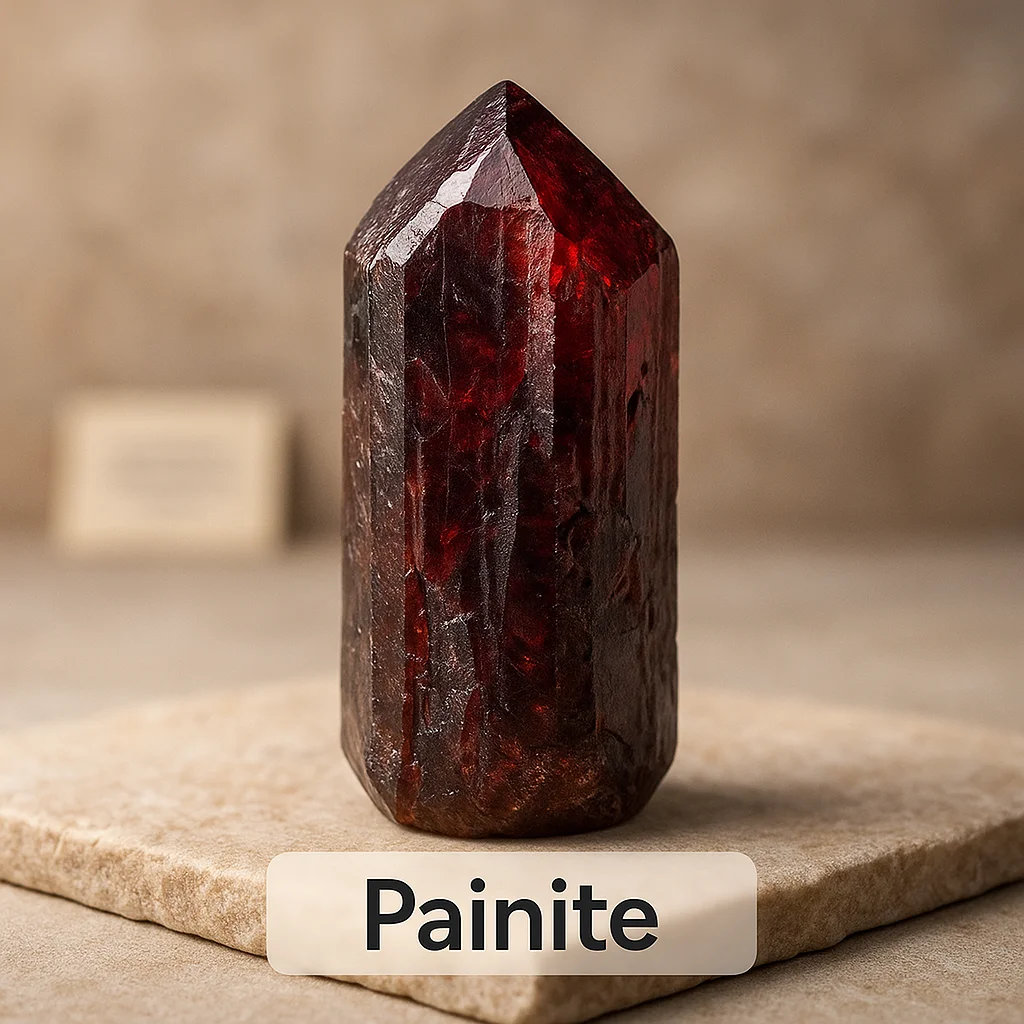
This educational article aims to introduce readers to the captivating world of Painite. We will explore its physical characteristics, formation, geographical origins, and how it compares to other gemstones. Additionally, we will cover practical topics like care, cleaning, buying tips, and how to distinguish Painite from potential look-alikes.
By the end of this guide, you will have a comprehensive understanding of Painite, allowing you to appreciate its uniqueness and significance in the mineral kingdom. Whether you are a budding gemologist or simply intrigued by rare minerals, this guide is designed to provide you with valuable insights.
🌍 Where It Comes From
Painite is primarily found in Myanmar, a region known for producing a variety of valuable gemstones. The mineral forms in igneous and metamorphic geological settings, where specific conditions such as pressure, heat, and the presence of particular elements like boron contribute to its creation.
While Myanmar is the most well-known source of Painite, there are reports of its occurrence in other parts of Asia. However, these discoveries are far less significant in size and quality compared to the Burmese output. This limited geographical origin makes Painite even more desirable and valuable.
The origin of Painite can influence factors such as color and clarity. Burmese Painite is highly sought after for its rich hue and minimal inclusions. The reputation of the origin, combined with its rarity, greatly impacts the gemstone's market value and desirability among collectors.
🔬 How It Forms
Painite forms under specific geological conditions that involve high temperatures and pressures, typically found deep within the Earth's crust. The presence of elements such as calcium, zirconium, boron, and aluminum contributes to its unique mineral structure.
As an igneous formation, Painite is created when molten rock cools and crystallizes. The presence of rare trace elements, including boron, is essential for the distinctive deep reddish-brown color that Painite is known for. Variations in hue can occur due to slight differences in these trace elements.
Painite crystals usually appear in hexagonal formations, though complete crystals are extremely rare. Most Painite specimens are discovered as fragmented pieces rather than whole crystals, adding to their rarity and intrigue.
🎨 Color and Look
Painite is renowned for its rich brownish-red color, which can sometimes exhibit a deep reddish-brown hue. This unique coloration is due to the presence of trace elements like iron and chromium within its crystal structure. In some lighting conditions, Painite may also display a faint pleochroism, showing different colors when viewed from different angles.
The appearance of Painite can be enhanced by its cut and polish. The luster is typically vitreous, meaning it possesses a glass-like shine. Due to its rarity, Painite is rarely treated, but collectors should stay informed about any potential enhancements used to improve the visual aspects of the mineral.
The clarity of Painite can vary, with some specimens containing visible inclusions. Inclusions are natural imperfections that occur during the formation process and can affect the stone's transparency and overall look. Nevertheless, minor inclusions are often accepted due to Painite's rarity.
🧪 Properties That Matter
Painite is known for its remarkable hardness, rating between 7.5 to 8 on the Mohs scale. This places it among the harder known minerals, making it resistant to scratches and suitable for different types of jewelry.
Its toughness, which refers to its ability to resist chipping and breaking, is generally good, though it should still be handled with care to prevent damage. Painite does not have perfect cleavage, meaning it doesn't easily split along specific planes, and it typically fractures in an uneven manner.
The luster of Painite is vitreous, providing a glass-like shine that is particularly attractive when the mineral is properly cut and polished. Due to its relative rarity, Painite is predominantly found in collector specimens rather than being widely used in everyday jewelry.
✨ Meanings, Birthstones, and Culture
While Painite is not designated as a traditional birthstone, it has garnered cultural attention due to its rarity and aesthetic appeal. It is not commonly incorporated into jewelry, primarily because of its scarcity and collectability.
In cultural symbolism, gems like Painite are often associated with unique and transformative qualities. However, it is important to recognize that these associations are based on tradition and personal beliefs rather than scientific evidence.
Collectors appreciate Painite for its exceptional rarity, and it has become a prized addition to mineral collections around the world, celebrated for its distinctive hue and intriguing geological story.
🧼 Care and Cleaning
Painite requires gentle care to maintain its beauty and integrity. Cleaning should be done using mild soap and water, avoiding harsh chemicals that could damage the stone. A soft cloth can be used to gently remove dust and fingerprints.
It is advisable to avoid exposing Painite to sudden temperature changes as this can cause damage. Long soaking periods should also be avoided to prevent any potential structural weakening.
For storage, keep Painite separate from other harder gemstones to prevent scratching. Using a soft pouch or individual compartment in a jewelry box is ideal for maintaining its condition.
🛒 Buying Tips and What to Check
When purchasing Painite, it's important to consider factors such as color, clarity, and carat size, which significantly affect value. Painite's rarity means that well-formed and clear specimens are more desirable and can demand higher prices.
Inquire about any treatments and request lab reports for high-value specimens. While treatments are rare, understanding the provenance and authenticity is crucial for collectors and buyers.
For online purchases, ensure clear photos are provided, check the seller's reputation, and review return policies. Reliable gemstone dealers will openly disclose details about quality and authenticity, giving buyers confidence in their purchase.
⚠️ Real vs Fake and Common Look-Alikes
Distinguishing natural Painite from synthetic or imitation stones requires careful examination. While synthetic versions are not widespread, understanding these differences is essential for collectors and buyers.
Common look-alikes for Painite may include other brownish-red gemstones. However, Painite's specific color and rarity set it apart, with professional testing required for confident identification.
Assembled stones, such as doublets or triplets, can sometimes mimic the appearance of genuine Painite. Always seek professional evaluation and lab verification to confirm authenticity and avoid misidentification.
❓ Common Questions and Misconceptions
Is Painite a mineral or a rock? Painite is a mineral.
Is it a birthstone? No, Painite is not a traditional birthstone.
Will it scratch easily? Painite is quite hard and does not scratch easily, with a Mohs hardness of 7.5 to 8.
Can it go in water? Occasional contact with water is generally safe, but avoid long soaking.
Does color fade in sunlight? There is no widely reported issue of Painite color fading with sunlight exposure.
What treatments are common? Painite is rarely treated, but always verify with lab reports.
Is lab-grown "fake"? Lab-grown stones are scientifically similar to natural ones but are not considered the same.
How do I store it safely? Store Painite separately in a soft pouch to prevent scratches.
Do inclusions always lower value? Minor inclusions may not significantly affect Painite's value due to its rarity.
How do I pick a good one for jewelry? Look for clear, well-cut Painite with minimal inclusions for the best quality.
📌 Summary
- Painite is a rare mineral known for its brownish-red color.
- It is primarily found in Myanmar, with minor occurrences in Asia.
- Forms under high heat and pressure involving elements like boron.
- Hardness of 7.5 to 8 makes it scratch-resistant.
- Painite is rarely treated but confirm authenticity with lab reports.
- Use gentle soap and water for cleaning and store properly to avoid scratches.
- Best suited for collector pieces rather than everyday jewelry.
- Common look-alikes include brownish-red gemstones.
- Professional testing is crucial for confirming authenticity.
- When buying, focus on color, clarity, and reputable sellers.
- Not a birthstone, valued for rarity and aesthetic appeal.
- Painite's rarity and distinctive color make it a collector's gem.