💎 Paraiba Tourmaline
🪨 What It Is
Paraiba Tourmaline is a captivating and vibrant gemstone renowned for its unique neon blue and green hues. As a variety of tourmaline, it is cherished in the world of gemstones for its extraordinary color and rarity. Paraiba Tourmaline boasts a high level of demand, making it a popular choice for jewelry enthusiasts and collectors alike.
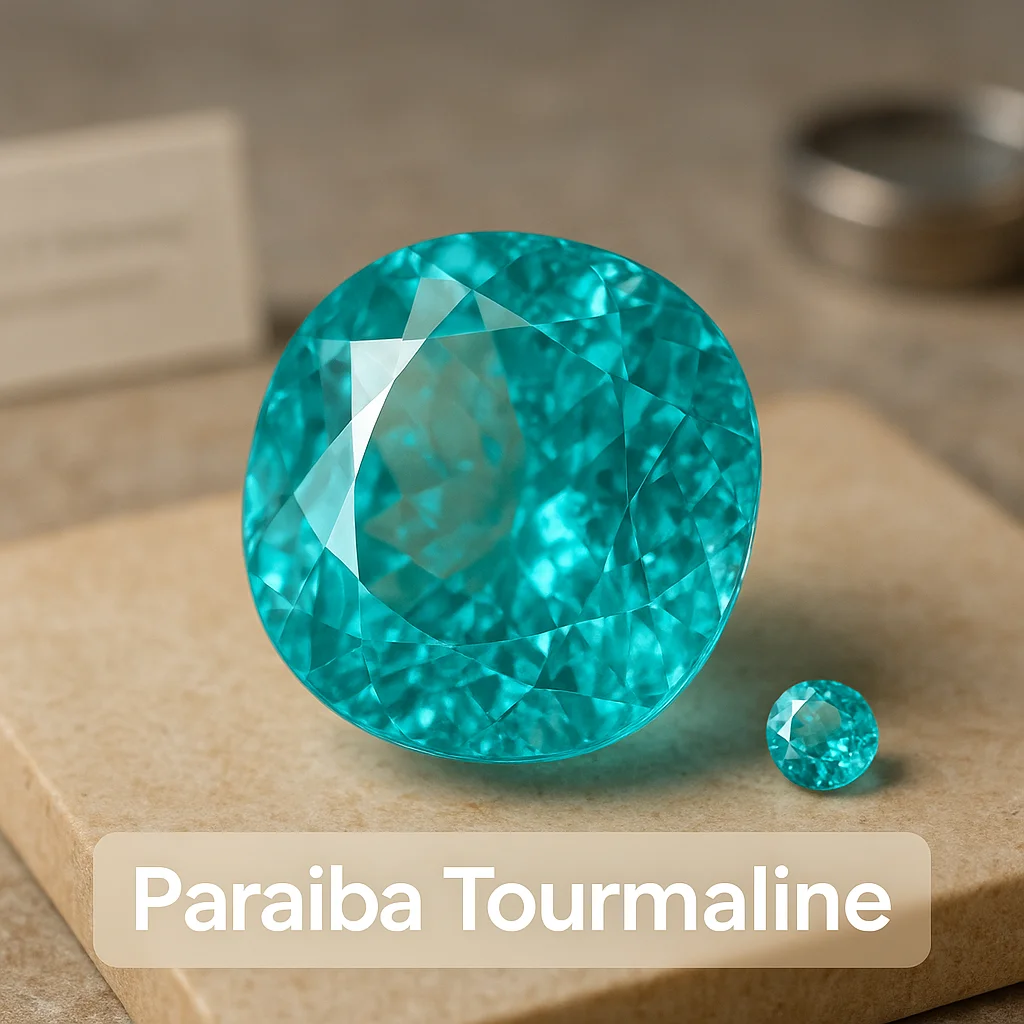
This gemstone is not tied to a specific birth month but has gained admiration for its aesthetic appeal. Its intense colors are often compared to tropical oceans, making it a standout choice for those seeking something truly distinctive in their jewelry collection.
In this article, you will learn about the origins, formation, appearance, and properties of Paraiba Tourmaline. We'll also explore its cultural significance, care tips, buying advice, and more.
🌍 Where It Comes From
Paraiba Tourmaline was first discovered in the Brazilian state of Paraíba, hence its name. This initial discovery in the late 1980s stunned the gemstone world with its unparalleled hues. These stones are found in pegmatite formations, a type of igneous rock characterized by its large crystal sizes.
In recent years, additional deposits of similar tourmalines have been found in other parts of the world, including Nigeria and Mozambique. These locations have yielded stones with colors and characteristics reminiscent of the original Brazilian material.
The origin of Paraiba Tourmaline can significantly impact its value. Stones from Brazil, particularly the early discoveries, are often considered more valuable due to their historical significance and unique color saturation.
🔬 How It Forms
Paraiba Tourmaline forms under specific geological conditions involving high temperatures and pressures deep within the Earth's crust. As pegmatites cool, elements such as copper—which contributes to the stone’s unique color—become incorporated into the crystal structure.
The distinct neon blue and green colors of Paraiba Tourmaline are primarily due to trace amounts of copper. Manganese may also play a role, subtly influencing the color variations within the stone.
These minerals typically crystallize in long, slender formations with a hexagonal cross-section, common among tourmalines.
🎨 Color and Look
Paraiba Tourmaline is famed for its luminous blue, turquoise, and green colors. Known for their vibrant and sometimes electric appearance, these colors are brought to life when the gemstone is expertly cut and polished.
The vivid colors of Paraiba Tourmaline can vary based on the concentration of copper and manganese. The appearance is greatly influenced by lighting conditions, with the colors appearing more vivid under natural daylight.
Heat treatment is sometimes used to enhance these colors, an accepted practice in the gemstone industry. It is essential for buyers to inquire about any treatments when purchasing such stones.
🧪 Properties That Matter
With a Mohs hardness of 7 to 7.5, Paraiba Tourmaline is relatively durable, meaning it's resistant to scratches and suitable for everyday jewelry. However, due to its crystalline structure, it may be more prone to chipping if struck against a hard surface.
This gemstone typically exhibits a vitreous luster, meaning it has a glass-like appearance that enhances its appeal when polished. Its transparency ranges from opaque to transparent, with transparent stones being the most sought after for jewelry.
Understanding these properties can help you choose the appropriate setting for your Paraiba Tourmaline, ensuring both durability and display.
✨ Meanings, Birthstones, and Culture
Traditionally, Paraiba Tourmaline is associated with clarity and positive energy. Though not officially designated as a birthstone, its stunning appearance makes it a favored choice for custom jewelry pieces.
In cultural traditions, tourmalines are thought to protect and enhance the wearer's well-being, although these beliefs are not scientifically proven. The colors of Paraiba Tourmaline are often thought to symbolize peace and relaxation, drawing comparisons to tranquil ocean waters.
While these interpretations vary, what remains constant is the gemstone's allure and popularity as a treasured jewelry piece.
🧼 Care and Cleaning
Caring for Paraiba Tourmaline involves gentle cleaning with mild soap and water. It's best to use a soft cloth to wipe it clean and avoid harsh chemicals or ultrasonic cleaners that could damage the stone’s surface.
It's wise to avoid sudden temperature changes, which might cause cracking, and to keep the gemstone away from prolonged exposure to direct sunlight to prevent any potential fading.
Storing Paraiba Tourmaline in a soft bag or a separate compartment in a jewelry box can help prevent scratching against other jewelry items.
🛒 Buying Tips and What to Check
Color, clarity, and cut are crucial factors affecting the value of Paraiba Tourmaline. Rich, vibrant colors with clear transparency are the most prized. Also, the origin of the stone can impact its price, with Brazilian stones often carrying a premium.
Consult a gemologist or a reputable dealer who can provide a lab certificate confirming the stone’s authenticity and any treatments it has undergone. This certificate will offer details about the gemstone's source and any enhancements applied.
For those purchasing online, ensure the seller offers clear photographs, a return policy, and transparency about treatment disclosures and seller reputation.
⚠️ Real vs Fake and Common Look-Alikes
Paraiba Tourmalines can be mistaken for other vibrant stones such as blue topaz or aquamarine. Synthetic versions created in labs exist and offer a more affordable alternative, though they lack the unique characteristics of natural stones.
Imitations made of glass or plastics may also be sold as Paraiba Tourmaline. These lack the distinct physical properties of the natural stone and can usually be identified by their weight and appearance.
Professional evaluation is recommended to confirm authenticity, as distinguishing between real and fake stones requires precise testing and cannot be accurately done with at-home methods.
❓ Common Questions and Misconceptions
Is it a mineral or a rock? Paraiba Tourmaline is a mineral, part of the tourmaline group.
Is it a birthstone? While not an official birthstone, it is a popular choice for its beauty.
Will it scratch easily? With a hardness of 7 to 7.5, it is relatively scratch-resistant, but caution is advised.
Can it go in water? Yes, gentle cleaning with water is safe.
Does color fade in sunlight? Prolonged exposure could lead to fading, so it’s best to store it away from direct light.
What treatments are common? Heat treatment is common to enhance color.
Is lab-grown "fake"? Lab-grown stones are synthetic but offer similar properties at a lower cost.
How do I store it safely? Store separately in a soft pouch to avoid scratches.
Do inclusions always lower value? Not always, but clarity typically affects desirability.
How do I pick a good one for jewelry? Look for vibrant color, transparency, and a well-executed cut.
📌 Summary
- Paraiba Tourmaline is a mineral, not a rock.
- Famous for vibrant blue and green colors.
- Forms in pegmatite under heat and pressure.
- Hardness of 7 to 7.5, suitable for everyday wear.
- Heat treatment common to enhance colors.
- Clean with mild soap and water, avoid harsh chemicals.
- Ideal for rings, pendants, and earrings.
- Common look-alikes include blue topaz and aquamarine.
- Confirm authenticity with professional lab reports.
- Check color, clarity, cut, and origin when buying.
- Not an official birthstone but highly admired for jewelry.
- Distinctive beauty makes it a memorable gemstone for collectors.