💎 Taaffeite
🪨 What It Is
Taaffeite is a rare gemstone often confused with spinel due to its similar appearance. Unlike many gemstones that are commonly used in jewelry, taaffeite is a collector's gem, prized for its rarity rather than its widespread use. It is a true mineral, belonging to the oxide category, and is recognized for its unique chemical composition that includes beryllium, aluminum, and magnesium.
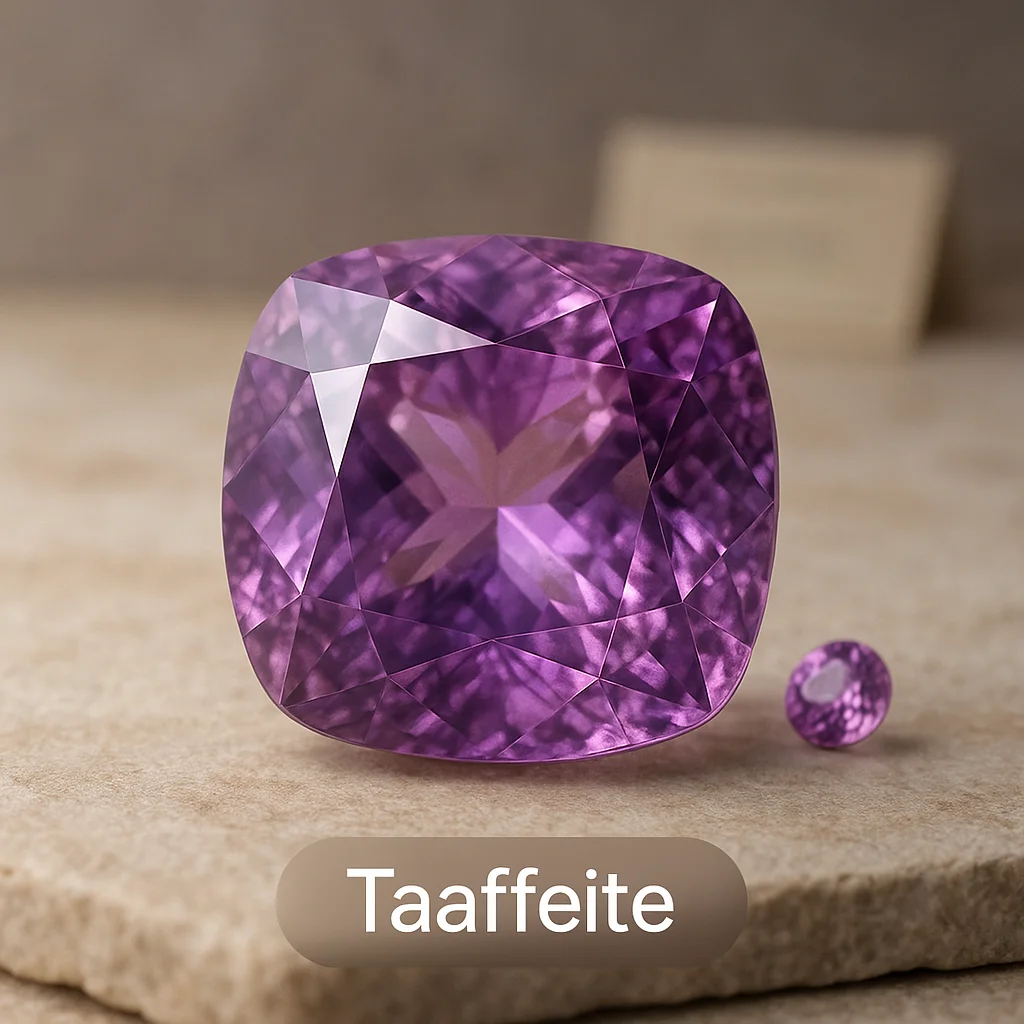
Although taaffeite is not a birthstone nor commonly used in mainstream jewelry, it holds a special place among gemstone enthusiasts and collectors. Its scarcity and the challenge it presents in terms of identification only add to its allure. As you explore this article, you'll learn about its appearance, properties, origins, and how to care for it.
This article will cover where taaffeite comes from, how it forms, what it looks like, and what properties make it unique. We will also discuss its cultural meanings, how to care for it, buying tips, distinguishing it from look-alikes, and common questions you may have.
🌍 Where It Comes From
Taaffeite primarily forms in metamorphic environments, which means it evolves under the influence of heat and pressure that alters the minerals in pre-existing rocks. These conditions allow taaffeite to crystallize, generally associated with carbonate rocks.
Most taaffeite found on the market is sourced from parts of Asia, particularly Sri Lanka and Myanmar. These regions are well-known for producing various other gemstones and offer conducive environments for taaffeite's formation. Smaller deposits have also been discovered in Tanzania, indicative of the mineral's scarcity.
The origin of a taaffeite can impact its color, clarity, and overall quality. Boron impurities, for example, can give Burmese taaffeite a desirable red or pink hue, whereas a cleaner stone might originate from Sri Lanka, impacting both its appearance and market value.
🔬 How It Forms
Taaffeite forms under geological conditions typically involving the metamorphosis of carbonate-rich rock. This process includes high temperatures and pressures that facilitate the growth of taaffeite crystals. Trace amounts of elements like iron, chromium, and manganese can influence the final coloration of the gemstone.
Crystal formations of taaffeite are generally hexagonal, but well-formed crystals are rarely found. Most taaffeite appears more as small fragments rather than as distinct crystals, which contributes to its rarity and difficulty in identification.
🎨 Color and Look
Taaffeite is known for its range of colors, from clear and light lavender to a more intense mauve or violet. The color can vary depending on trace elements present during formation. Certain lighting conditions may highlight the stone's unique color, with incandescent light often enhancing its gentle hues.
Cut and polish play crucial roles in taaffeite's appearance. A well-cut taaffeite will reveal its lush colors and maximize light reflection. Clarity varies, with most stones containing some inclusions. Unlike stones frequently subjected to treatments, taaffeite is rarely treated because its natural beauty is a significant part of its charm.
🧪 Properties That Matter
The hardness of taaffeite rates at about 8 to 8.5 on the Mohs scale, making it one notch below sapphire and ruby, but still suitable for wearing. This hardness means it's quite resistant to scratching, an important factor if you want to keep it gleaming over time.
Toughness, which describes how well a gemstone can survive chipping or cracking, is reasonable but not as robust as its hardness. Taaffeite's fracture is uneven to conchoidal, suggesting it can break with a glass-like finish if struck.
Taaffeite is also known for its vitreous luster, meaning it shines similarly to glass. Its transparency can be excellent, making it very appealing when properly cut and set, though its rarity can make fully transparent specimens hard to find.
✨ Meanings, Birthstones, and Culture
Traditionally, taaffeite does not play a significant role in birthstone lore or widespread cultural symbolism like other gems. However, its rare nature makes it a prized possession among collectors, seen as a representation of uniqueness and rarity itself.
Though taaffeite is not officially associated with any zodiac signs, some enthusiasts might link it to traits of mystery or exclusivity, given its well-hidden presence in nature and the gemstone market.
🧼 Care and Cleaning
Caring for taaffeite involves using mild soap and water with a soft cloth to clean the gemstone, avoiding harsh chemicals and abrasive materials that could scratch its surface. Given its relatively high hardness, occasional cleaning is sufficient to maintain its luster.
Avoid exposing taaffeite to extreme temperature changes, as this could potentially lead to fractures. Long-term exposure to sudden temperature shifts is not recommended.
Store taaffeite separately from other gemstones to prevent scratches, ideally in a soft pouch or a separate compartment in a jewelry box.
🛒 Buying Tips and What to Check
When purchasing taaffeite, consider factors such as color, clarity, and carat weight. Taaffeite's rarity means even small increases in size can significantly affect price. A stone's reputed origin may also enhance its value.
Ask sellers about any treatments the gem may have undergone, and request a gemological report when making high-value purchases. This report can verify authenticity and detail the gemstone's properties.
If buying online, look for clear photos, a return policy, and seller reviews to ensure a credible transaction. Disclose any known issues with the taaffeite to avoid misunderstandings.
⚠️ Real vs Fake and Common Look-Alikes
Taaffeite is often mistaken for spinel, as they can look quite similar to the untrained eye. While natural taaffeite is quite rare, synthetic versions may exist, although they are not common in the market due to the complexity of its composition.
Imitations of taaffeite could include glass or composite materials designed to mimic its look. Similarly, assembled stones like doublets or triplets might be sold as taaffeite, but these are made from different materials altogether.
Professional testing is the safest way to verify a taaffeite's authenticity, as home tests may not yield accurate results.
❓ Common Questions and Misconceptions
Is it a mineral or a rock? Taaffeite is a mineral, known for its specific and rare chemical composition.
Is it a birthstone? No, taaffeite is not commonly recognized as a birthstone.
Will it scratch easily? With a Mohs hardness of 8 to 8.5, it is relatively scratch-resistant.
Can it go in water? Occasional exposure is fine, but long soaks are not recommended.
Does color fade in sunlight? Taaffeite generally retains its color well but should be stored properly to maintain it.
What treatments are common? Taaffeite is rarely treated due to its natural beauty.
Is lab-grown 'fake'? Lab-grown taaffeite can be chemically identical, but is less valued for its rarity.
How do I store it safely? Store taaffeite separately to minimize scratching.
Do inclusions always lower value? Not always; minor inclusions are acceptable but larger ones may affect appearance.
How do I pick a good one for jewelry? Focus on color and clarity, considering its intended wear and size.
📌 Summary
- Taaffeite is a rare, collectible mineral gemstone.
- Typical colors include lavender, mauve, and violet.
- Forms in metamorphic environments through heat and pressure.
- Durable with a Mohs hardness of 8 to 8.5.
- Rarely treated; natural beauty is a key factor.
- Clean with mild soap and water; avoid harsh chemicals.
- Best used in occasional-wear jewelry due to rarity.
- Look-alikes include spinel and glass.
- Gem reports verify authenticity; professional testing recommended.
- Buy based on color, clarity, and reputable sourcing.
- Not an official birthstone, but valued for uniqueness.
- Remarkably scarce, making it a gem collector's dream.